Malte, neuf ans après le meurtre de la journaliste Daphne Caruana Galizia
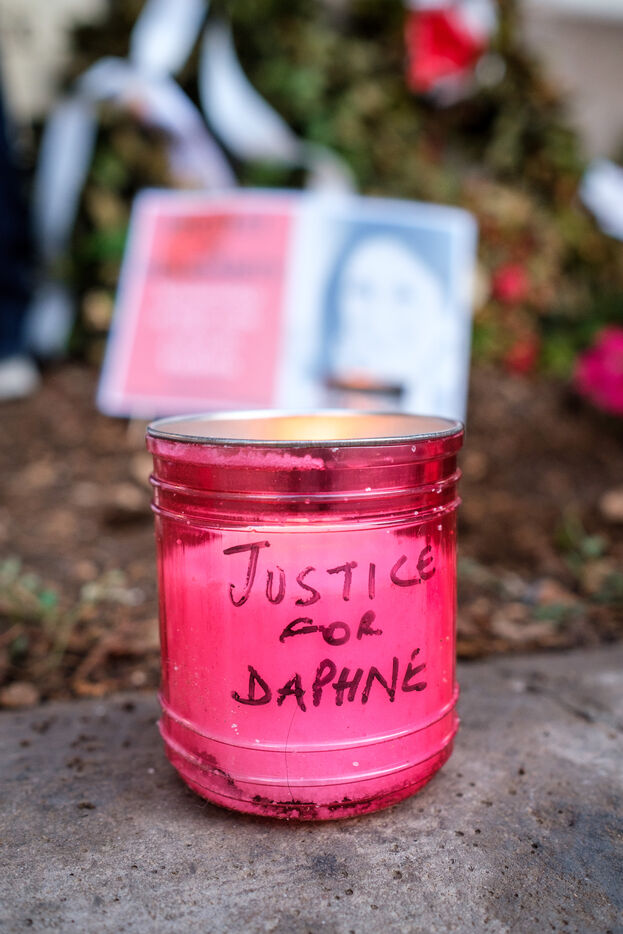
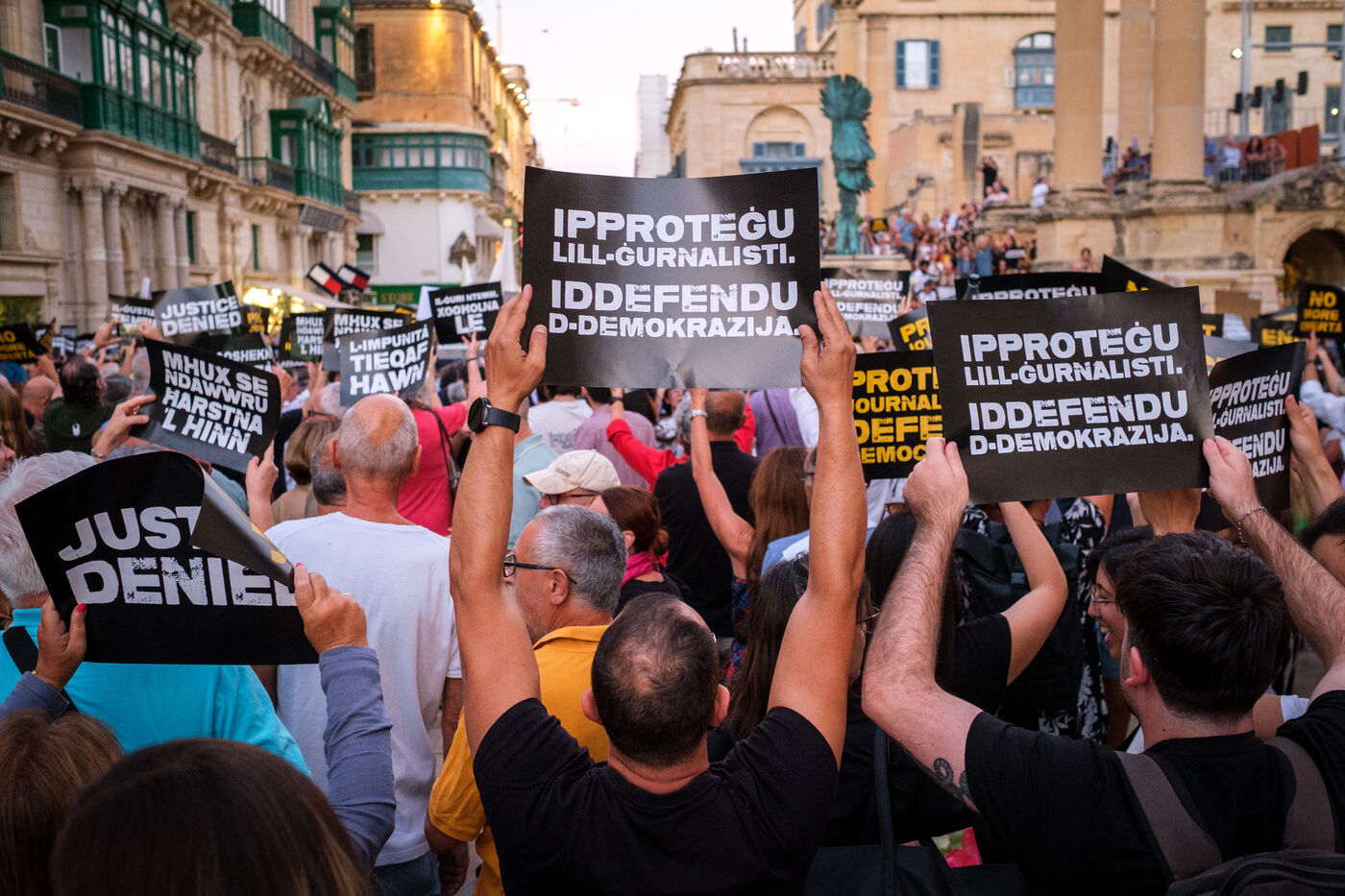
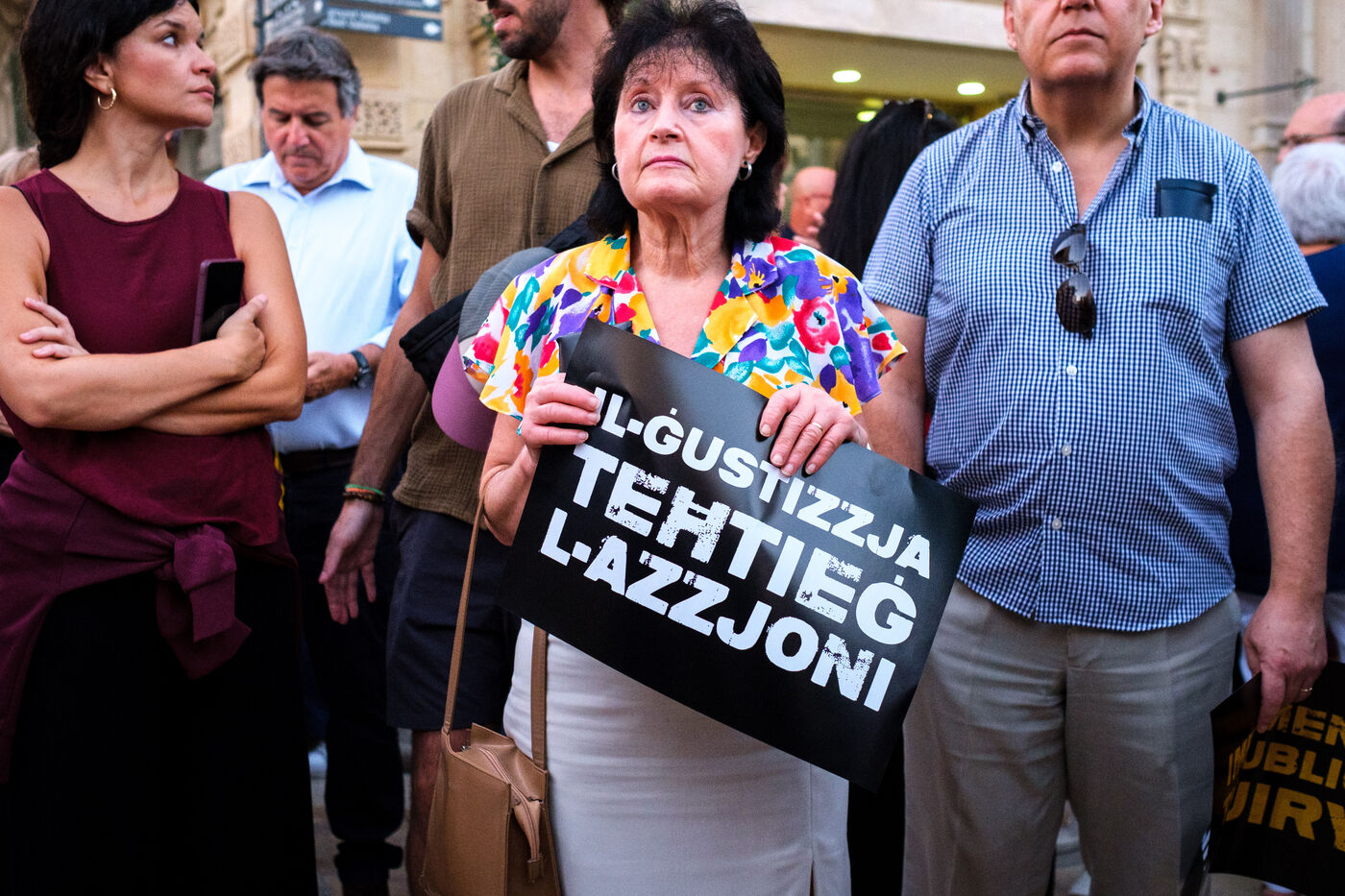
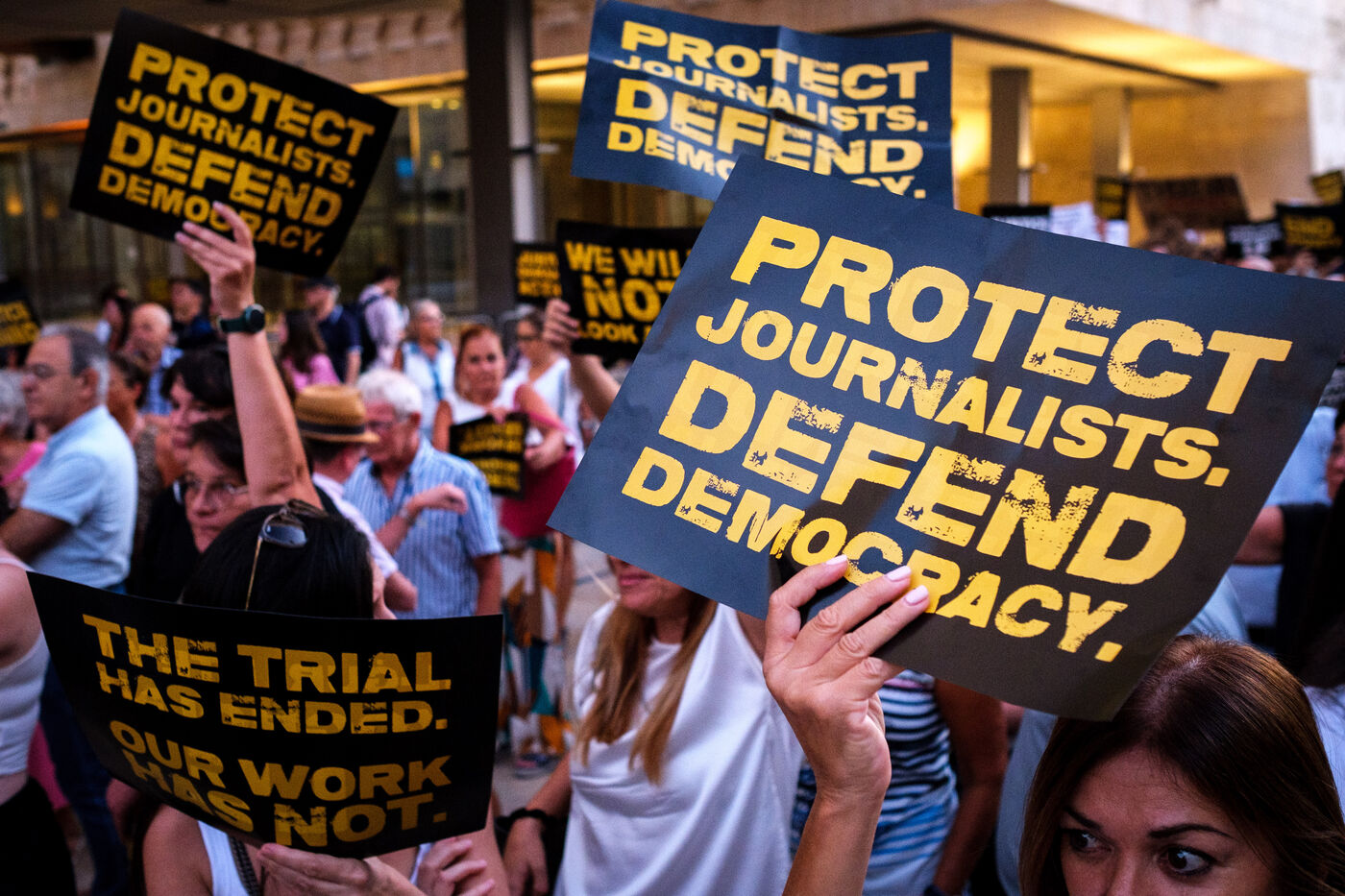
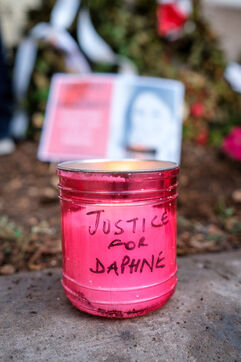
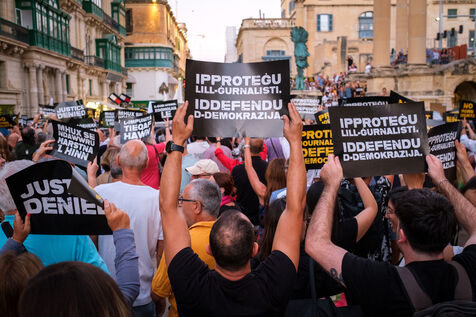
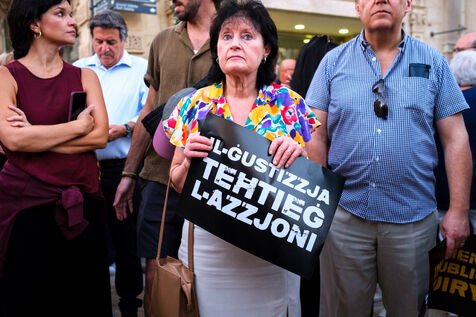
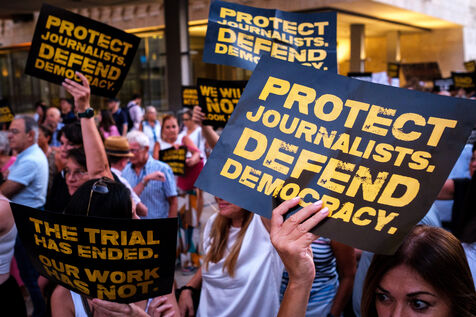
Le jour décline sur La Valette. Dans Republic Street, des hommes et des femmes de tous âges avancent vers le palais de justice avec des portraits de Daphne Caruana Galizia. « Mafia, mafia », crie la foule. Deux semaines plus tôt, Yorgen Fenech, accusé de complicité dans l’assassinat de la journaliste en 2017, a été acquitté par huit jurés sur neuf. Le 22 septembre, le procureur général maltais a fait appel du verdict. Rencontrée à la Daphne Caruana Galizia Foundation, sa sœur Corinne Vella résume le choc provoqué par l’acquittement : « C’est comme si on avait tué Daphne une seconde fois. »
Les hommes reconnus coupables d’avoir participé matériellement au meurtre purgent de longues peines de prison, mais personne n’a encore été définitivement condamné pour l’avoir commandité. Après l’acquittement, trois jurés et le mari de l’une des jurées ont été arrêtés le 17 septembre, interrogés puis remis en liberté sous caution policière. Un juré suppléant a également été arrêté le lendemain. Des médias ont évoqué des publications sur les réseaux sociaux et le soupçon qu’un juré ait eu accès à un téléphone. La police maltaise a toutefois précisé que son enquête portait « exclusivement » sur le respect du serment des jurés, notamment sur d’éventuels commentaires publics formulés avant le procès, et non sur les autres allégations relayées dans la presse.
Au-delà de la responsabilité pénale de Fenech, que le jury n’a pas retenue, une question revient : à l’approche du neuvième anniversaire de l’assassinat de Daphne Caruana Galizia, qu’est-ce qui a réellement changé dans les institutions maltaises ?
En 2021, une enquête publique indépendante avait livré un constat sévère. Mise en place par le gouvernement maltais en 2019 sous l’Inquiries Act, à la suite d’une résolution du Parlement maltais et d’une résolution de l’Assemblée parlementaire du Conseil de l’Europe, elle était conduite dans sa composition définitive par trois magistrats : l’ancien juge Michael Mallia, l’ancien Chief Justice Joseph Said Pullicino et la juge Abigail Lofaro. Sa mission dépassait la recherche de responsabilités pénales individuelles. Elle devait déterminer si des actes ou omissions de l’État avaient facilité l’assassinat ou contribué à ne pas l’empêcher, et si les institutions avaient suffisamment combattu l’impunité et protégé les personnes menacées, notamment les journalistes. L’enquête n’a pas conclu que l’État avait participé au meurtre, mais elle a estimé qu’il devait en assumer une responsabilité institutionnelle.
Le rapport 2026 de la Commission européenne sur l’État de droit permet de mesurer plus concrètement le chemin parcouru. Bruxelles constate des progrès limités pour réduire la durée des enquêtes visant la corruption de haut niveau et aucun progrès dans l’établissement d’un bilan solide de jugements définitifs. Les avancées restent également limitées concernant les garanties offertes aux journalistes et l’accès aux documents publics. La réforme visant à associer davantage la magistrature à la nomination du Chief Justice reste, elle aussi, inachevée.
Le gouvernement maltais met en avant les avancées également relevées dans le rapport. Le ministère de la Justice souligne notamment une hausse de 11 % du budget consacré à la justice en 2026, de nouveaux recrutements et la poursuite de la numérisation. L’opposition s’est, elle, saisie du verdict Fenech pour réclamer d’autres réformes. Son chef, Alex Borg, veut notamment pousser des lois anti-mafia et sur les patrimoines inexpliqués, en reprenant plusieurs recommandations formulées après l’enquête publique.
À quelques kilomètres de La Valette, Portomaso donne une dimension concrète au poids économique de la famille Fenech. Ce vaste complexe immobilier et touristique de St Julian’s, développé par le Tumas Group, concentre marina, résidences, casino et bureaux. À quelques mètres du bruit et de la circulation, le décor change brutalement : yachts alignés, façades vitrées, appartements de luxe. Un espace presque à part dans l’île.
Le lieu ne dit rien de la culpabilité de Yorgen Fenech. Il permet en revanche de replacer certains éléments du travail de Daphne Caruana Galizia dans leur contexte. Une enquête conjointe de Reuters et du Times of Malta avait établi en 2018 que Fenech était le propriétaire de 17 Black, société enregistrée dans l’Ajman Free Zone, aux Émirats arabes unis, et titulaire d’un compte bancaire à Dubaï. À cette période, Fenech était aussi directeur d’Electrogas, et représentait les actionnaires maltais du consortium lié au projet de centrale électrique au gaz de Delimara.
Daphne Caruana Galizia s’intéressait à ces dossiers avant son assassinat. Elle avait mentionné 17 Black dès 2017 et enquêtait sur des éléments liés à Electrogas. Au procès, l’accusation s’est appuyée sur ces investigations dans sa théorie du mobile. Fenech a contesté cette lecture et le jury l’a acquitté. La propriété de 17 Black et son rôle dans Electrogas sont établis, mais ne constituent pas en eux-mêmes une preuve de son implication dans le meurtre. Pour la famille, presque neuf années de procédures n’ont pas refermé la blessure. Son fils Matthew Caruana Galizia, rencontré dans la maison familiale, porte toujours cette histoire avec une fatigue visible. Lorsqu’il évoque certaines affaires mêlant police, pouvoir et réseaux criminels à Malte, il résume son sentiment en quelques mots : « It’s incredibly mad. Mad. »
L’affaire dépasse depuis longtemps l’archipel. Le Parlement européen a lancé en 2020 un prix de journalisme portant le nom de Daphne Caruana Galizia. Avant la manifestation du 16 septembre, sa présidente, la Maltaise Roberta Metsola, avait elle-même appelé les citoyens à y participer, estimant que manifester pour demander justice n’était « pas seulement un droit », mais aussi « un devoir ».
Au crépuscule, sur la place du Grand Siège, face au palais de justice, les applaudissements adressés aux journalistes rappellent que l’affaire Fenech ne se résume plus au sort judiciaire d’un homme. Depuis 2017, Malte a engagé des réformes et accru les moyens consacrés à sa justice. Mais la Commission européenne continue de relever des faiblesses dans la lutte contre la corruption de haut niveau et la protection des journalistes. L’appel contre l’acquittement de Fenech ouvre un nouveau chapitre judiciaire. La question institutionnelle, elle, reste ouverte.
Malta, nine years after the murder of journalist Daphne Caruana Galizia
The light is fading over Valletta. Along Republic Street, men and women of all ages walk towards the courthouse carrying portraits of Daphne Caruana Galizia. “Mafia, mafia,” the crowd chants. Journalists are applauded as they pass. The demonstration on 16 September stands out for its size and emotion. Two weeks earlier, Yorgen Fenech, the businessman accused of complicity in the journalist’s 2017 assassination, was acquitted by eight of the nine jurors. On 22 September, Malta’s Attorney General appealed the verdict. Met at the Daphne Caruana Galizia Foundation, her sister Corinne Vella sums up the shock caused by the acquittal: “It is as if Daphne had been killed a second time.”
The men convicted of taking part in carrying out the murder are serving lengthy prison sentences, but no one has yet been definitively convicted of ordering the assassination. After Fenech’s acquittal, three jurors and the husband of one of them were arrested on 17 September, questioned and then released on police bail. An alternate juror was also arrested the following day. Media reports referred to social media posts and suspicions that one juror may have had access to a phone. Malta’s police, however, said their investigation was focused “exclusively” on compliance with the jurors’ oath, particularly on possible public comments made before the trial, rather than on the other allegations reported in the press.
Beyond Fenech’s criminal responsibility, which the jury did not establish, a broader question remains: as the ninth anniversary of Daphne Caruana Galizia’s assassination approaches, what has actually changed within Malta’s institutions?
In 2021, an independent public inquiry delivered a severe assessment. The Maltese government had established the inquiry in 2019 under the Inquiries Act. Its terms of reference referred both to a resolution adopted by Malta’s House of Representatives on 12 December 2018 and to Resolution 2293 of the Parliamentary Assembly of the Council of Europe, adopted on 26 June 2019. The parliamentary reference requires some context: in December 2018, the House had rejected an opposition motion calling for a public inquiry while the criminal investigation was still under way. Six months later, PACE explicitly called on Malta to establish an independent public inquiry within three months.
The inquiry’s final panel consisted of three judges: former judge Michael Mallia, former Chief Justice Joseph Said Pullicino and judge Abigail Lofaro. Its mandate went beyond determining individual criminal responsibility. It was tasked with examining whether acts or omissions by the State had facilitated the assassination or contributed to a failure to prevent it, and whether Malta’s institutions had done enough to combat impunity and protect people at risk, particularly journalists. The inquiry did not conclude that the State had participated in the murder, but found that it bore institutional responsibility.
The European Commission’s 2026 Rule of Law Report provides a more concrete measure of what has changed since then. Brussels found only limited progress in reducing the length of high-level corruption investigations and no progress in establishing a robust track record of final judgments. Progress also remained limited on safeguards for journalists and access to public documents. The reform intended to give the judiciary a greater role in appointing the Chief Justice also remains incomplete.
The Maltese government highlights the advances also acknowledged in the report. The Justice Ministry points in particular to an 11% increase in the justice budget for 2026, new recruitment and continued digitalisation. The opposition, meanwhile, has used the Fenech verdict to call for further reforms. Its leader, Alex Borg, wants to push for anti-mafia legislation and unexplained wealth orders, drawing on several recommendations made after the public inquiry.
A few kilometres from Valletta, Portomaso offers a concrete sense of the economic weight of the Fenech family. This large property and tourism complex in St Julian’s, developed by the Tumas Group, includes a marina, residences, a casino and offices. Just metres away from the noise and traffic, the scenery changes abruptly: rows of yachts, glass façades and luxury apartments. It feels almost separate from the rest of the island.
The place says nothing about Yorgen Fenech’s guilt. It does, however, help place parts of Daphne Caruana Galizia’s work in context. A joint investigation by Reuters and the Times of Malta established in 2018 that Fenech owned 17 Black, a company registered in the Ajman Free Zone in the United Arab Emirates and holder of a bank account in Dubai. At the time, Fenech was also a director of Electrogas and represented the Maltese shareholders in the consortium linked to the Delimara gas power station project.
Daphne Caruana Galizia had been investigating these issues before her assassination. She had mentioned 17 Black as early as 2017 and was looking into matters connected to Electrogas. At Fenech’s trial, the prosecution relied on those investigations as part of its theory of motive. Fenech disputed that interpretation and the jury acquitted him. His ownership of 17 Black and his role in Electrogas could form part of the circumstantial case advanced by the prosecution regarding motive, but they do not by themselves establish any participation in the murder.
For the family, almost nine years of legal proceedings have not closed the wound. Her son Matthew Caruana Galizia, met at the family home, still carries the story with visible exhaustion. When discussing cases involving police, political power and criminal networks in Malta, he sums up his reaction in a few words: “It’s incredibly mad. Mad.”
The case has long extended beyond the archipelago. In 2020, the European Parliament launched a journalism prize bearing Daphne Caruana Galizia’s name. Before the 16 September demonstration, its president, Malta’s Roberta Metsola, herself called on citizens to attend, saying that protesting to demand justice was “not only a right” but also “a duty.”
At dusk, on Great Siege Square, opposite the courthouse, the applause directed at journalists is a reminder that the Fenech case no longer concerns only the judicial fate of one man. Since 2017, Malta has introduced reforms and increased the resources devoted to its justice system. But the European Commission continues to identify weaknesses in the fight against high-level corruption and in the protection of journalists. The appeal against Fenech’s acquittal now opens another judicial chapter. The institutional question remains unresolved.