Pour accéder à la série en entier, vous devez vous logger ou demander un compte Hans Lucas en cliquant ici.
Luc Delahaye au Jeu de Paume
Paris, Jeu de Paume.
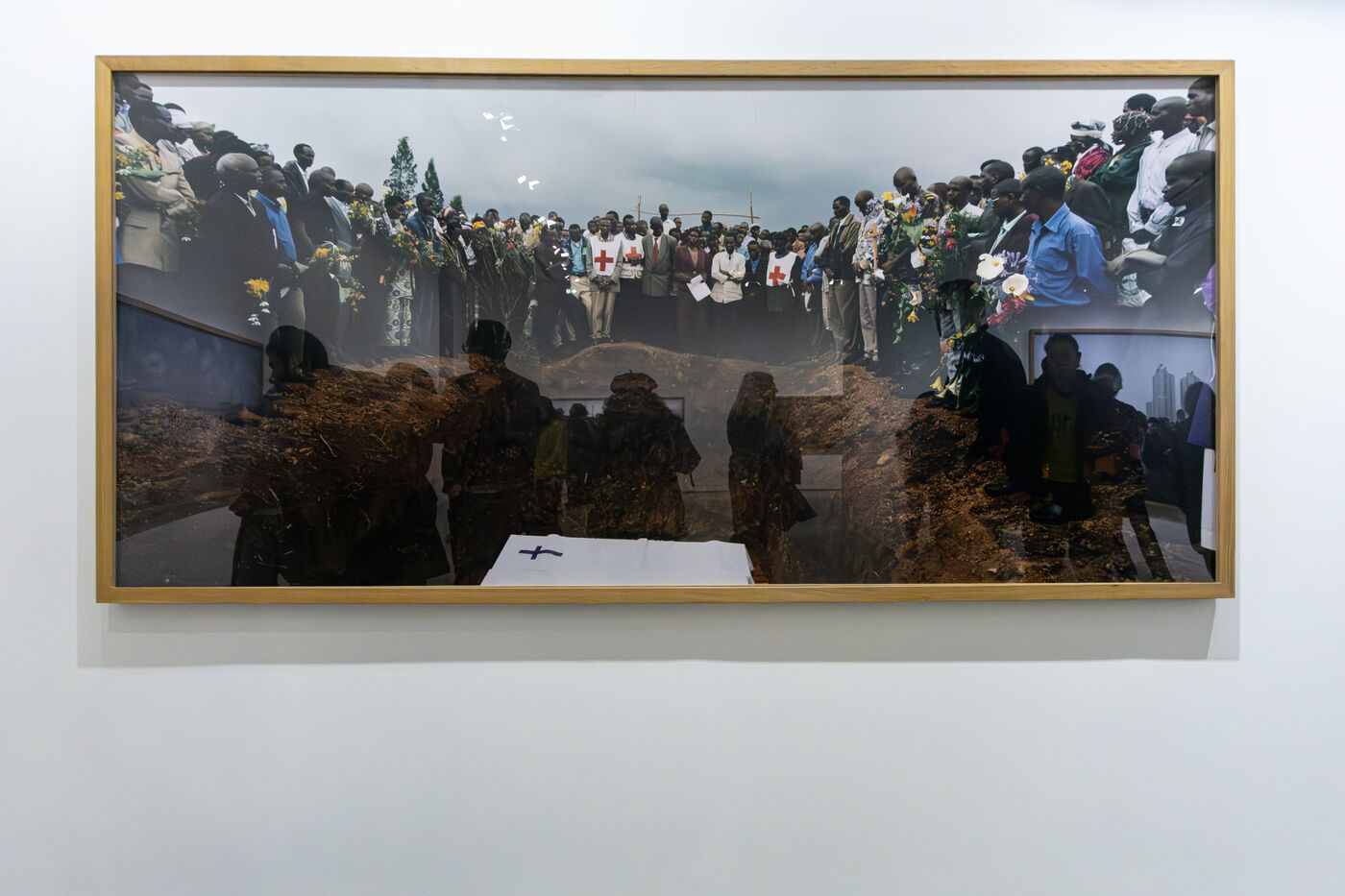
Du 10 octobre 2025 au 25 janvier 2026, le musée présente la première grande exposition parisienne de Luc Delahaye depuis vingt ans. Une rétrospective qui rassemble une quarantaine de photographies de grand format, une vidéo consacrée au conflit syrien et une installation inédite conçue pour l’occasion.
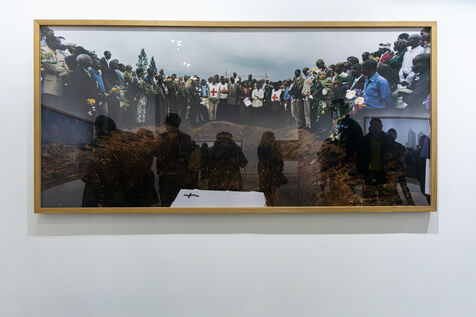
Ancien grand reporter, Luc Delahaye développe depuis plus de vingt-cinq ans une œuvre à la frontière de l’art et du documentaire. Ses images, souvent monumentales, abordent les théâtres de guerre, les crises géopolitiques, les grandes conférences internationales et les lieux du pouvoir. De la guerre d’Irak à celle d’Ukraine, d’Haïti à la Libye, des sommets de l’OPEP aux conférences de la COP, il compose une cartographie visuelle des tensions du monde contemporain.
Certaines de ses photographies sont réalisées en une seule prise, d’autres sont construites sur de longs mois par assemblage numérique. Toutes poursuivent un même geste : rendre visible le réel sans démonstration, dans une forme de retrait presque silencieux. Pour Delahaye, photographier consiste à chercher « une unité avec le réel », une manière de se réunifier au monde par l’image.
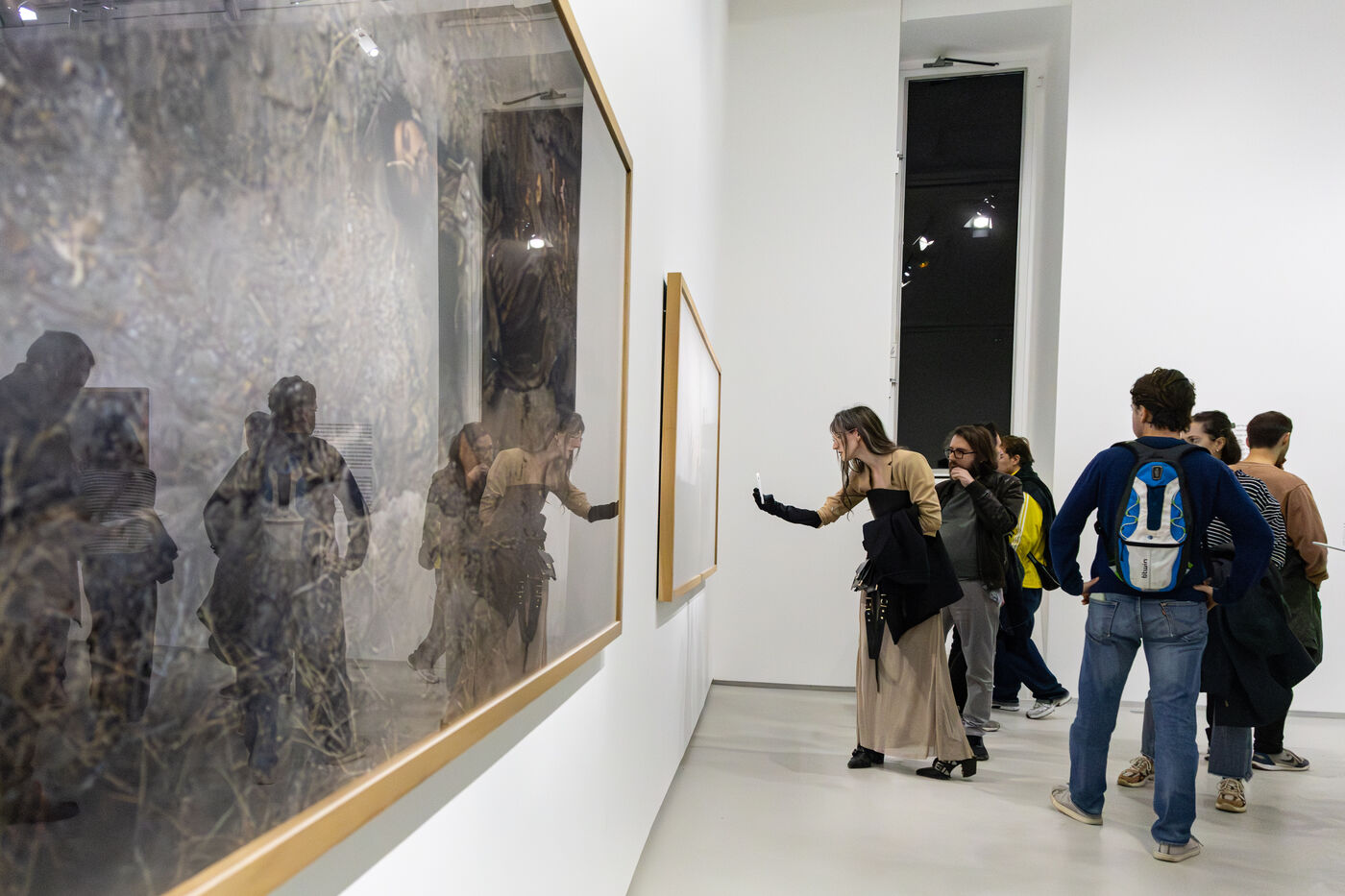
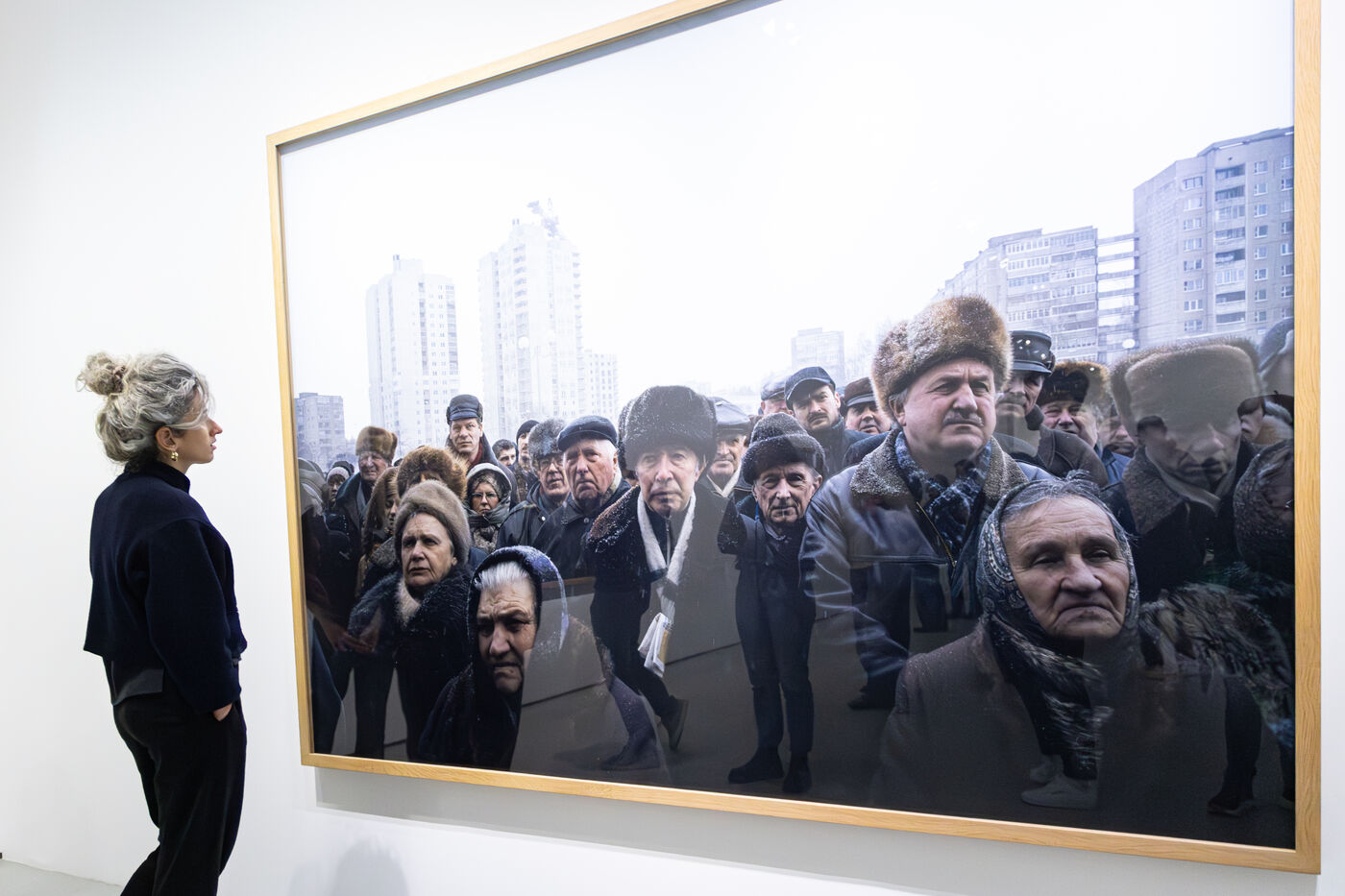
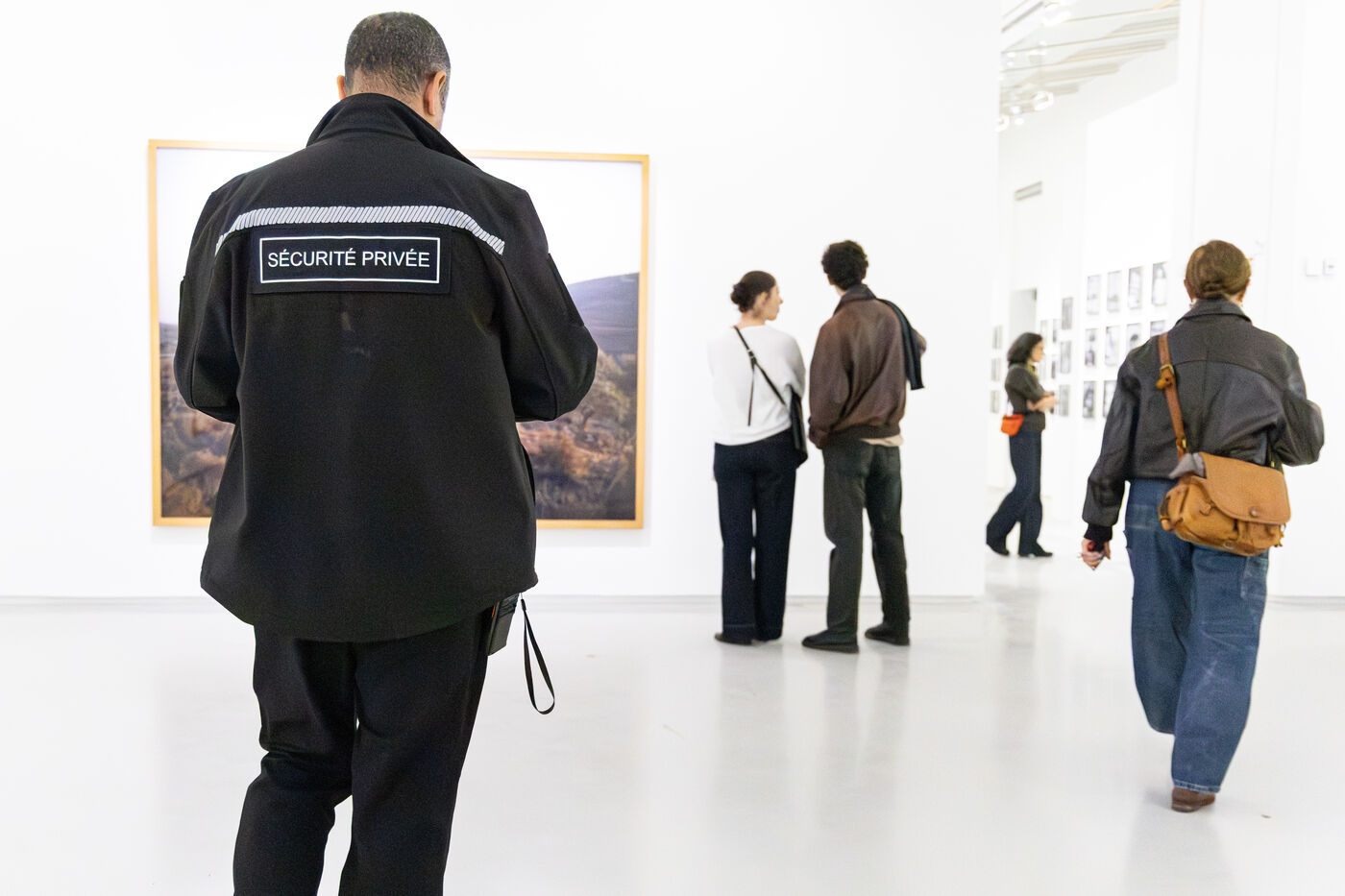
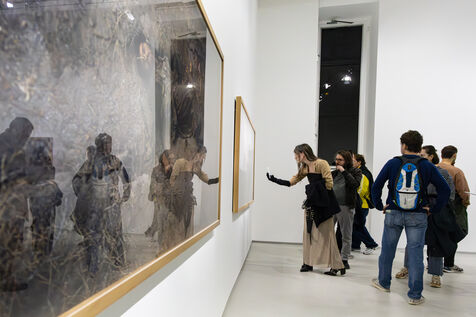
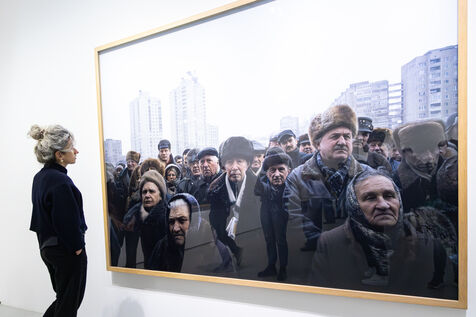
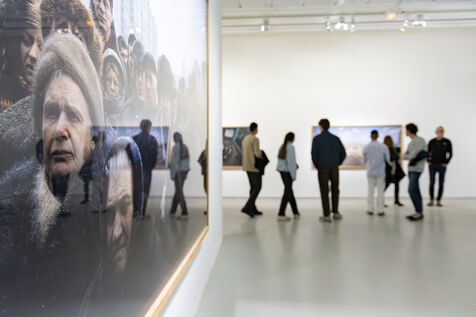
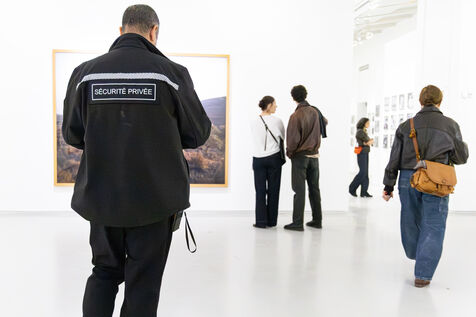
Dans les salles du Jeu de Paume, les visiteurs se déplacent lentement entre ces œuvres monumentales. Ils s’arrêtent, lisent, regardent, reculent, s’approchent, photographient. Leurs corps, parfois minuscules face aux images, composent une autre scène. Une scène secondaire, mais essentielle : celle de la réception, de la confrontation intime entre le public et des images devenues des fragments d’histoire.
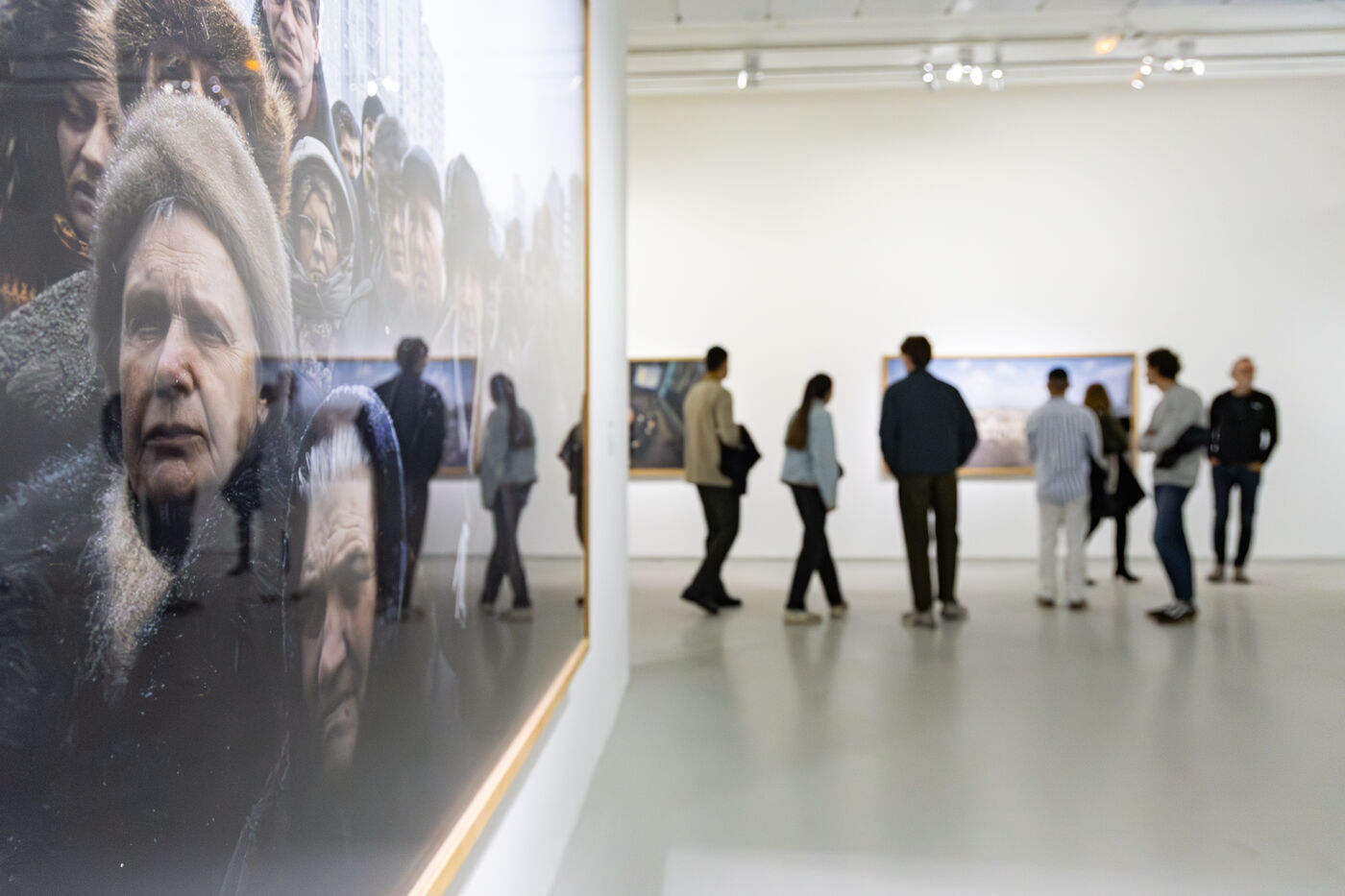
Cette série photographique ne documente pas seulement une exposition. Elle observe un moment de suspension : le temps où des regards contemporains rencontrent des images du monde contemporain. Un espace où la photographie ne montre plus seulement le réel, mais la manière dont ce réel est regardé, interprété, absorbé.
Regarder ceux qui regardent Delahaye, c’est ajouter une strate au récit : celle du présent face aux archives en devenir.
Luc Delahaye at the Jeu de Paume
Paris, Jeu de Paume.
From 10 October 2025 to 25 January 2026, the museum presents Luc Delahaye’s first major Parisian exhibition in twenty years. This retrospective brings together around forty large-format photographs, a video dedicated to the Syrian conflict, and a new installation specially conceived for the occasion.
A former war reporter, Luc Delahaye has developed for more than twenty-five years a body of work situated at the crossroads of art and documentary photography. His images, often monumental in scale, explore theatres of war, geopolitical crises, major international conferences and sites of power. From the war in Iraq to that in Ukraine, from Haiti to Libya, from OPEC summits to COP conferences, he composes a visual cartography of the tensions shaping the contemporary world.
Some of his photographs are made in a single exposure, while others are constructed over long months through digital assemblage. All of them pursue the same gesture: to make reality visible without demonstration, in a form of almost silent withdrawal. For Delahaye, photographing means seeking “a unity with reality,” a way of reuniting oneself with the world through the image.
Inside the galleries of the Jeu de Paume, visitors move slowly among these monumental works. They stop, read, look, step back, move closer, photograph. Their bodies, sometimes dwarfed by the images, compose another scene — a secondary yet essential one: that of reception, of the intimate confrontation between the public and images that have become fragments of history.
This photographic series does not merely document an exhibition. It observes a suspended moment: the time when contemporary gazes encounter images of the contemporary world. A space where photography no longer shows only reality, but the way reality is looked at, interpreted, and absorbed.
To photograph those who look at Delahaye is to add another layer to the narrative that of the present facing archives in the making.