Pour accéder à la série en entier, vous devez vous logger ou demander un compte Hans Lucas en cliquant ici.
Les guêpiers d’Europe dans le Gers
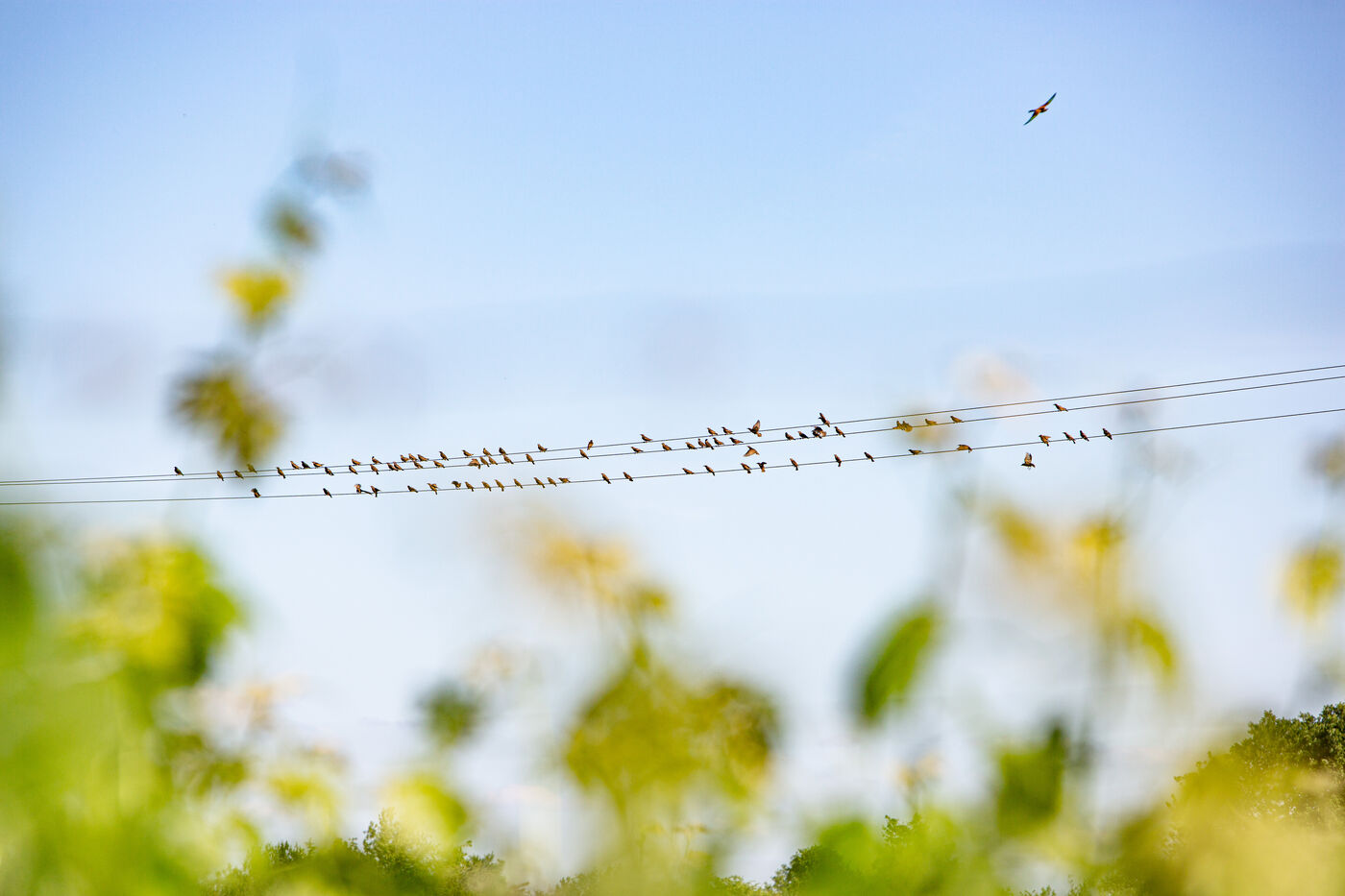
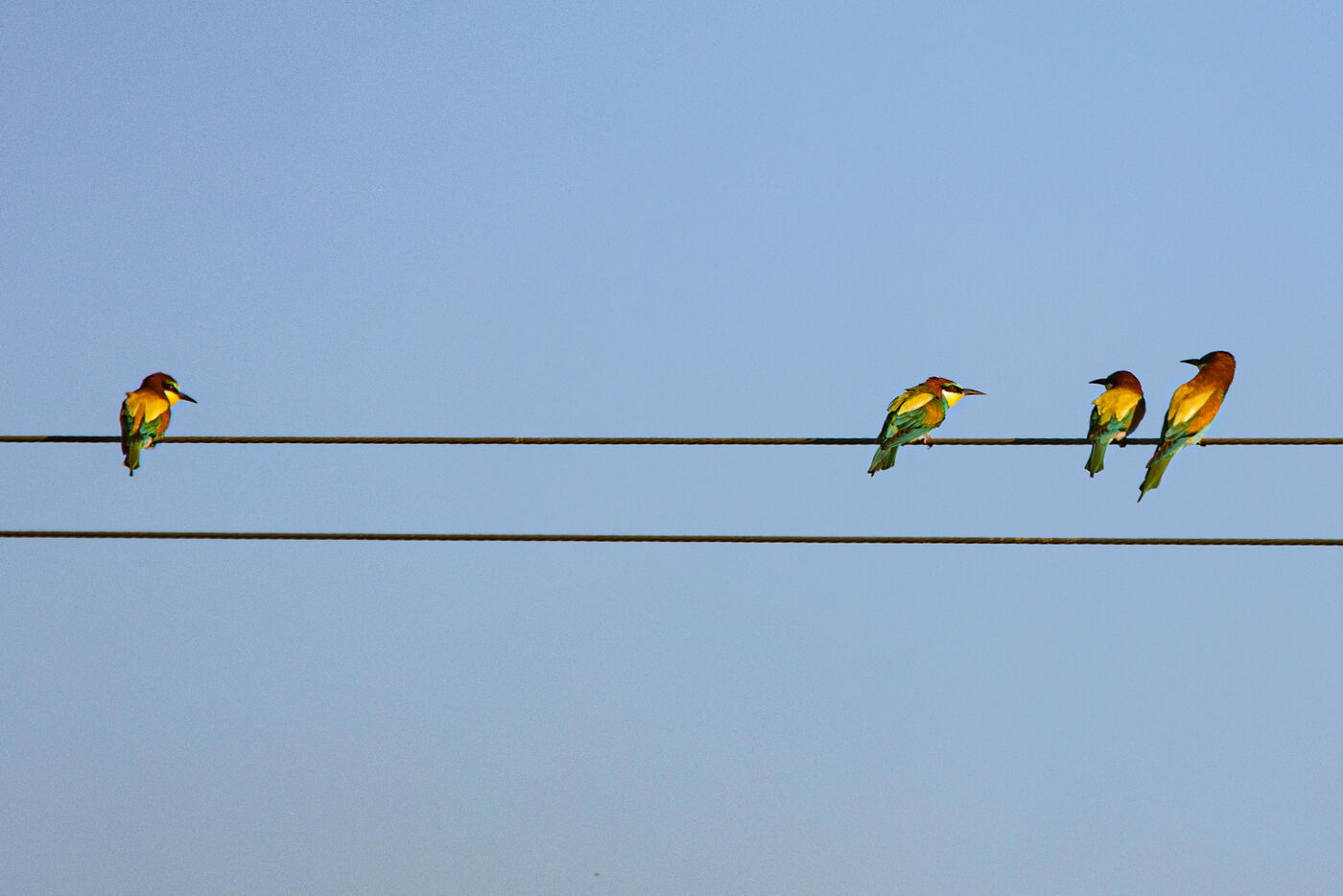
Chaque année, au mois de mai, un oiseau aux couleurs éclatantes revient dans le ciel du Gers : le guêpier d’Europe. Après avoir passé l’hiver en Afrique subsaharienne, ces oiseaux migrateurs rejoignent nos campagnes pour se reproduire, à condition d’y trouver des milieux favorables et suffisamment tranquilles.
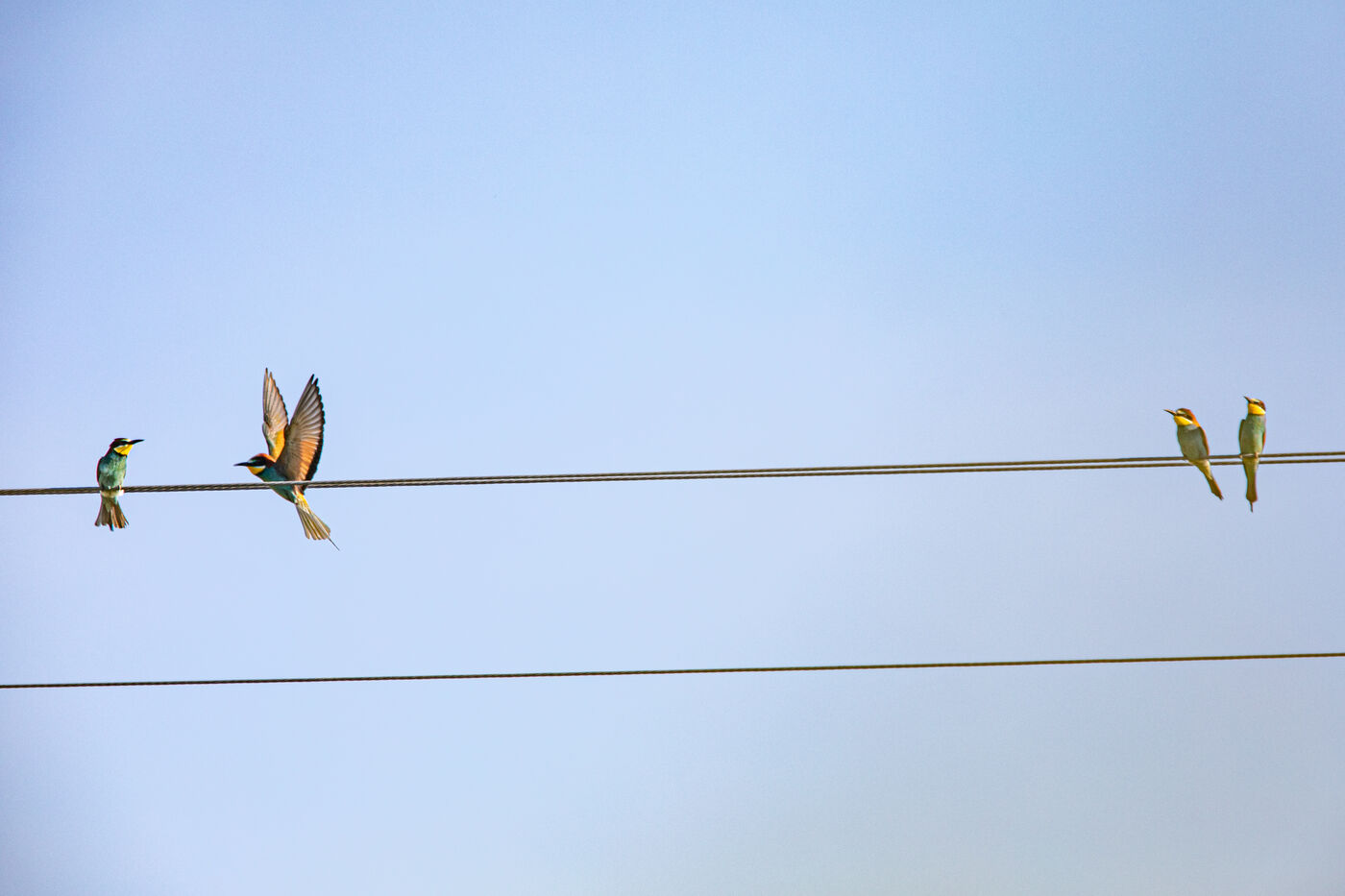
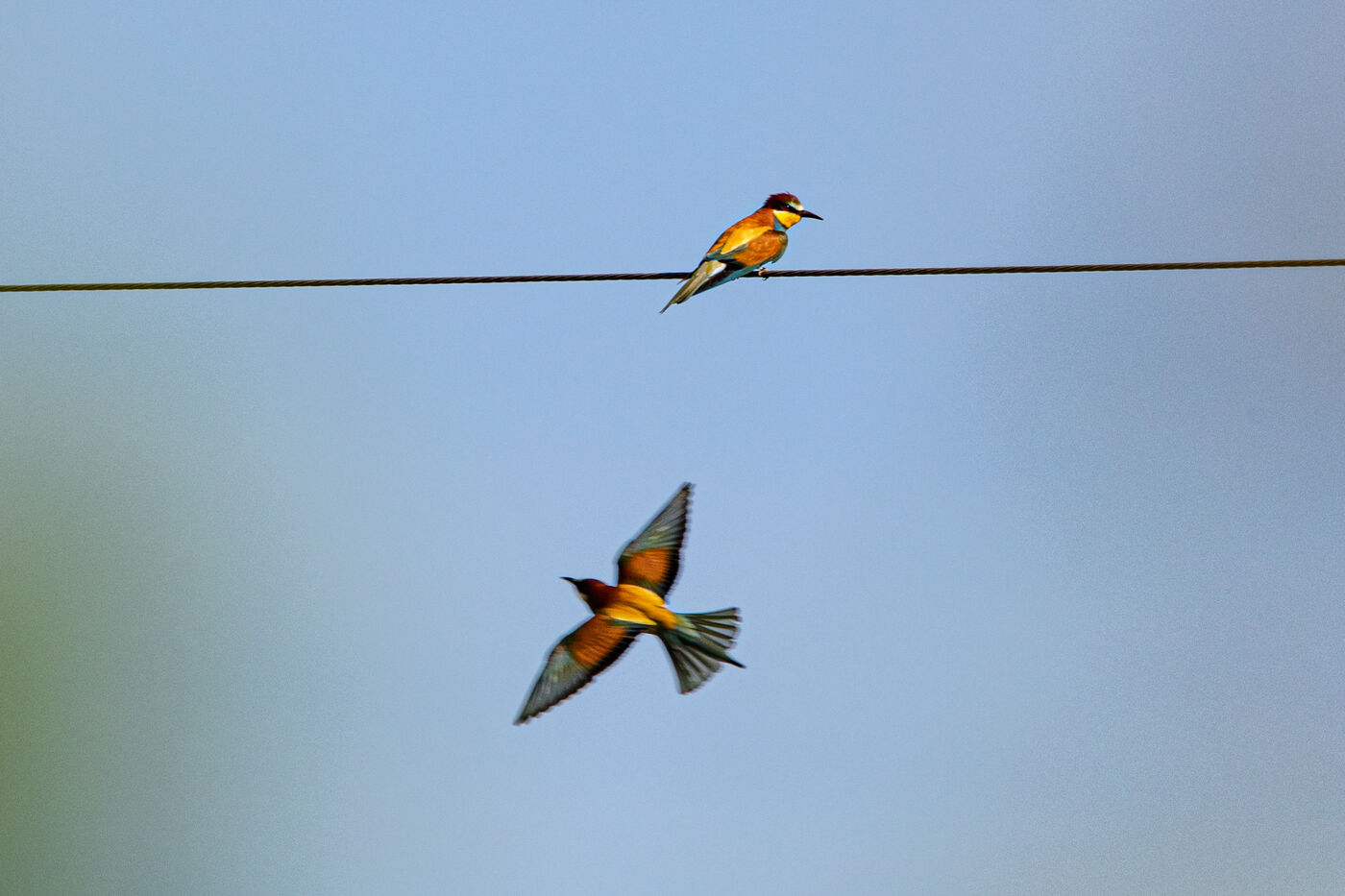
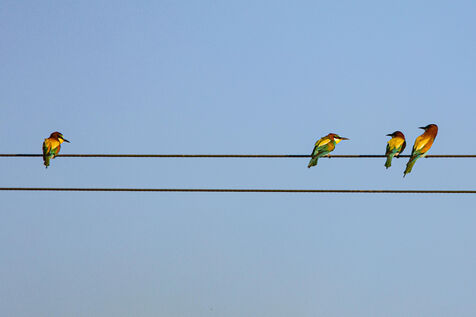
Le guêpier d’Europe (Merops apiaster) est reconnaissable à son plumage spectaculaire mêlant le turquoise, le jaune, le roux et le vert. Derrière cette apparence flamboyante se cache cependant un oiseau discret, organisé et sensible aux perturbations.
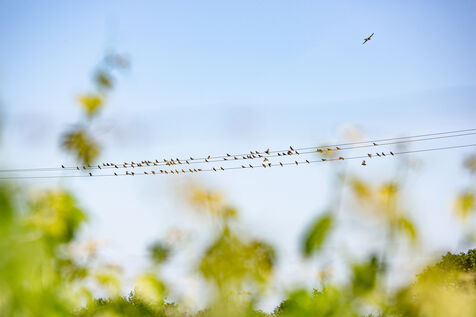
Les guêpiers nichent souvent en colonies dans des terriers creusés à même les parois meubles de talus, de falaises sableuses ou d’anciennes carrières. Chaque couple creuse un long tunnel horizontal, pouvant dépasser un mètre, au fond duquel la femelle dépose généralement entre cinq et sept œufs.
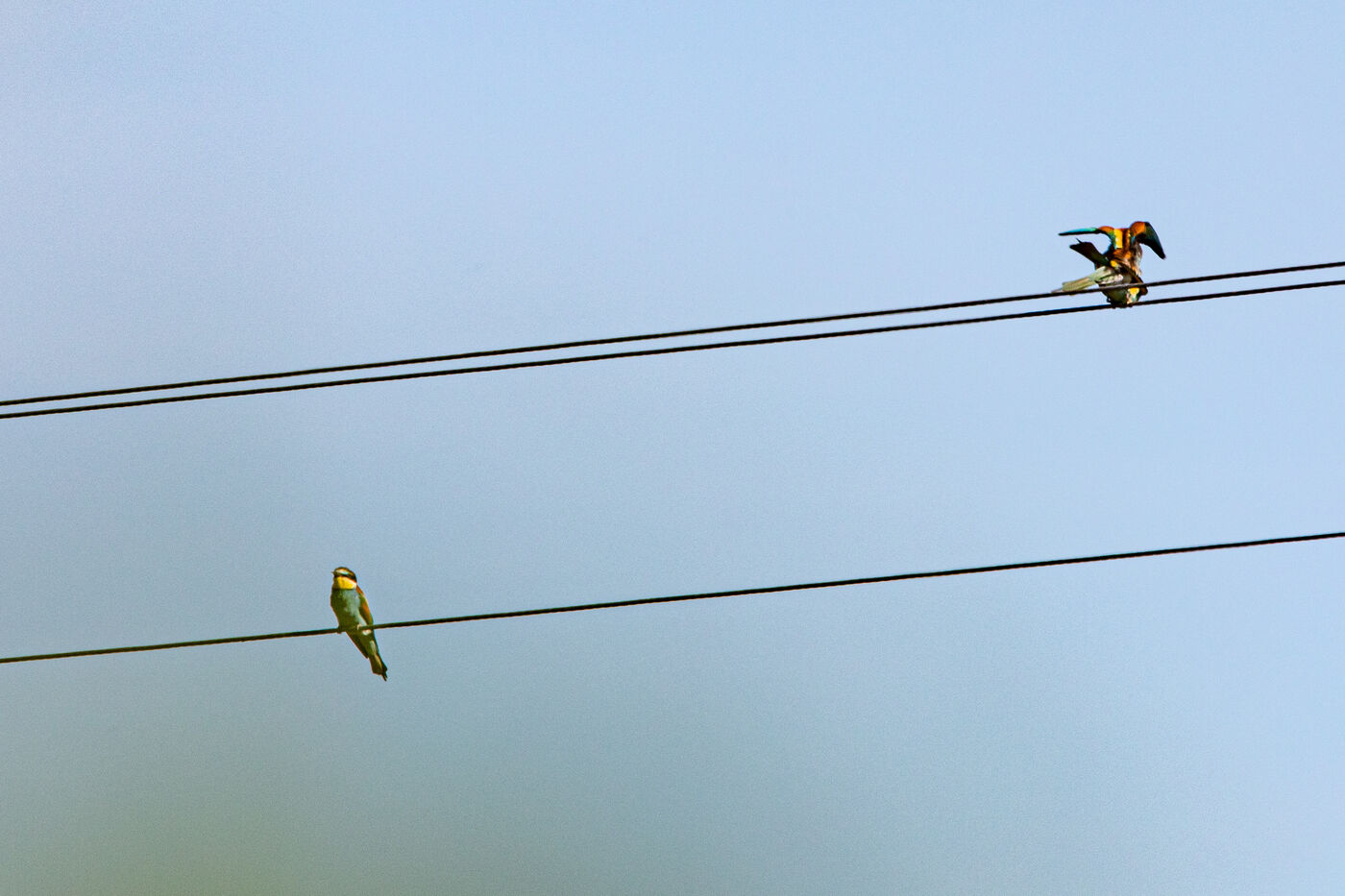
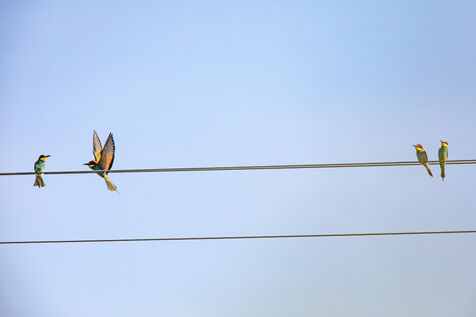
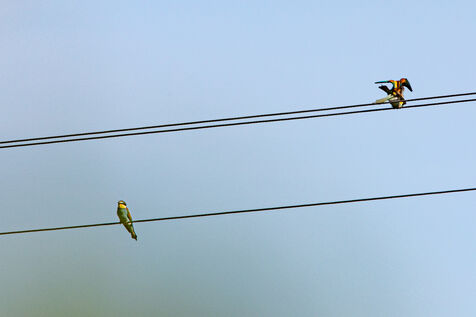
Avant la ponte vient le temps de la séduction. Le mâle offre régulièrement un insecte à la femelle. Ces offrandes nuptiales s’accompagnent de vols en duo, de rapprochements et de chants caractéristiques.
Pendant la période de reproduction, les guêpiers sont particulièrement vulnérables au dérangement. Une présence humaine trop proche ou trop prolongée peut interrompre le nourrissage, tenir les adultes éloignés du terrier et, dans certains cas, provoquer l’abandon du site ou de la nichée.
C’est pourquoi je ne révélerai pas l’endroit où j’ai eu la chance de les observer et de les photographier. J’ai travaillé depuis un affût, à bonne distance, en veillant à ne pas modifier leur comportement. Préserver la confidentialité des sites de nidification participe aussi à leur protection.
Observer ces oiseaux exige de la patience et de la discrétion. Les admirer silencieusement, sans s’approcher des terriers, permet de respecter leur reproduction et de favoriser leur retour, année après année, dans les campagnes gersoises.
European Bee-eaters
Every year in May, a brightly coloured bird returns to the skies above the Gers: the European bee-eater. After spending the winter in sub-Saharan Africa, these migratory birds return to the countryside of south-western France to breed, provided they can find suitable and sufficiently undisturbed habitats.
The European bee-eater (Merops apiaster) is instantly recognisable by its spectacular plumage, combining shades of turquoise, yellow, chestnut and green. Behind this flamboyant appearance, however, lies a discreet, highly organised bird that is sensitive to disturbance.
Bee-eaters often nest in colonies, digging burrows into soft earthen banks, sandy cliffs or disused quarries. Each pair excavates a long horizontal tunnel, which can extend for more than a metre, with a nesting chamber at the end where the female generally lays between five and seven eggs.
Before the eggs are laid comes the courtship period. The male regularly presents the female with an insect. These courtship offerings are accompanied by synchronised flights, close interactions and distinctive calls.
During the breeding season, bee-eaters are particularly vulnerable to disturbance. A human presence that is too close or prolonged can interrupt feeding, keep the adults away from their burrow and, in some cases, cause them to abandon the nesting site or their brood.
For this reason, I will not reveal the location where I had the privilege of observing and photographing them. I worked from inside a hide and at a safe distance, taking care not to alter their natural behaviour. Keeping nesting sites confidential is also an important part of protecting them.
Observing these birds requires patience and discretion. Watching them quietly, without approaching their burrows, helps protect their breeding cycle and encourages their return, year after year, to the countryside of the Gers.