Pour accéder à la série en entier, vous devez vous logger ou demander un compte Hans Lucas en cliquant ici.
Du jazz à la poésie
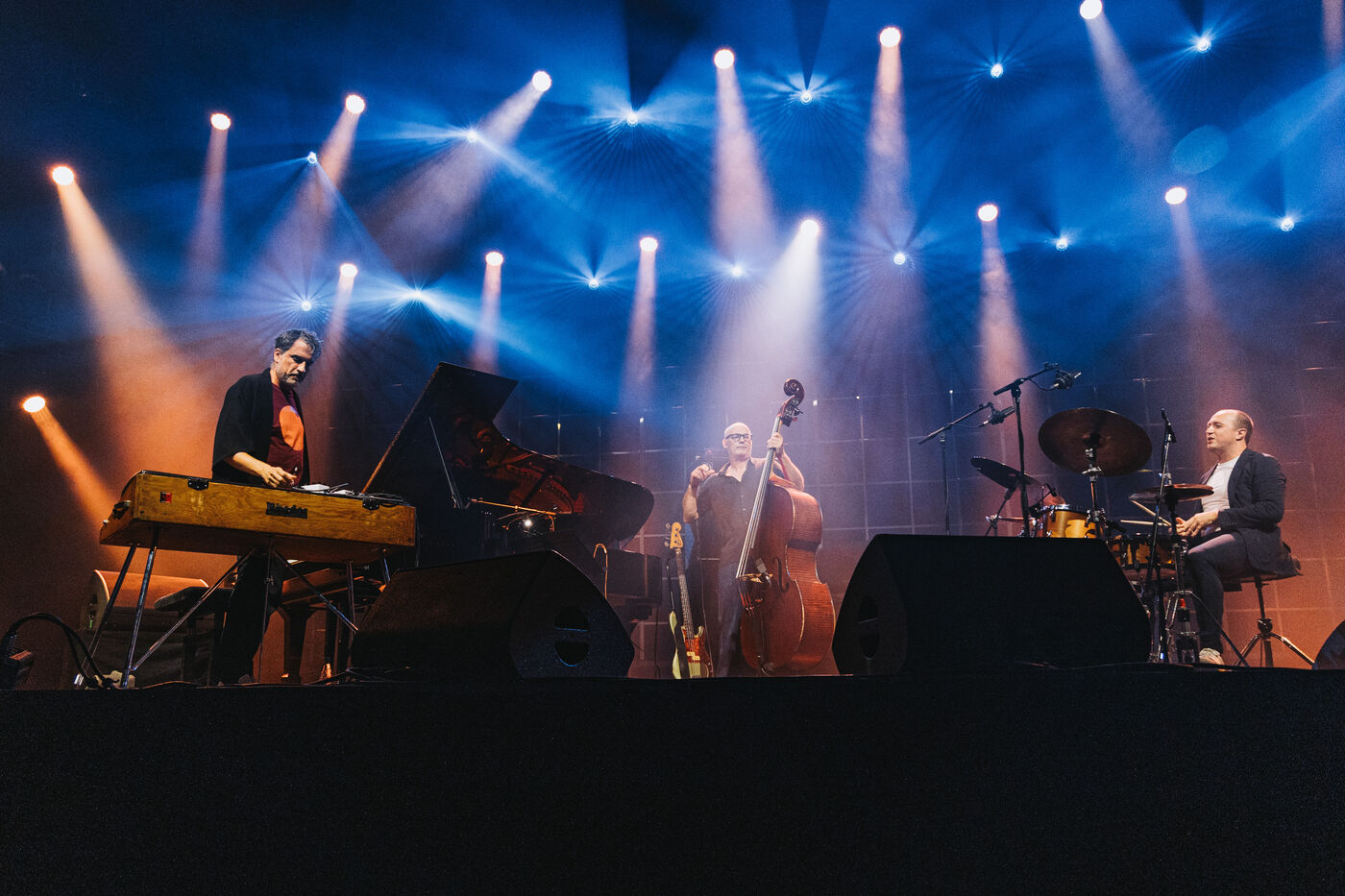
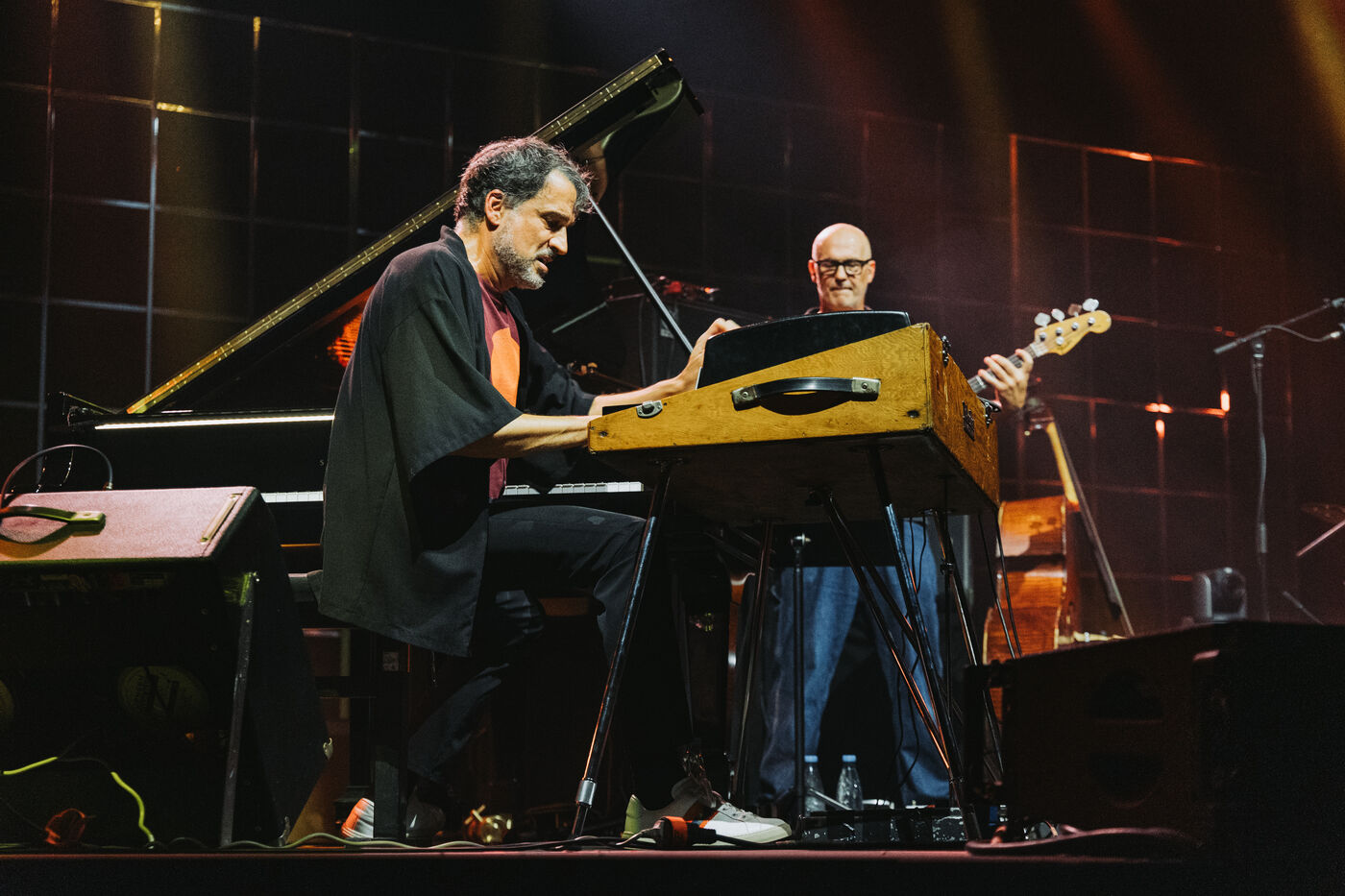
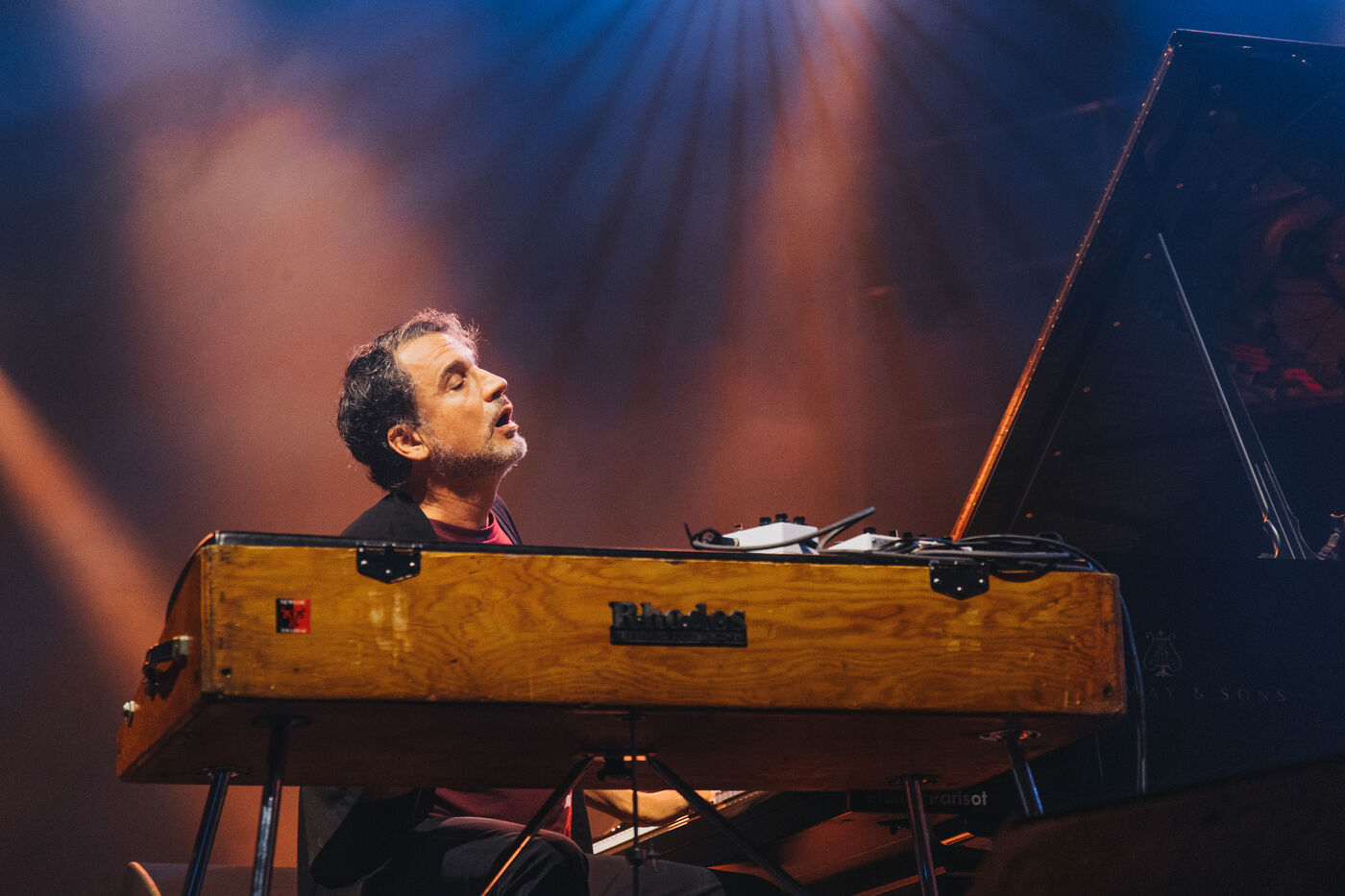
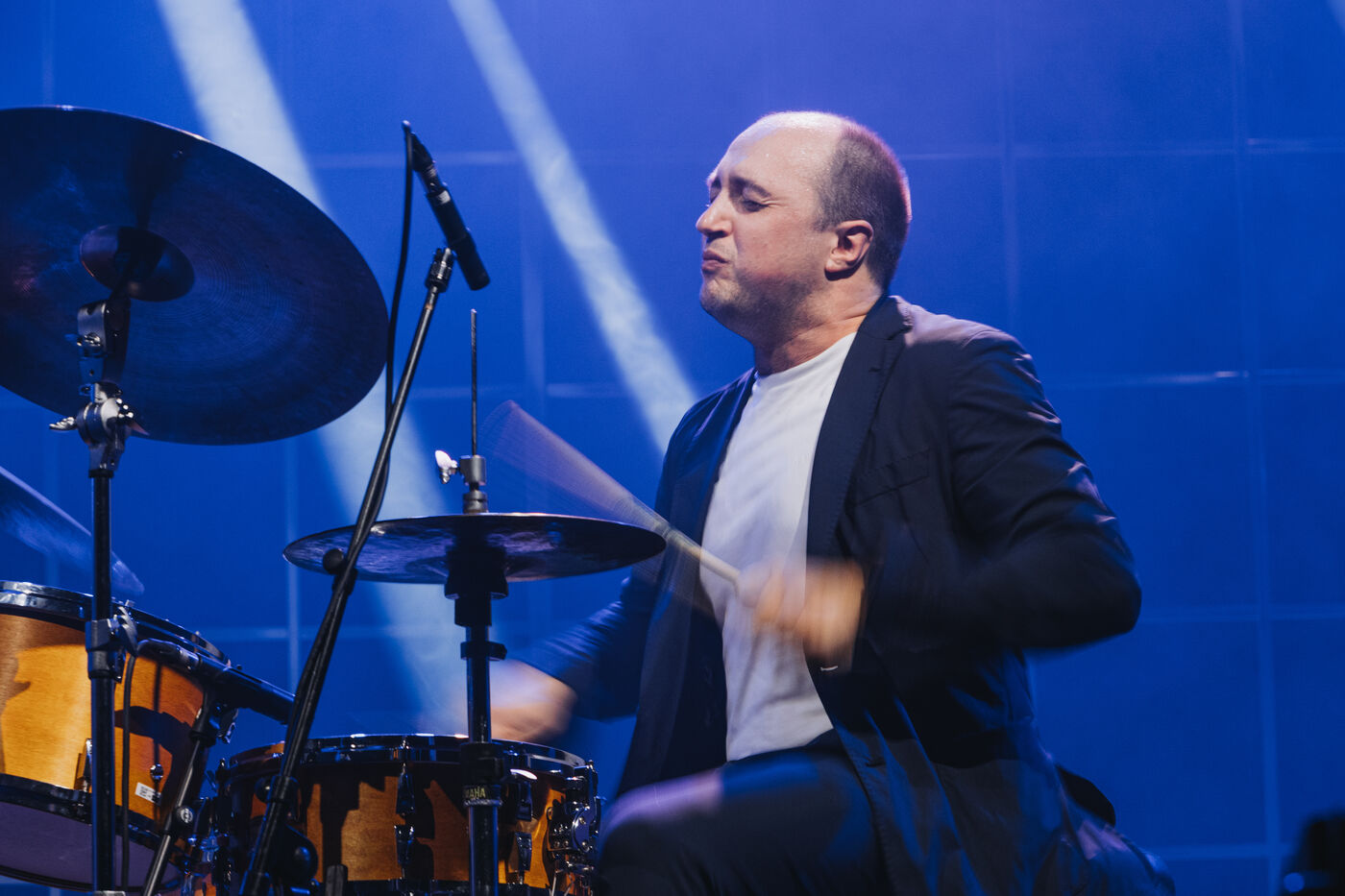
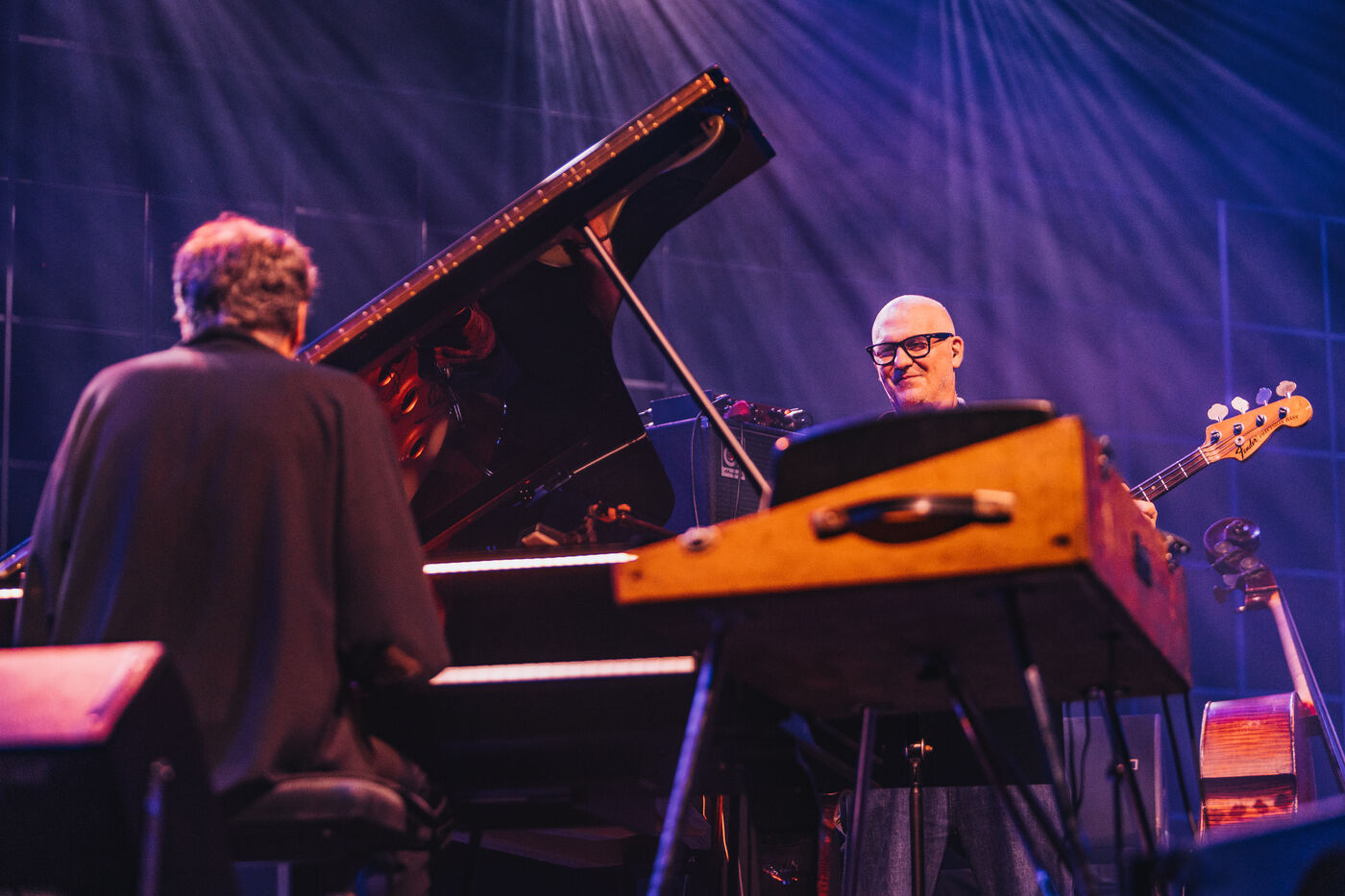
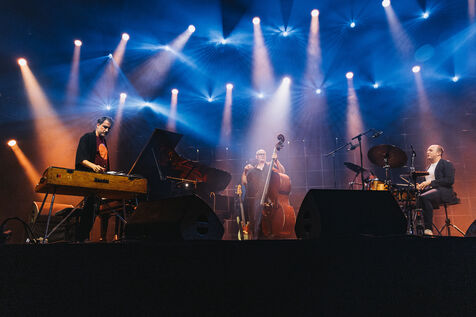
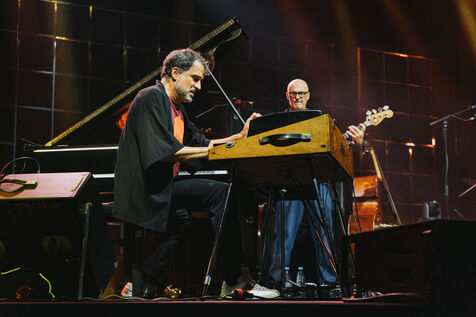
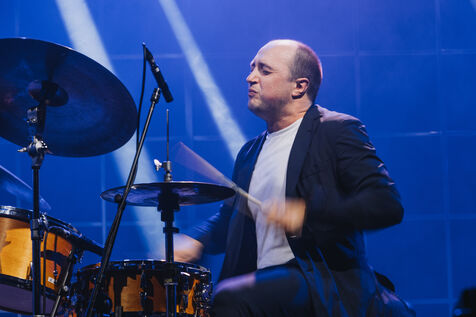
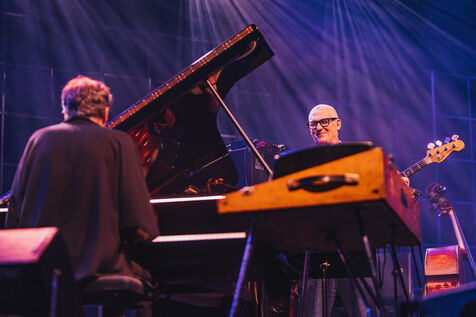
Retour en images sur le concert de Baptiste Trotignon à Jazz in Marciac. Entouré de Jérôme Regard à la basse et de Raphaël Pannier à la batterie, le pianiste a présenté Art Is Simple, un répertoire construit autour de mélodies épurées et d’un dialogue permanent entre les trois musiciens.
Sur scène, le trio évolue avec une grande liberté. Le piano dessine les lignes mélodiques, la basse leur donne profondeur et mouvement, tandis que la batterie joue sur les contrastes, entre retenue et énergie. L’équilibre repose sur l’écoute : chaque musicien intervient avec précision, laissant aux notes comme aux silences le temps de prendre toute leur place.
Derrière une apparente simplicité, la musique révèle de nombreuses nuances. Les compositions de Baptiste Trotignon circulent entre jazz contemporain, influences pop et accents rock. L’écriture demeure présente, mais elle ne ferme jamais la porte à l’improvisation. Chaque morceau devient ainsi un terrain d’échange, susceptible de se transformer au fil du concert.
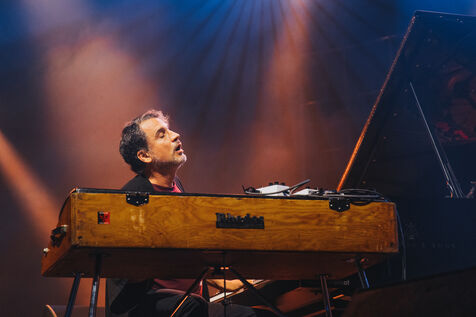
La soirée change ensuite d’atmosphère avec l’arrivée d’Arthur Teboul, chanteur et parolier du groupe Feu! Chatterton. Pour cette seconde partie, Jérôme Regard et Raphaël Pannier quittent la scène. Baptiste Trotignon reste seul au piano pour accompagner le chanteur.
Dans ce face-à-face dépouillé, la voix et les mots d’Arthur Teboul rencontrent le jeu sensible du pianiste. Sans autre instrumentation, leur complicité apparaît avec davantage de force. Le piano soutient le chant, lui répond ou s’efface pour laisser résonner le texte. Les deux artistes installent une proximité particulière avec le public, à la frontière du récital, de la chanson et de l’improvisation.
Cette parenthèse en duo offre un contraste avec l’énergie collective du trio. Après la richesse des échanges instrumentaux, la scène se resserre autour de deux présences, d’une voix et d’un piano. La sobriété de la mise en place renforce l’intensité de l’interprétation et souligne leur goût commun pour la poésie et la chanson française.
De la liberté du trio à l’intimité du duo, Baptiste Trotignon aura donné à entendre plusieurs facettes de son univers. La venue d’Arthur Teboul a apporté une dimension inattendue à la soirée, conclue par un moment complice et suspendu.
From Jazz to Poetry
A photographic look back at Baptiste Trotignon’s concert at Jazz in Marciac. Joined by Jérôme Regard on bass and Raphaël Pannier on drums, the pianist presented Art Is Simple, a repertoire built around understated melodies and a constant dialogue between the three musicians.
Onstage, the trio performed with remarkable freedom. The piano traced the melodic lines, the bass gave them depth and momentum, while the drums played with contrasts, shifting between restraint and energy. Their balance rested on attentive listening: each musician entered with precision, allowing both the notes and the silences the time and space they needed.
Beneath its apparent simplicity, the music revealed a wealth of nuance. Baptiste Trotignon’s compositions moved between contemporary jazz, pop influences and touches of rock. The writing remained clearly present, yet never closed the door on improvisation. Each piece became a space for exchange, free to evolve over the course of the performance.
The atmosphere then shifted with the arrival of Arthur Teboul, singer and lyricist of the band Feu! Chatterton. For this second part of the evening, Jérôme Regard and Raphaël Pannier left the stage, while Baptiste Trotignon remained alone at the piano to accompany the singer.
In this stripped-back encounter, Arthur Teboul’s voice and words met the pianist’s sensitive playing. With no other instrumentation, the connection between them emerged with even greater intensity. The piano supported the vocals, responded to them or receded to let the words resonate. Together, the two artists created a special sense of intimacy with the audience, somewhere between recital, French chanson and improvisation.
This interlude as a duo contrasted with the collective energy of the trio. After the richness of the instrumental exchanges, the stage narrowed its focus to two performers, one voice and one piano. The sparseness of the arrangement heightened the intensity of the performance and highlighted their shared affinity for poetry and French song.
From the freedom of the trio to the intimacy of the duo, Baptiste Trotignon revealed several facets of his musical world. Arthur Teboul’s appearance brought an unexpected dimension to the evening, which ended with a moment of rare connection, seemingly suspended in time.