Un dessin pour l’histoire
Dans les procès pour VSS, les journalistes sont en première ligne. Ils assistent, jour après jour, à ce que l’humanité peut produire de plus violent.
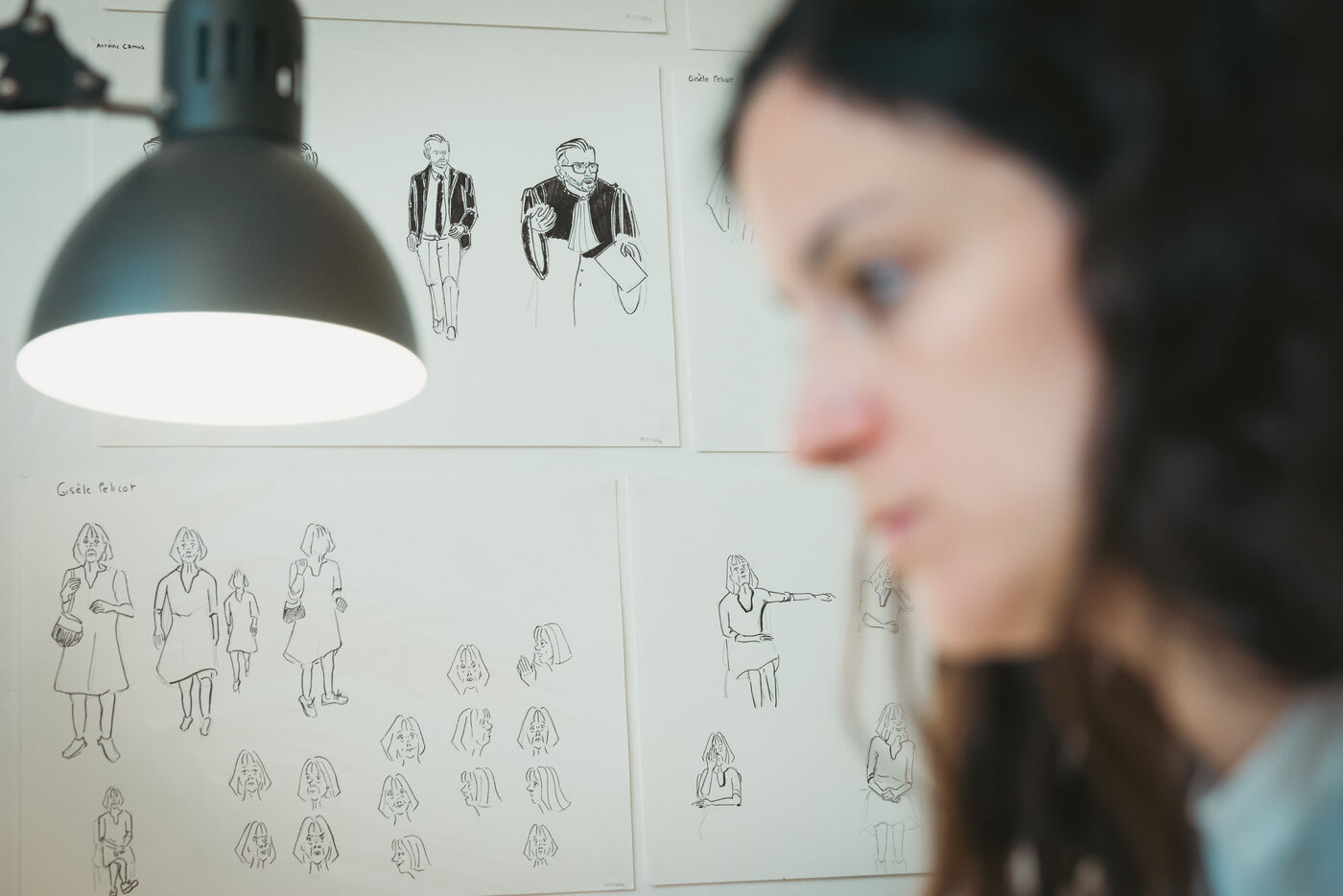
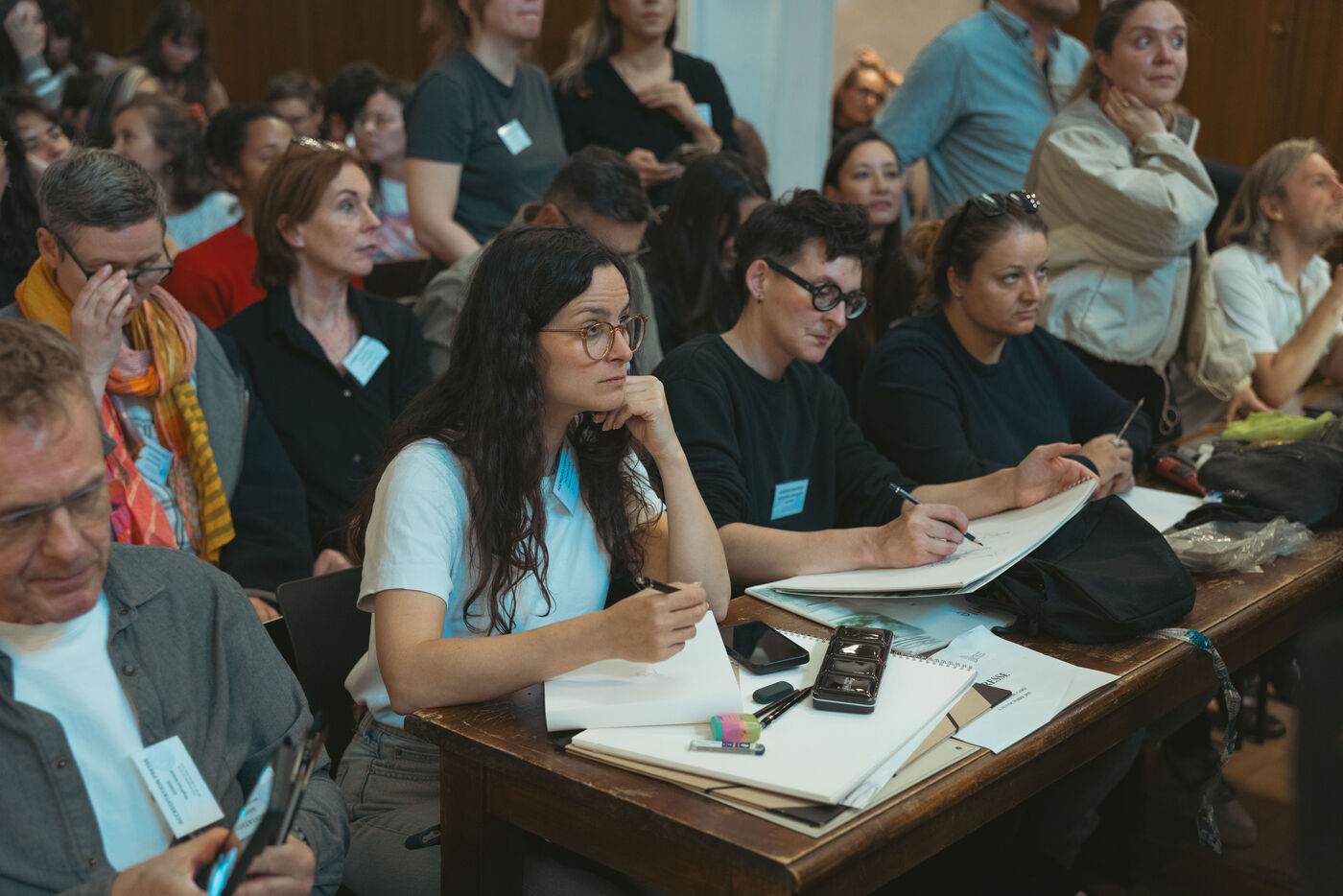
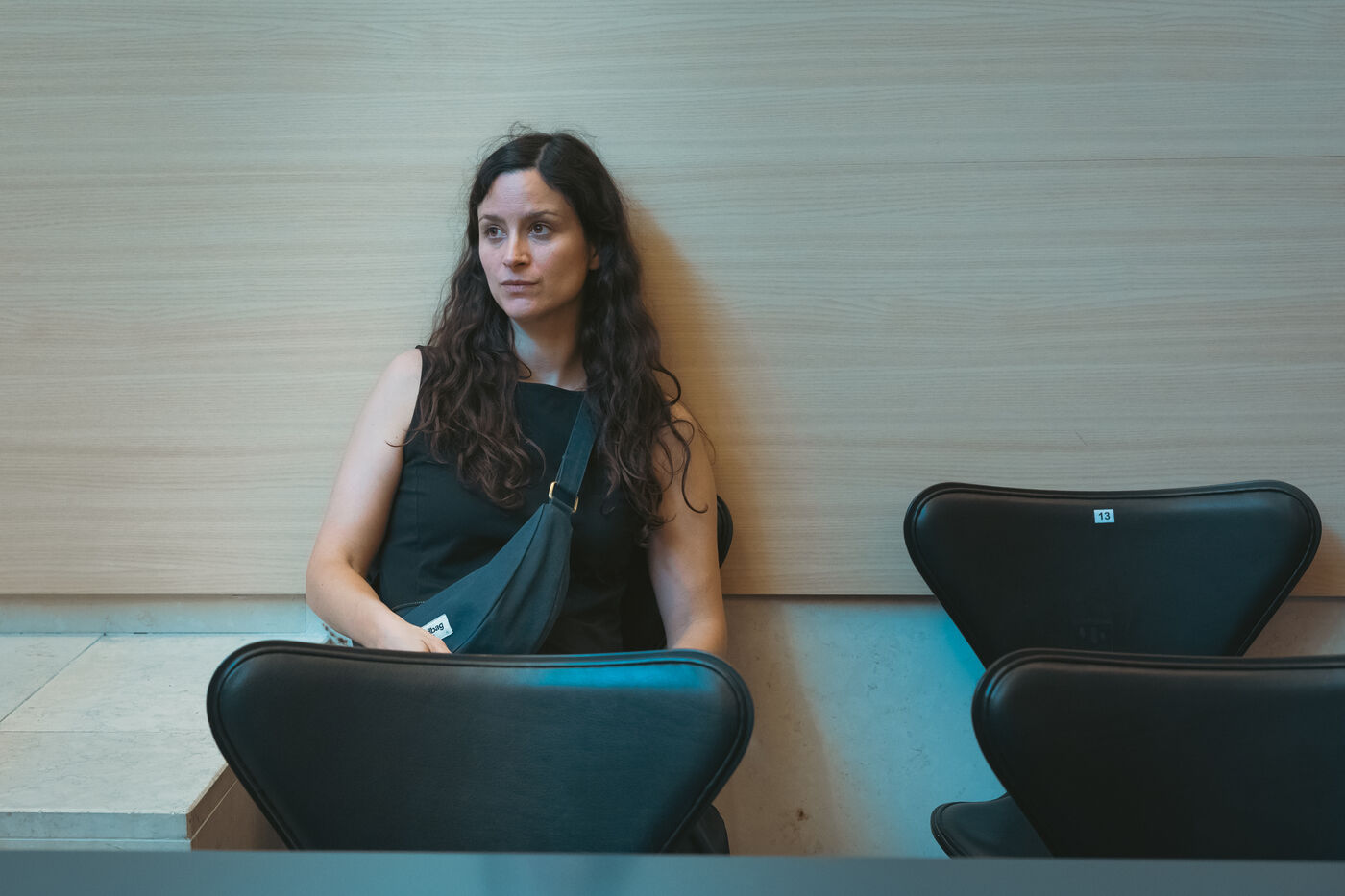
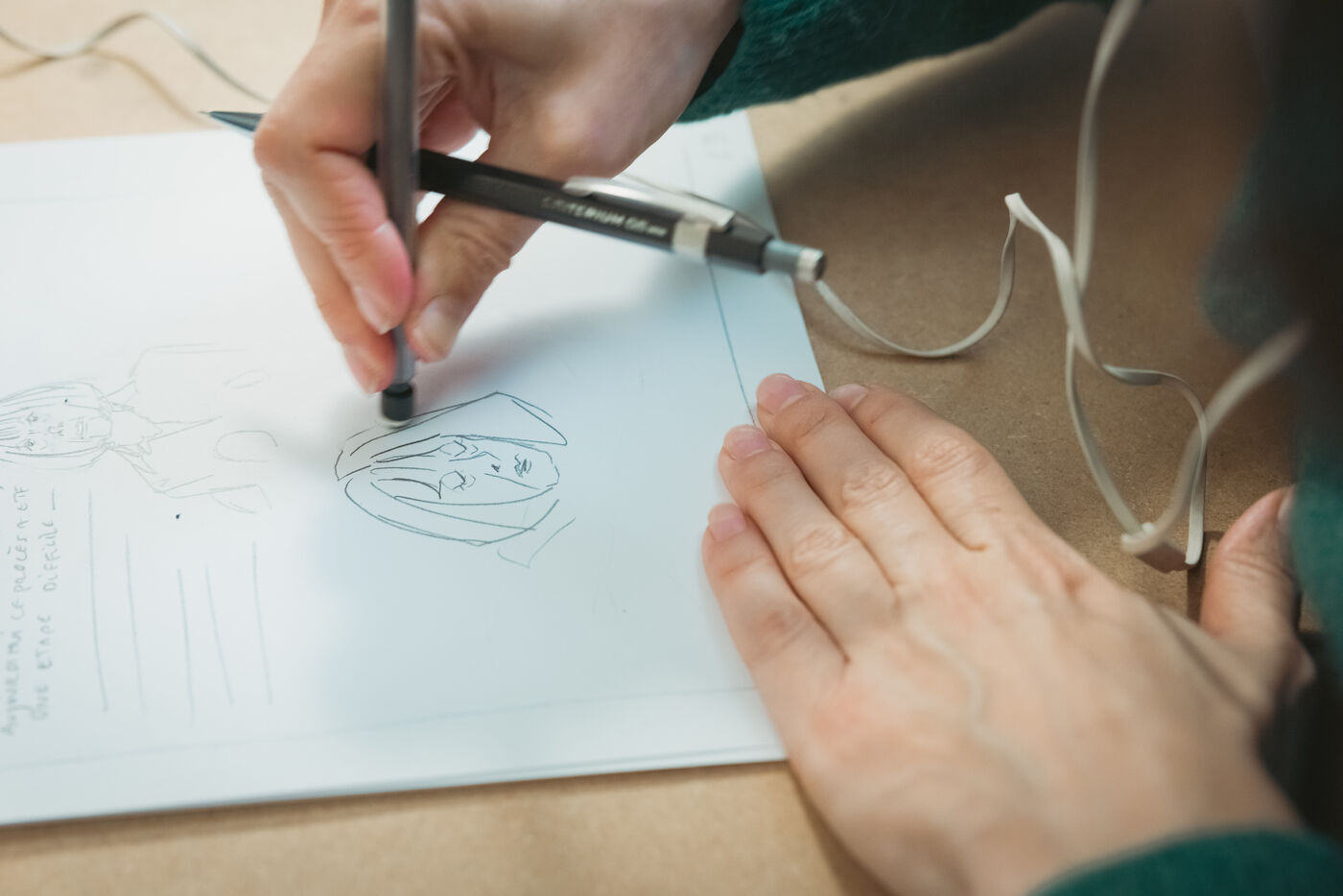
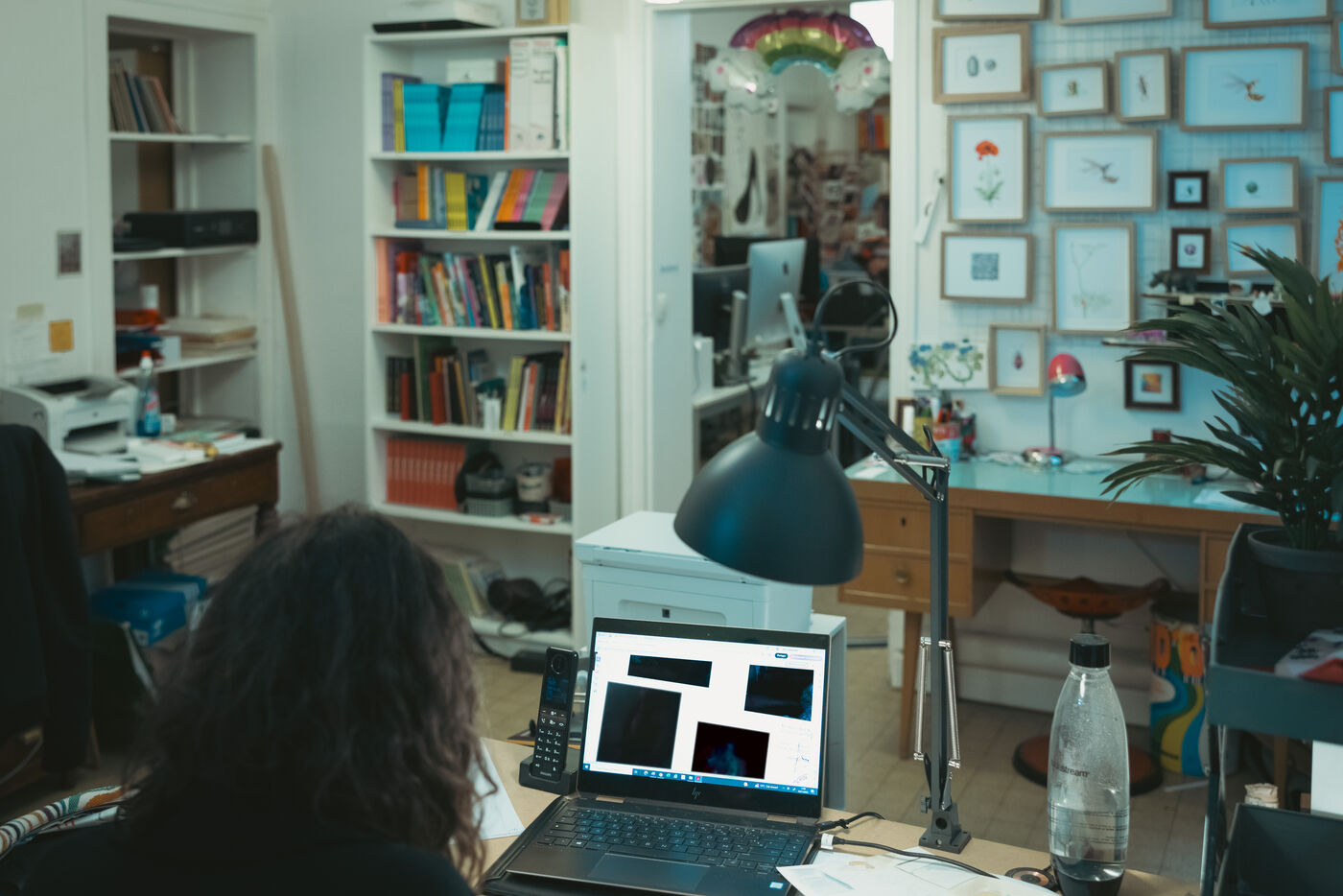
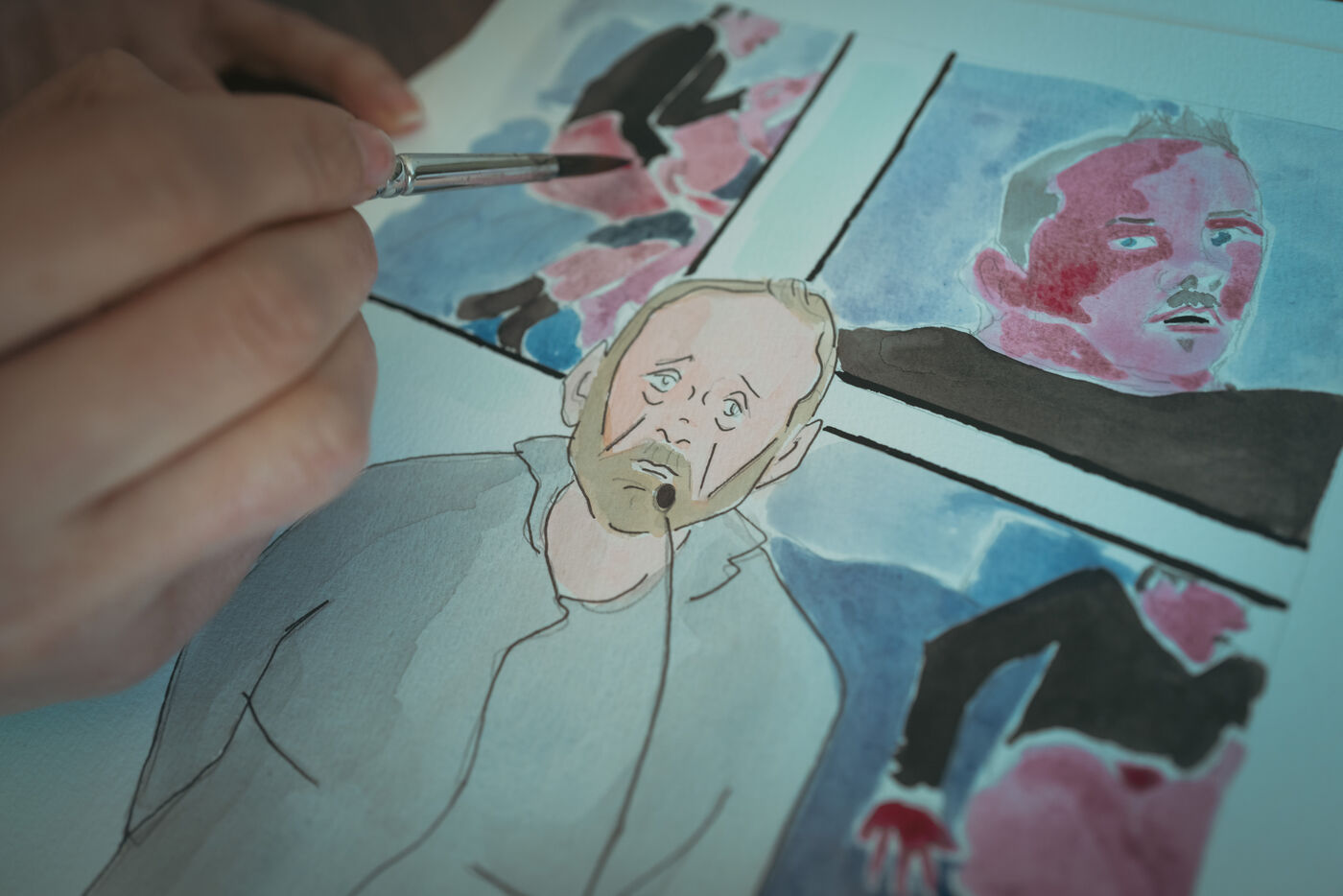
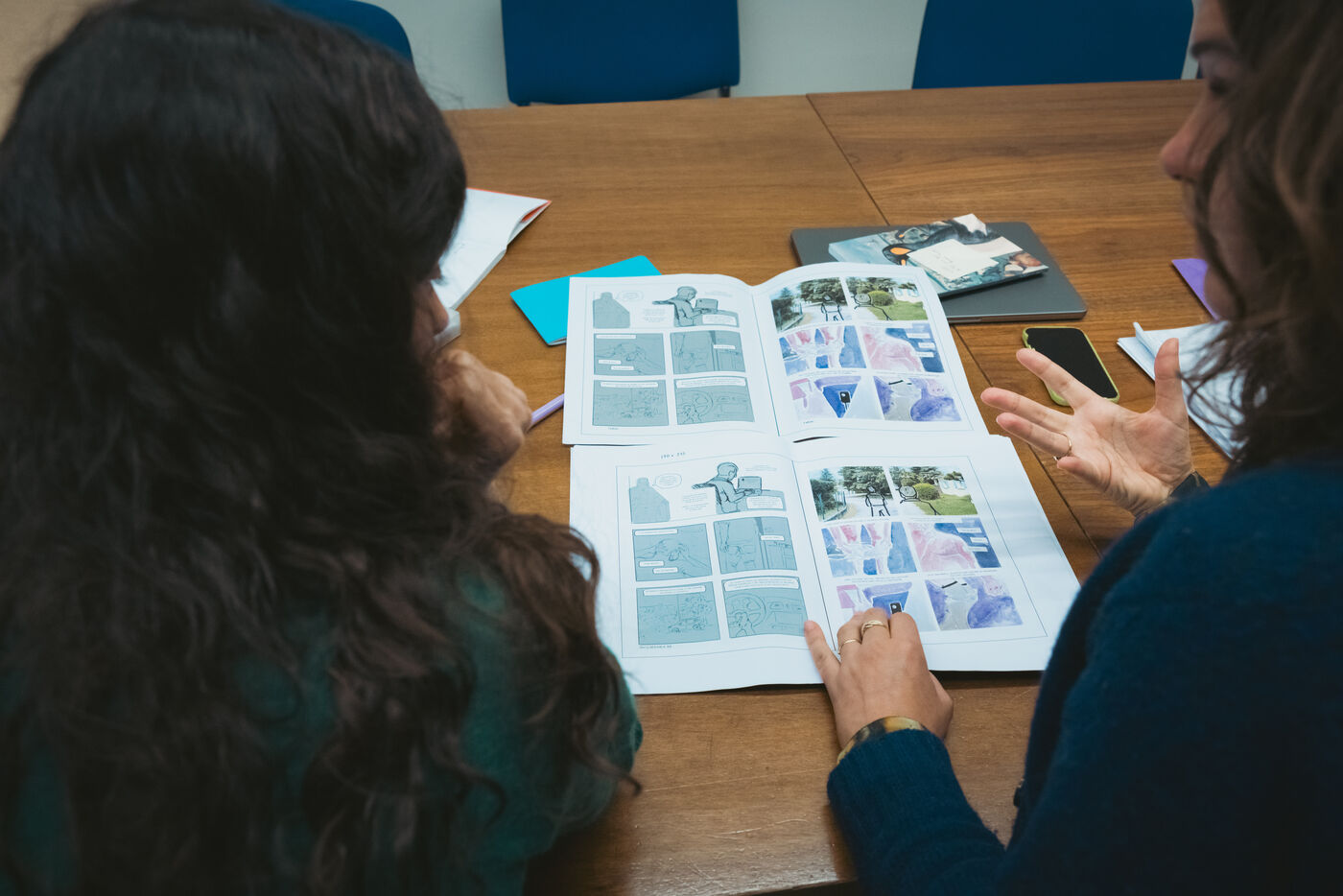
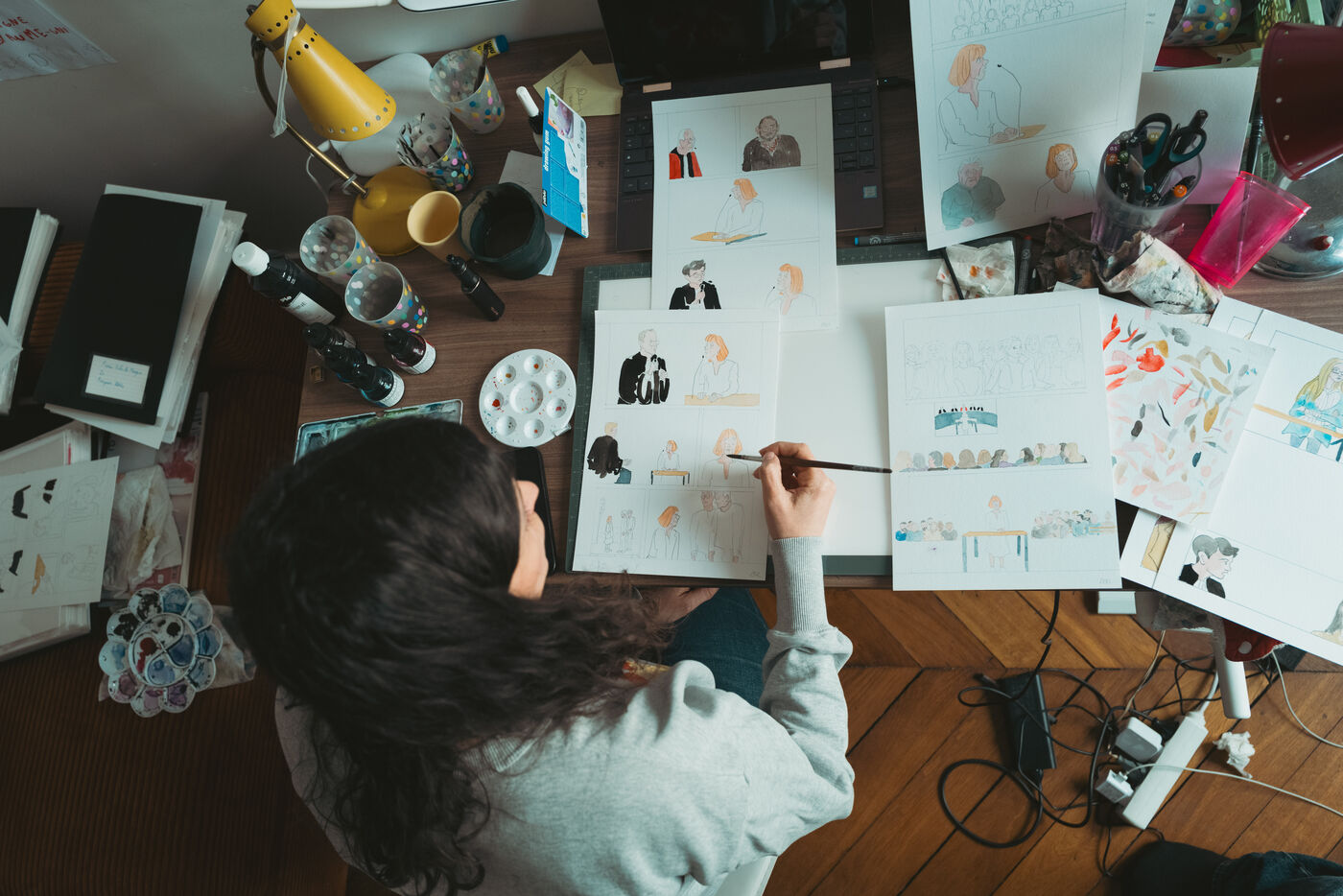
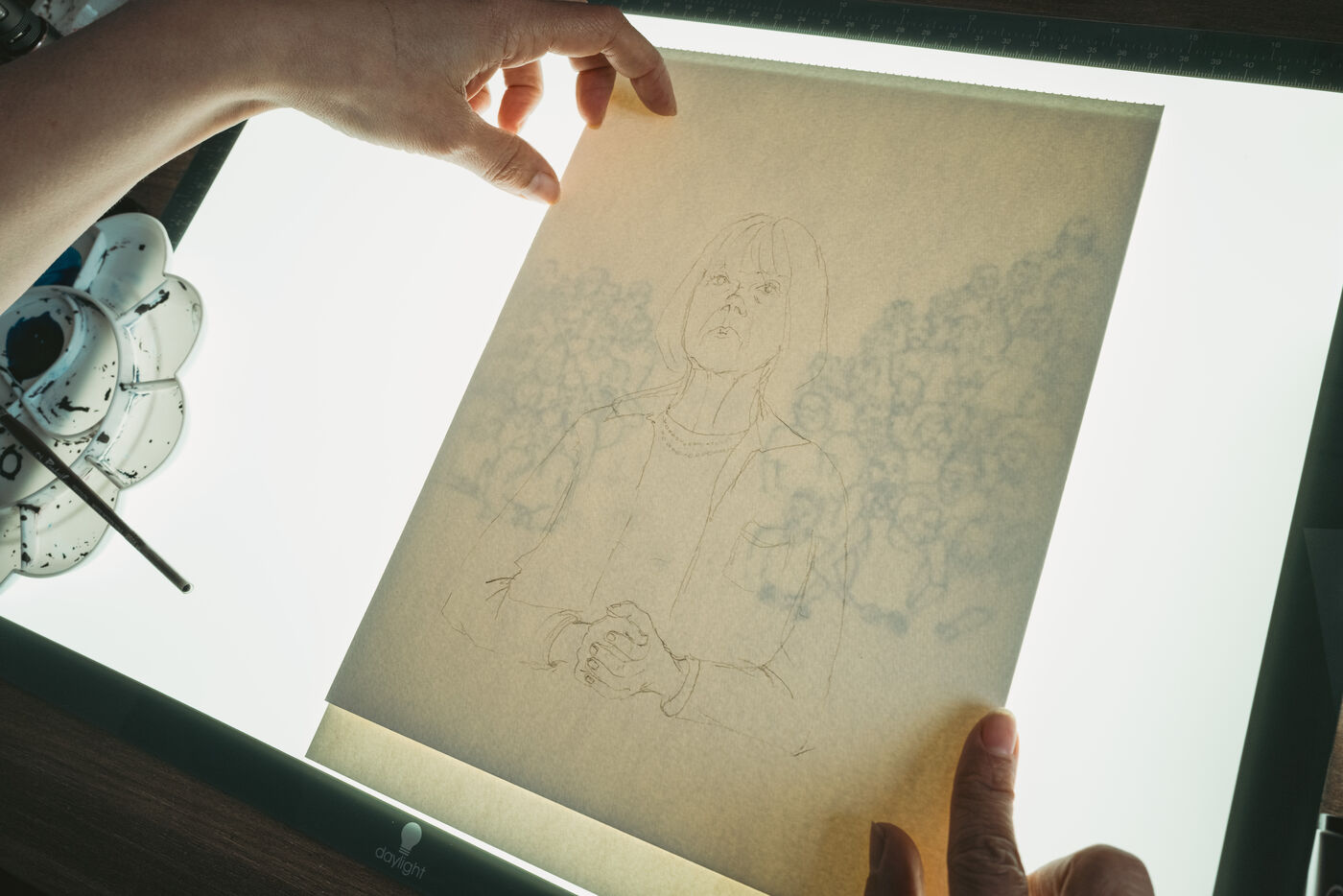
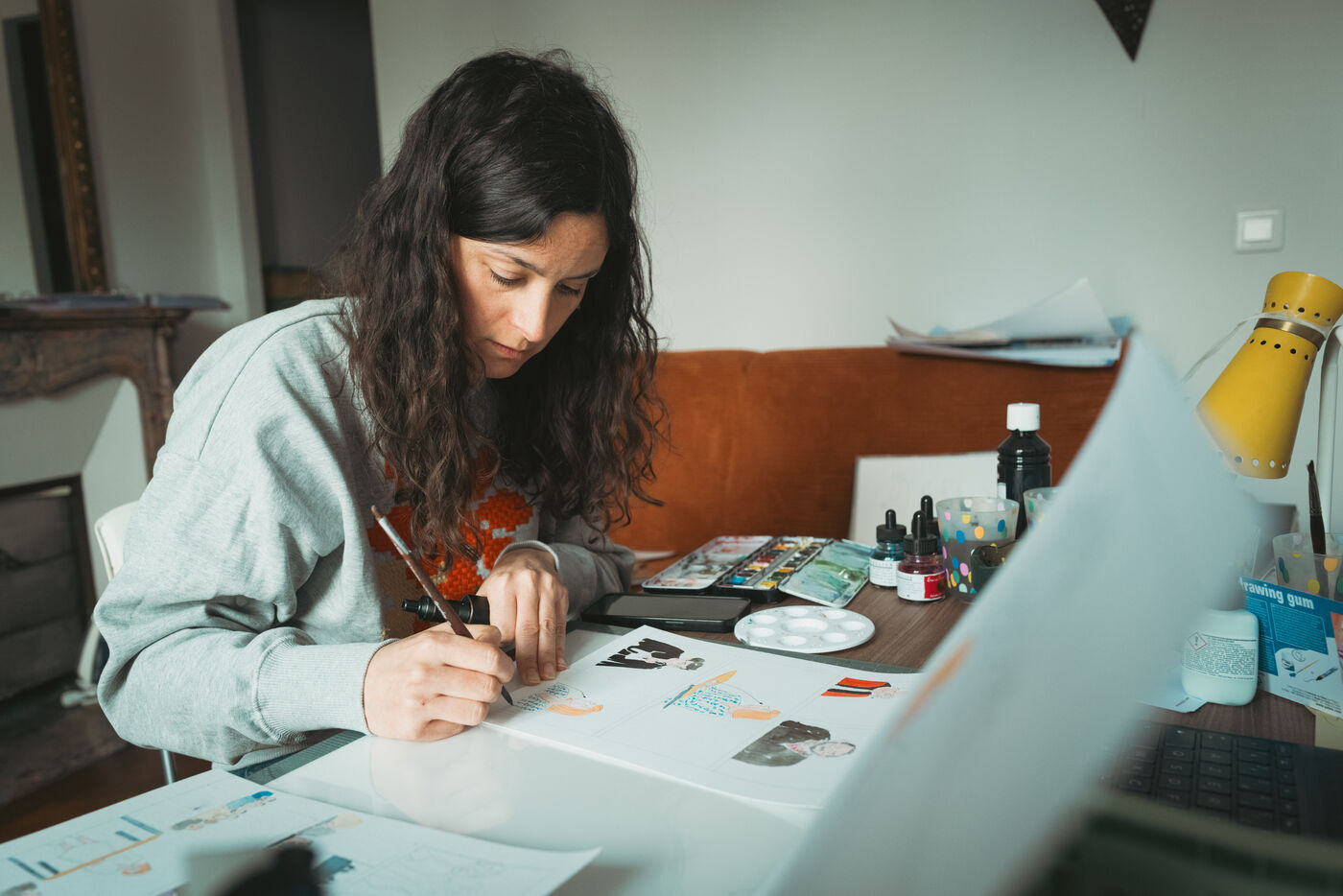
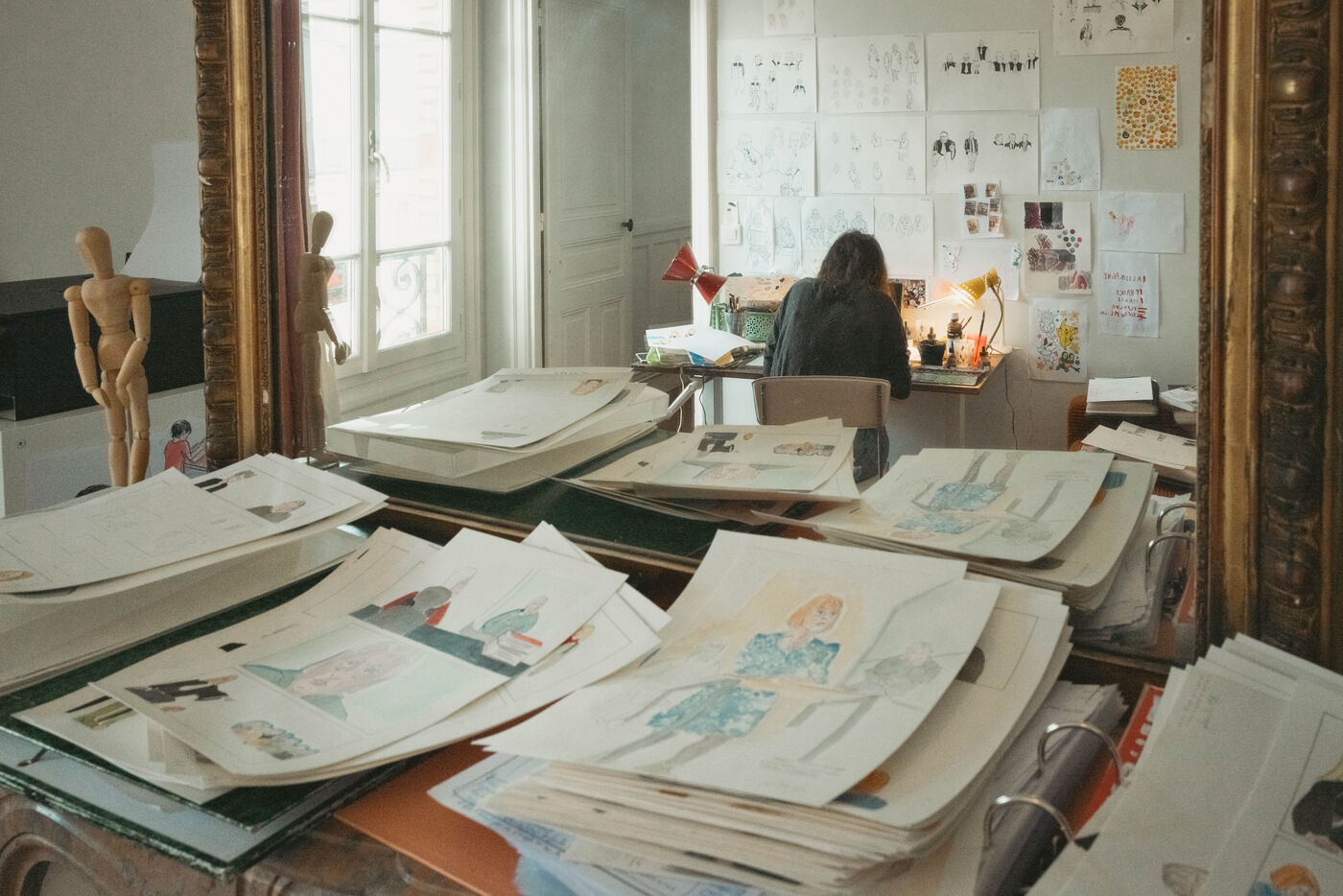
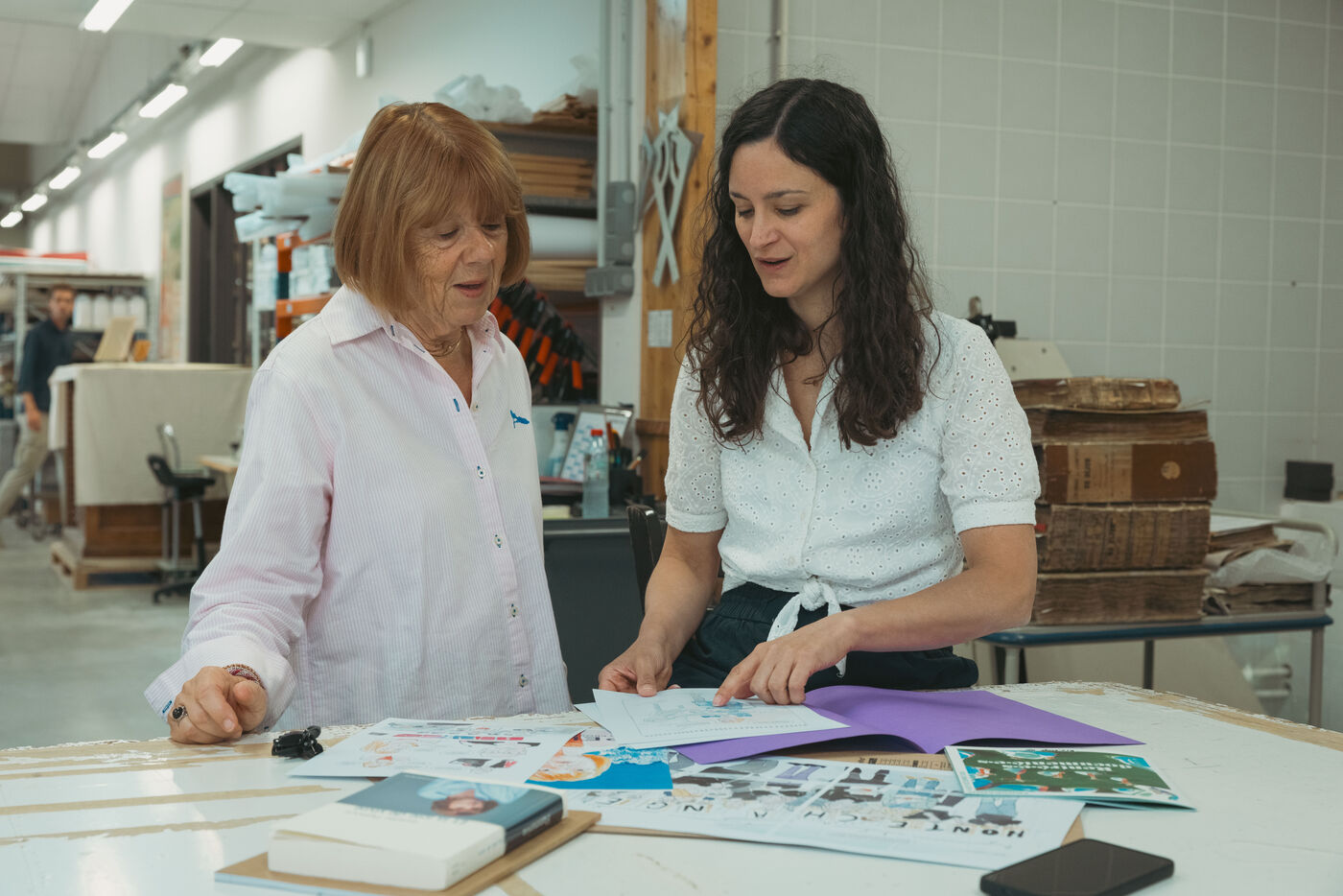
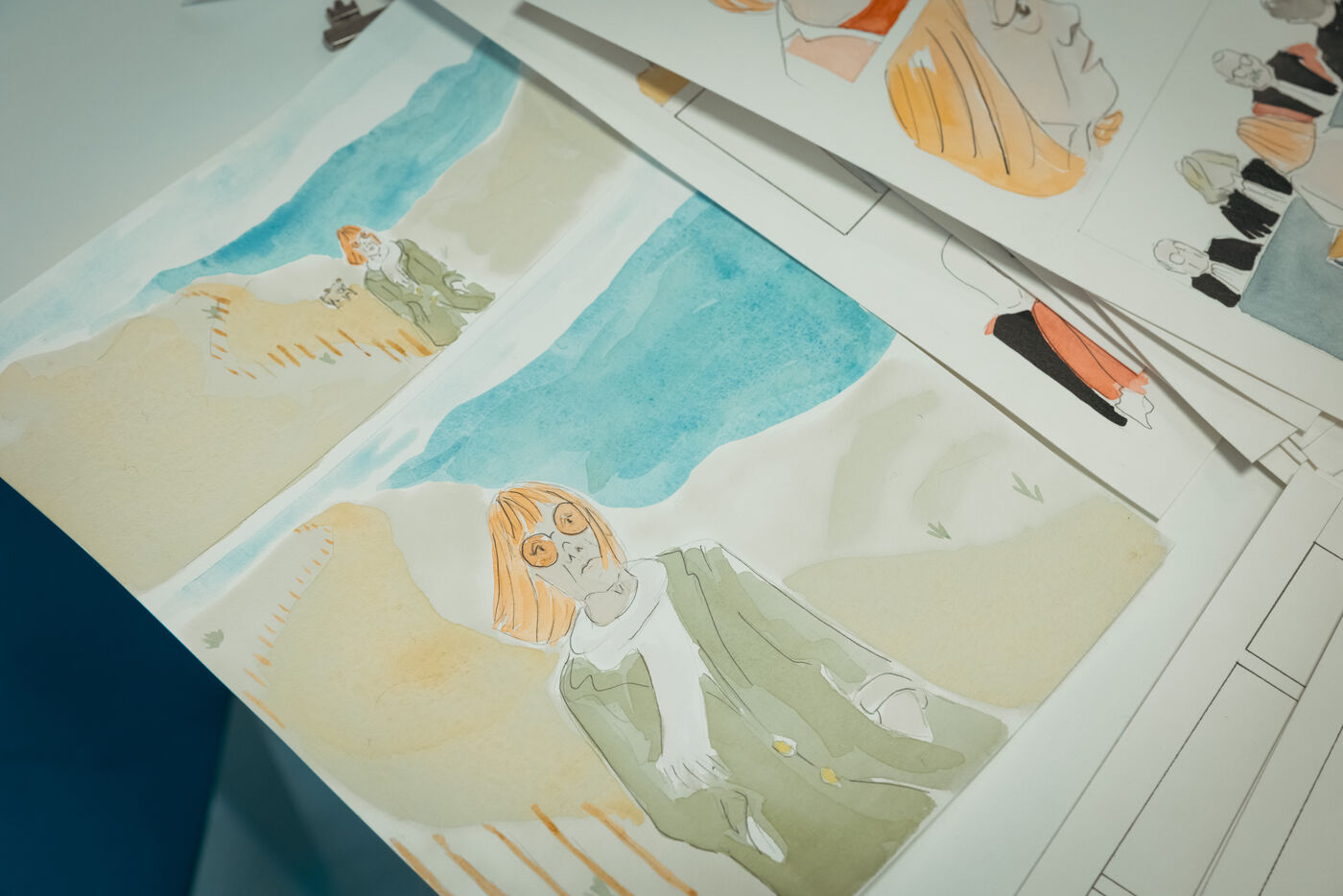
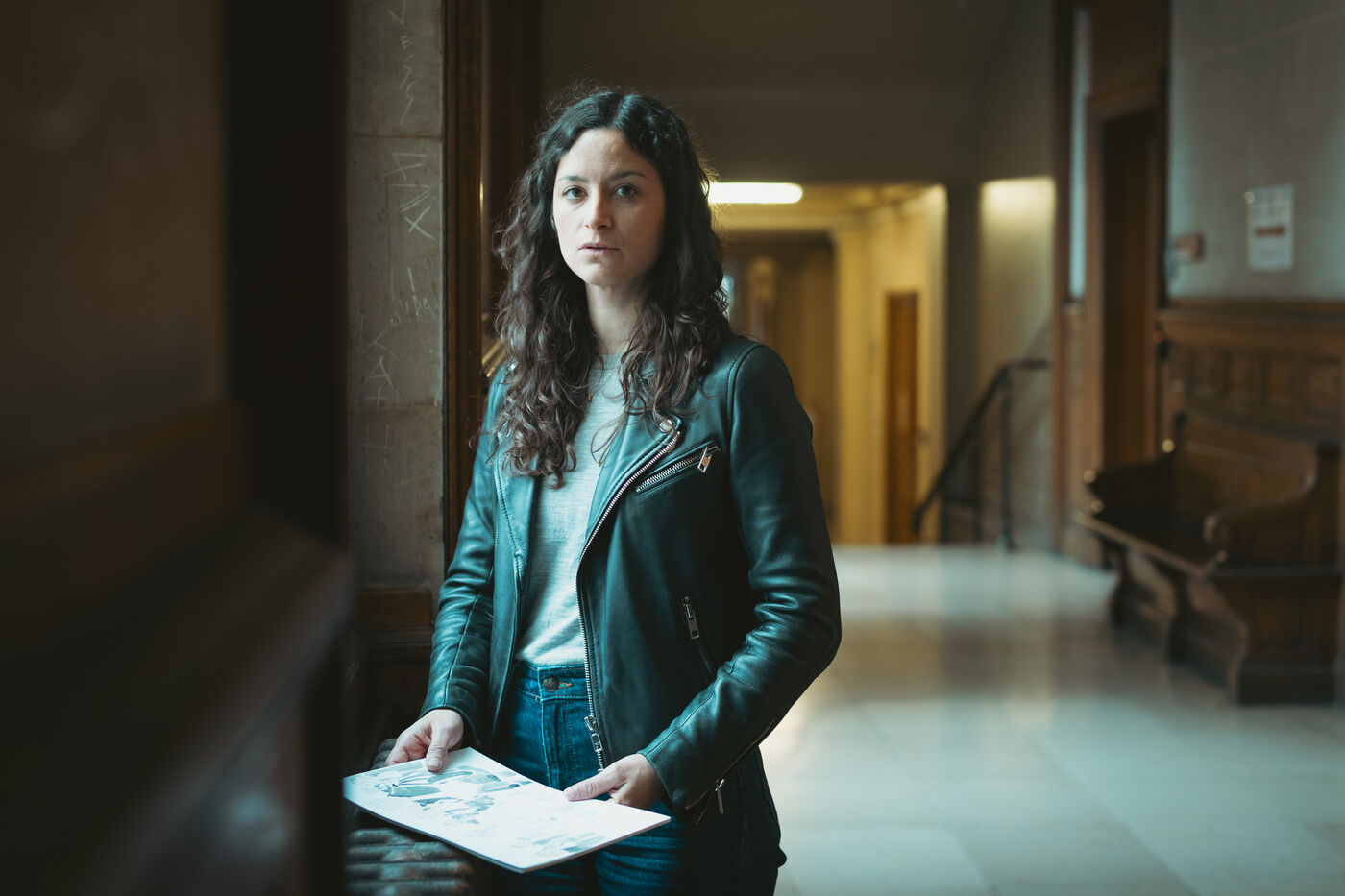
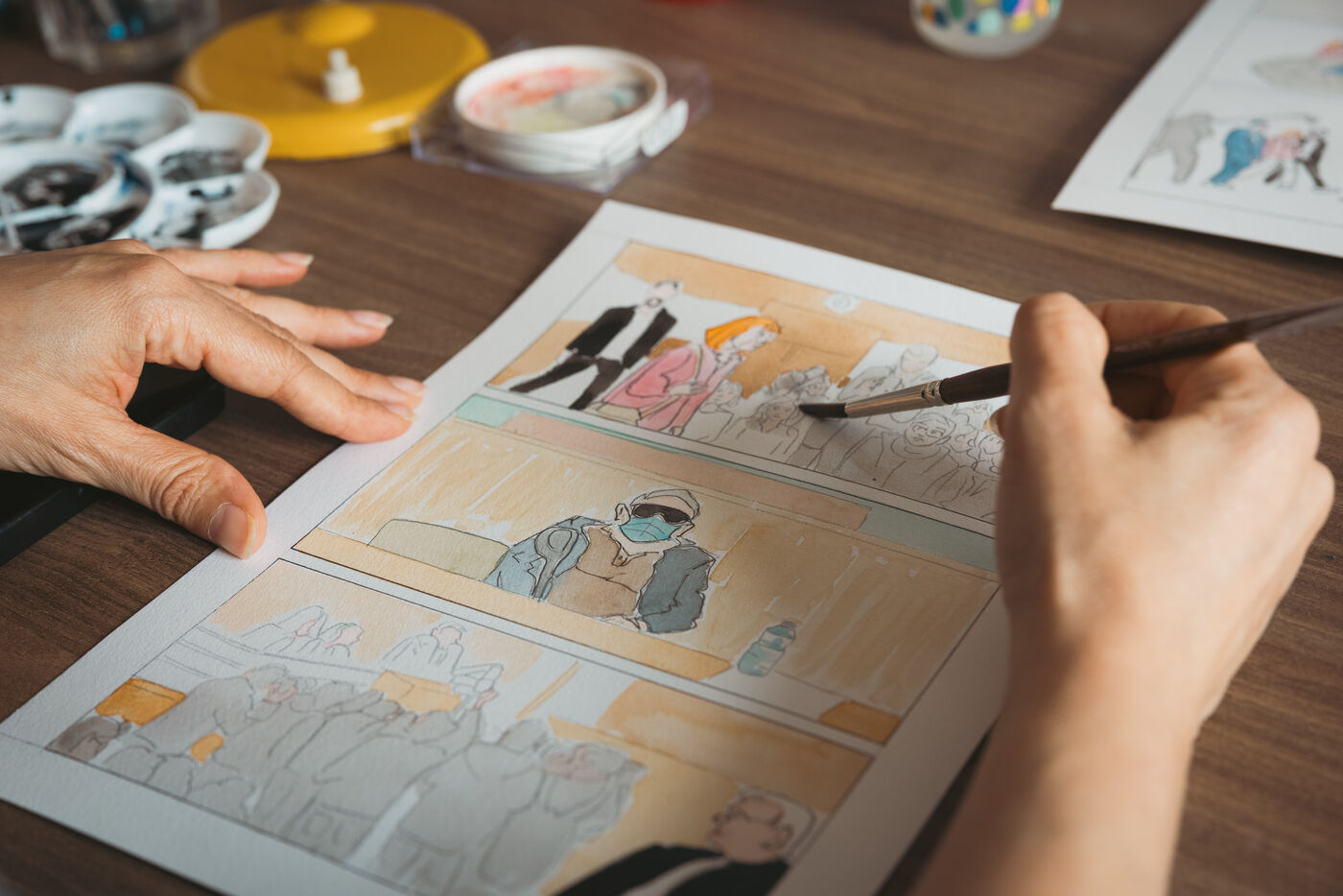
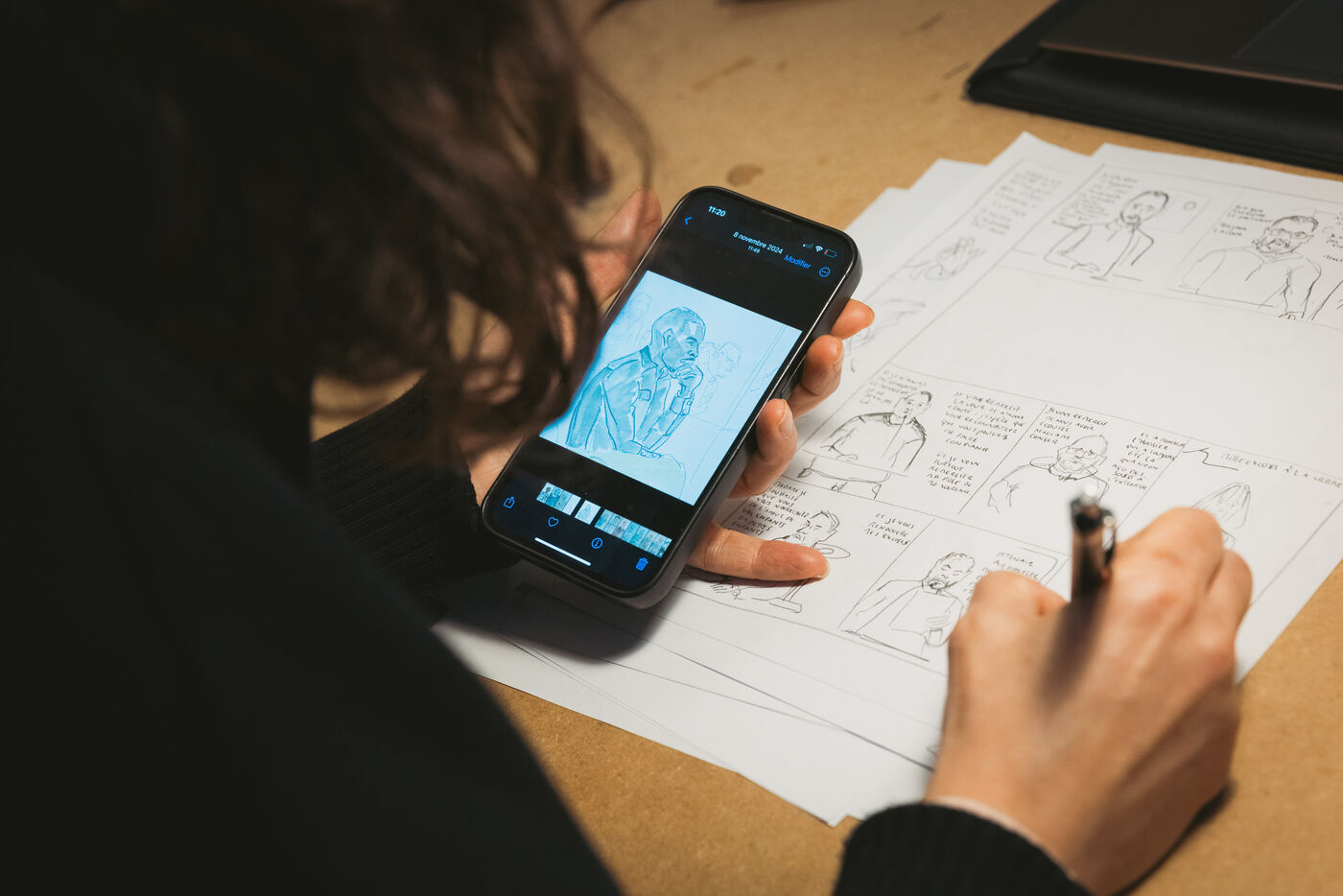
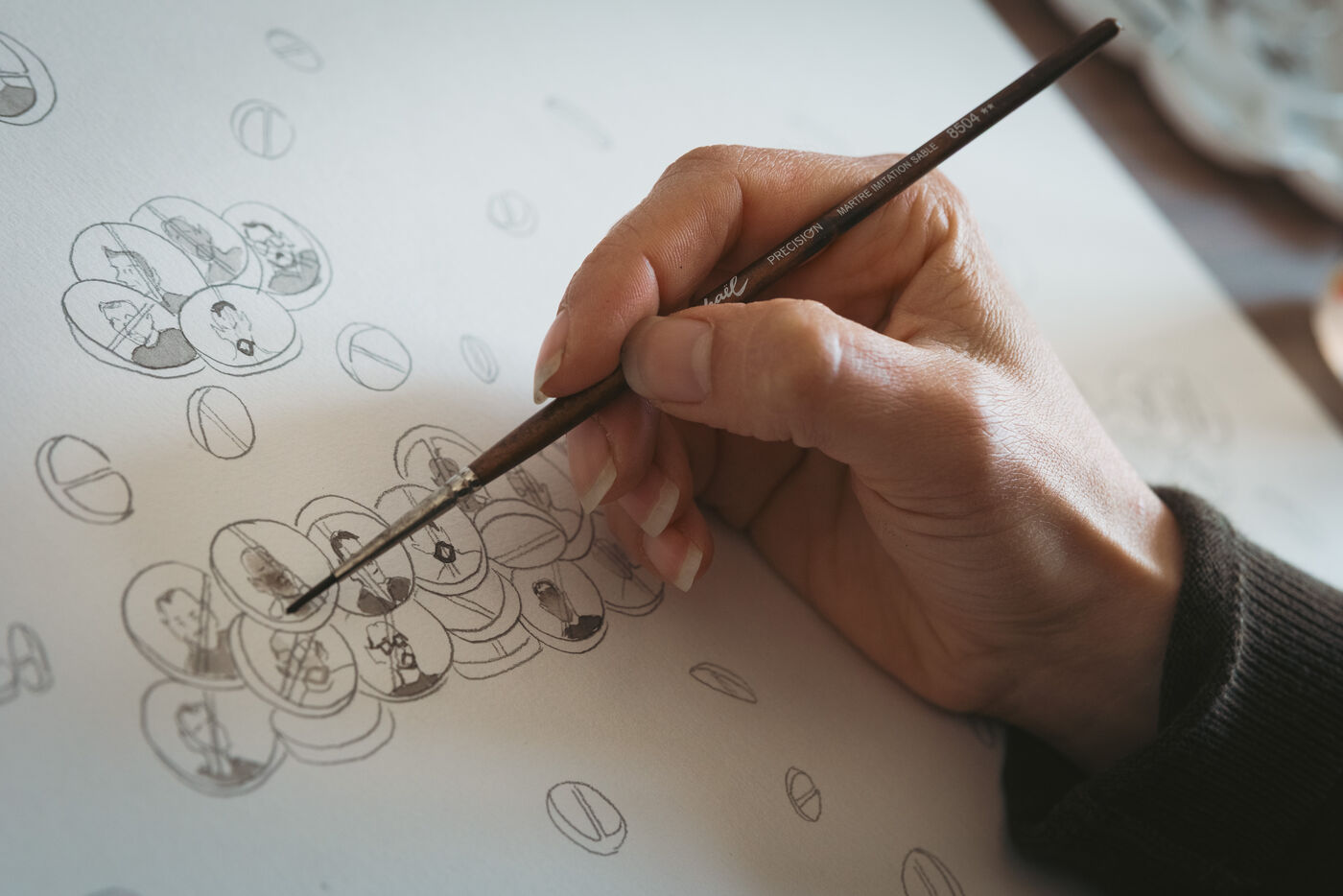
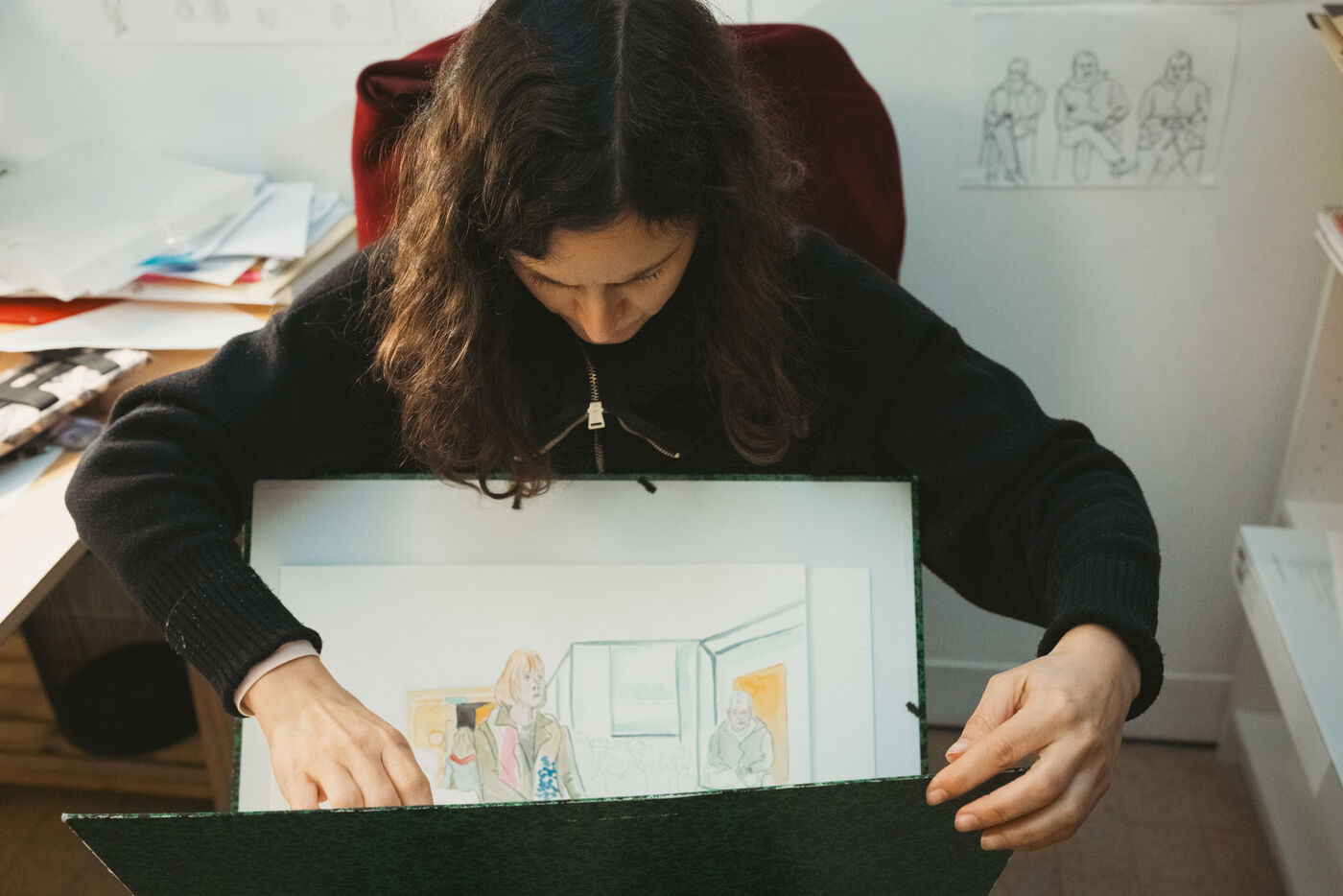
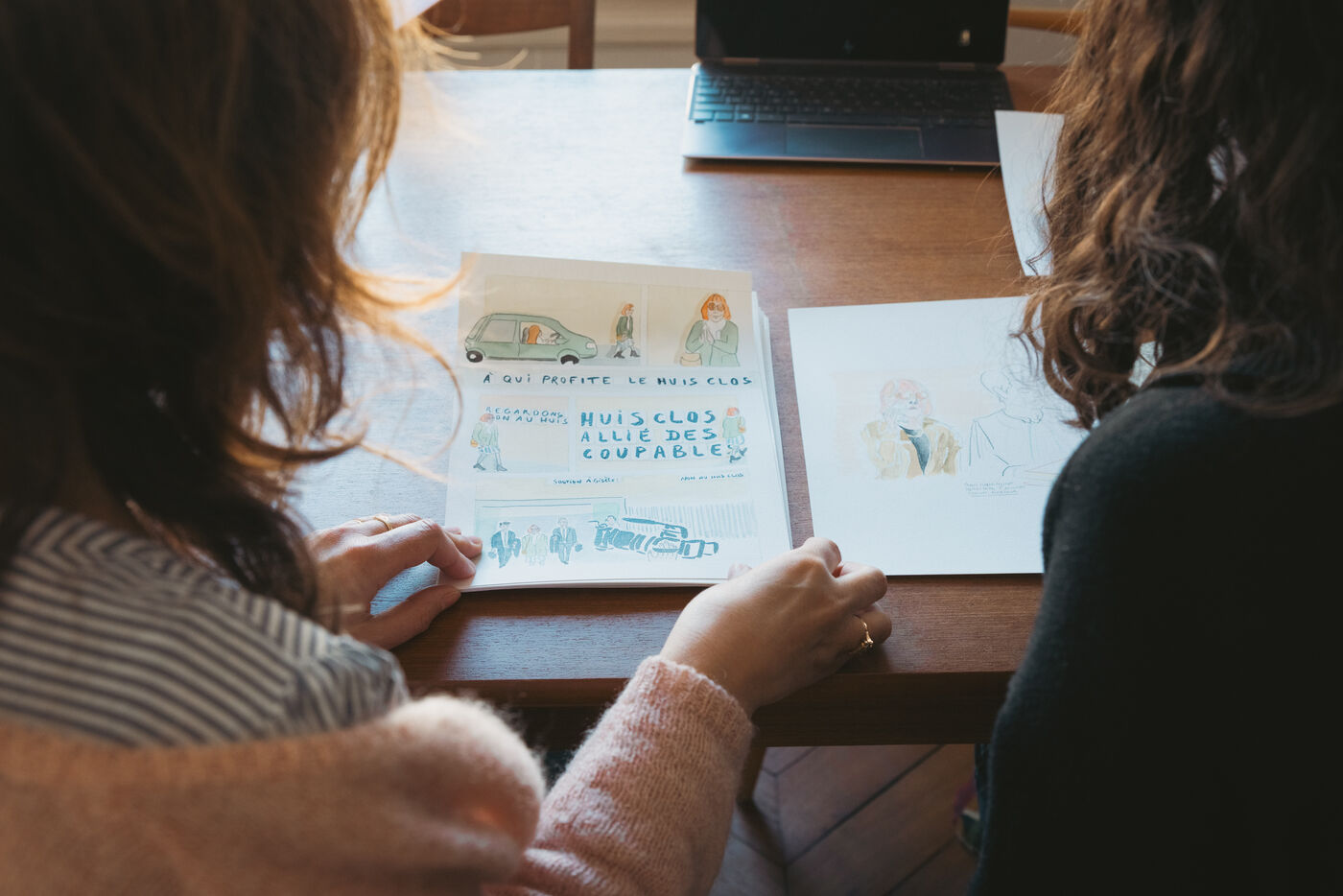
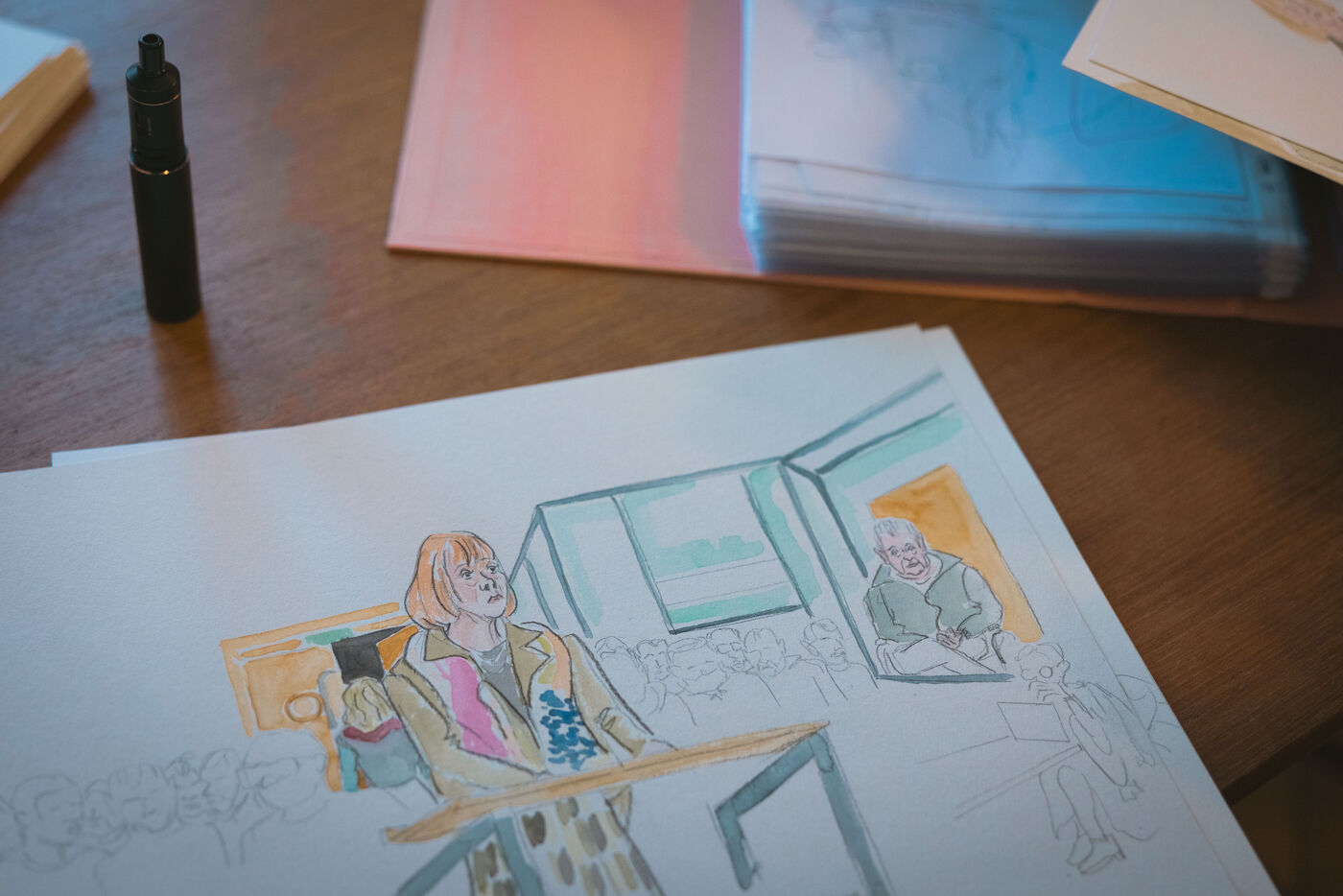
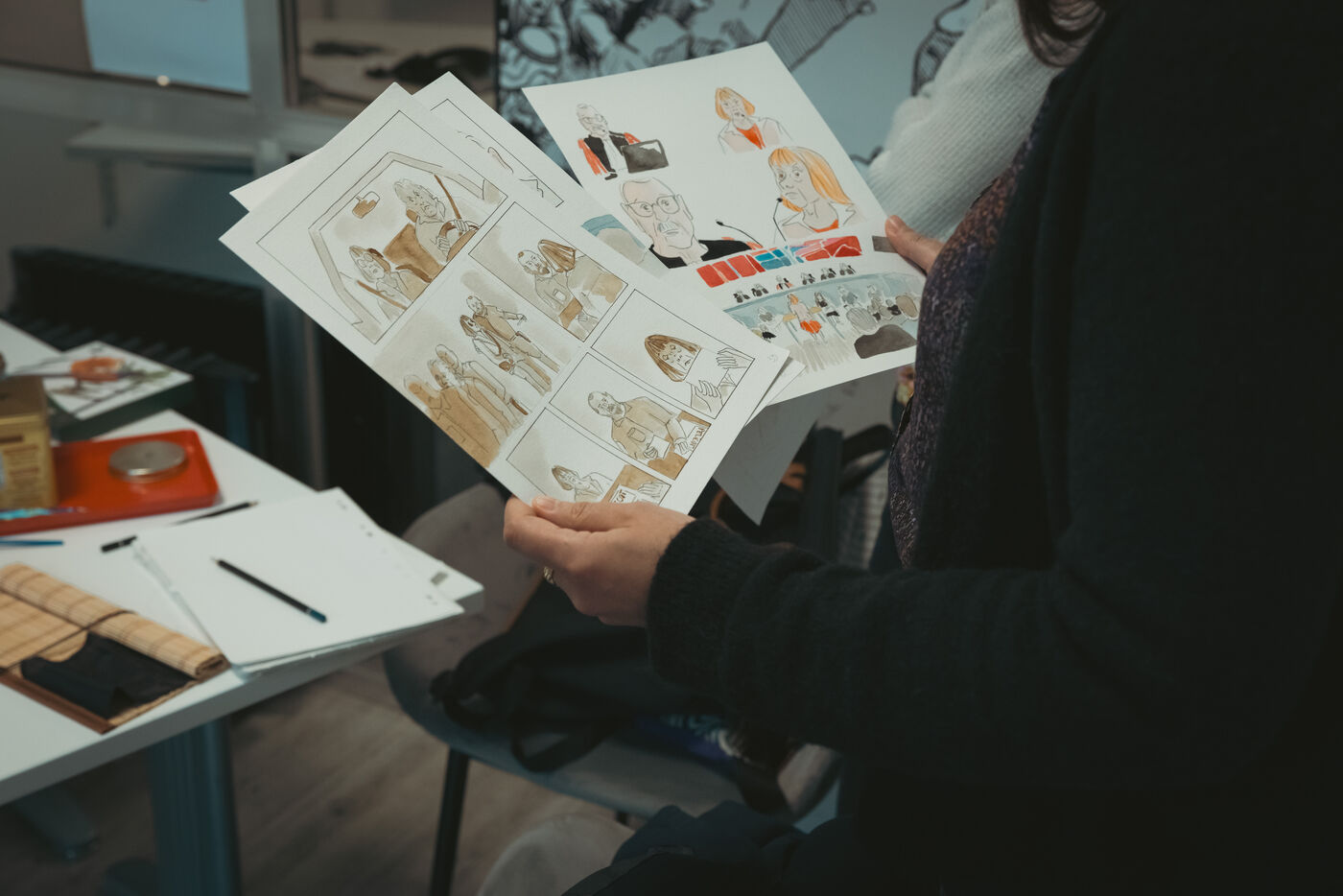
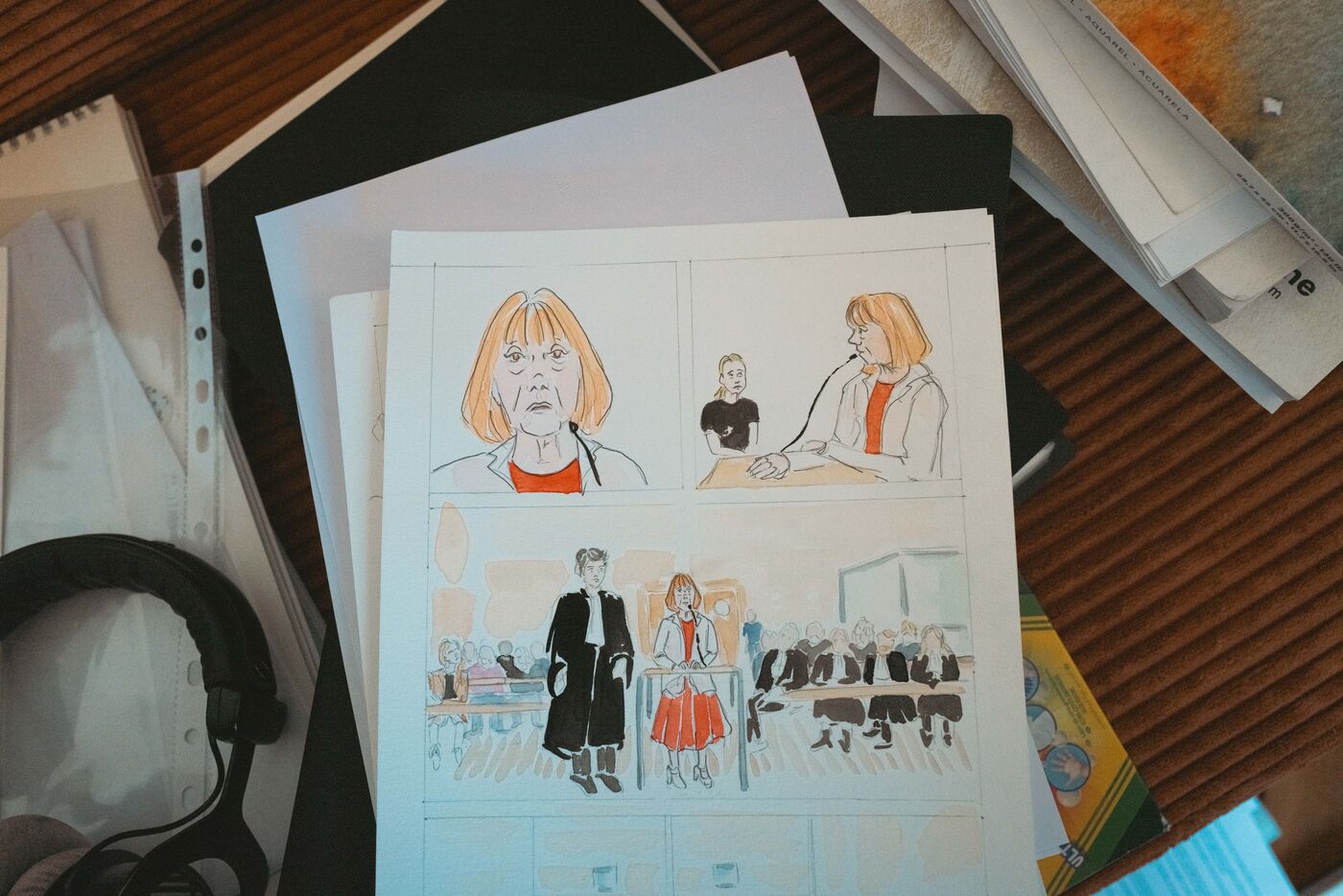
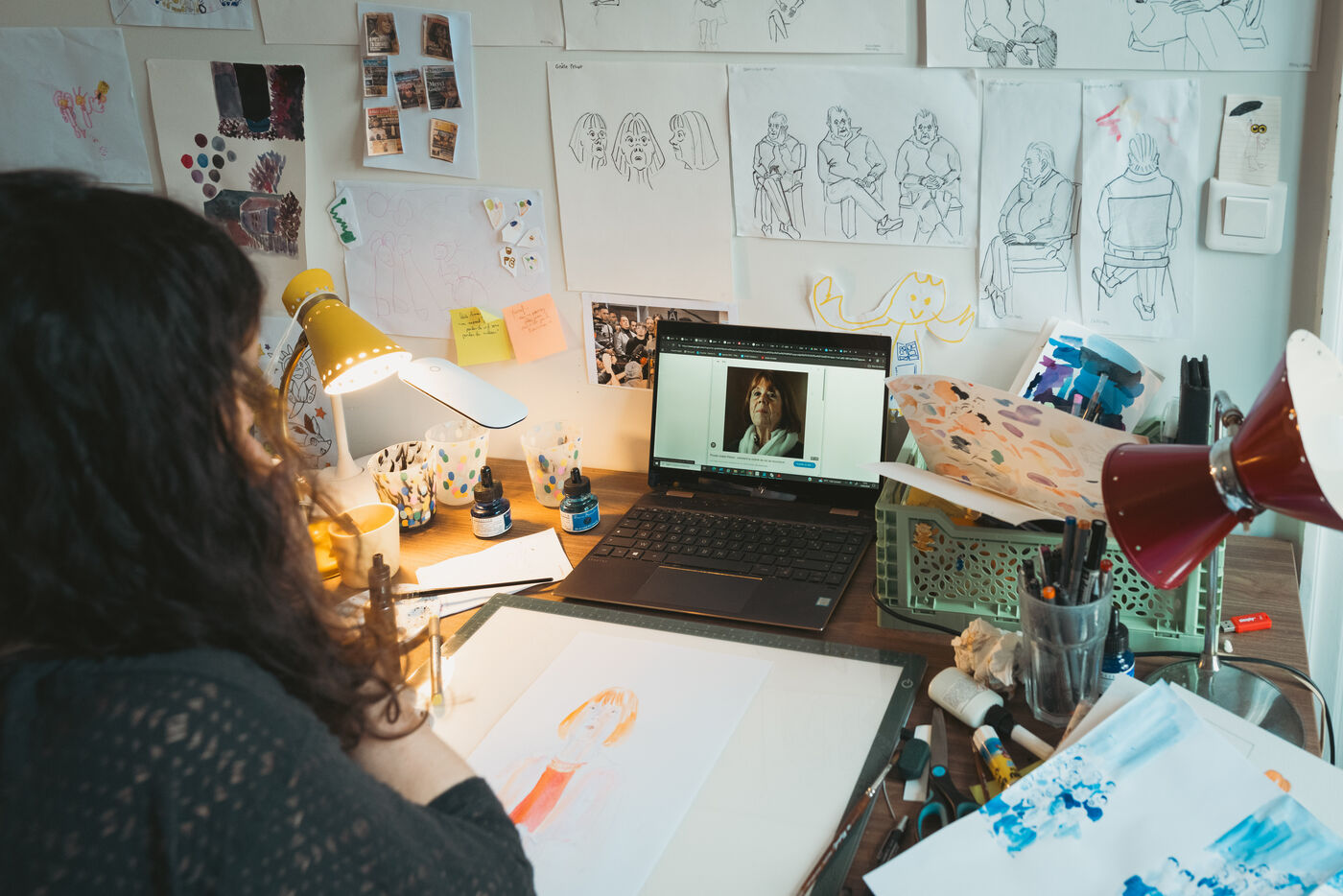
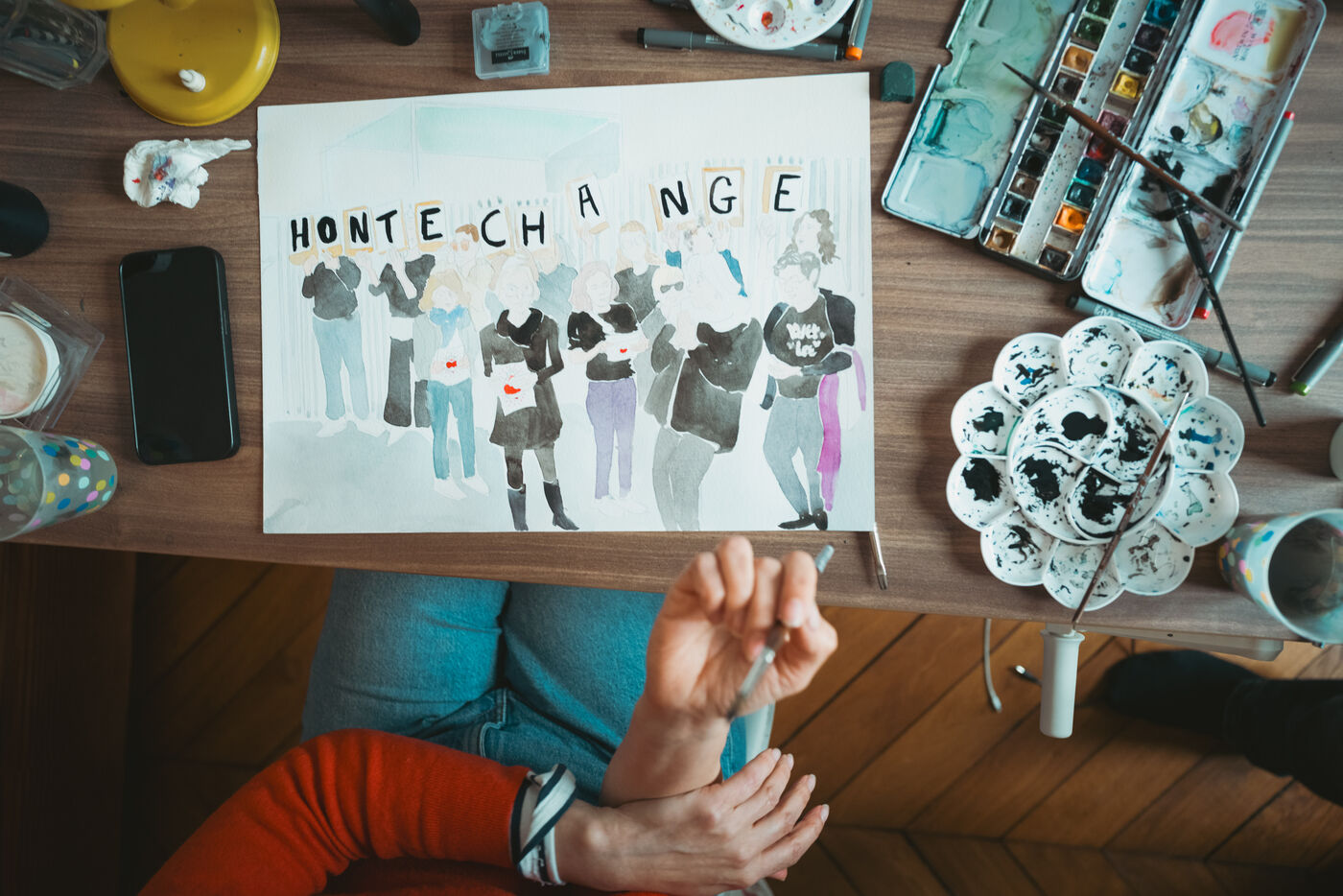
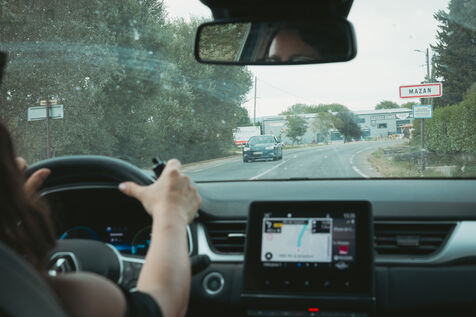
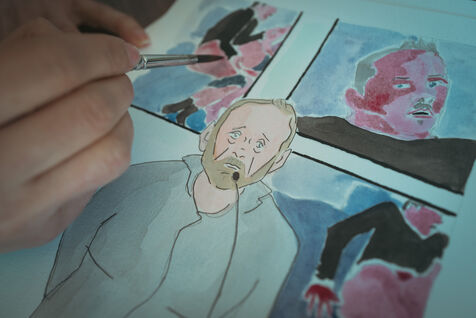
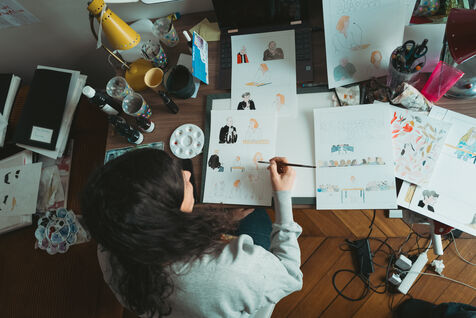
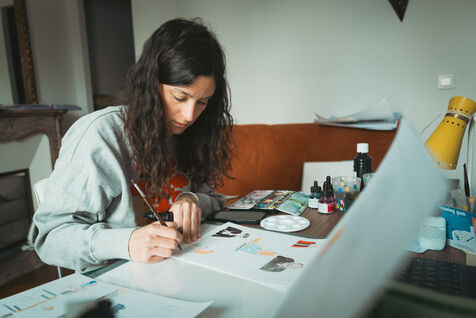
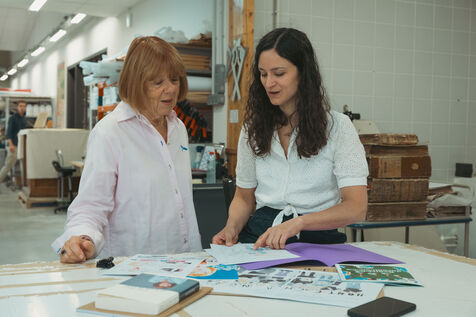
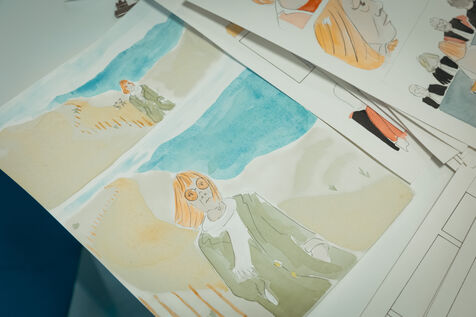
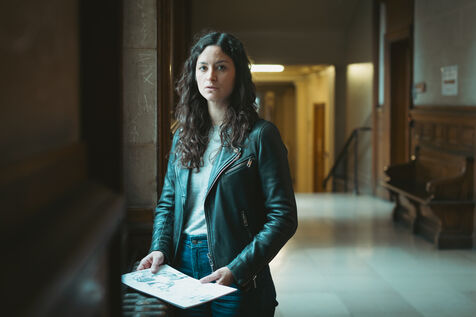
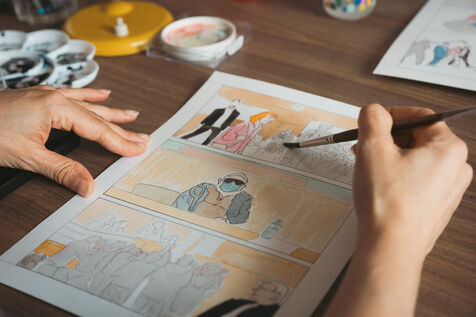
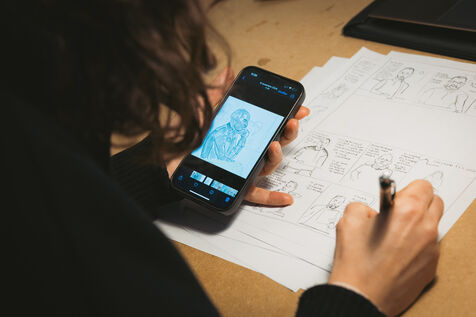
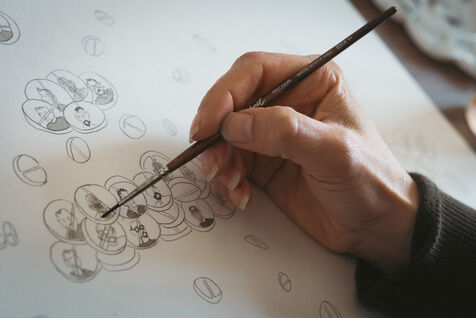
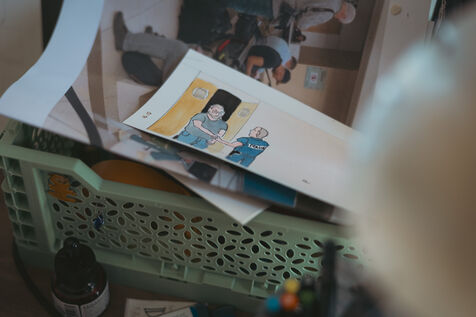
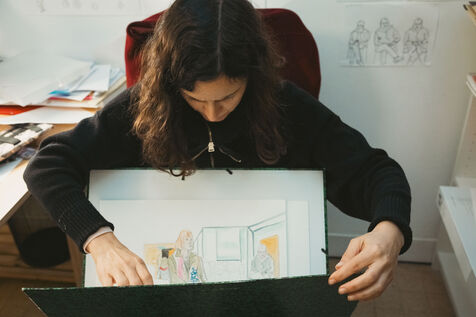
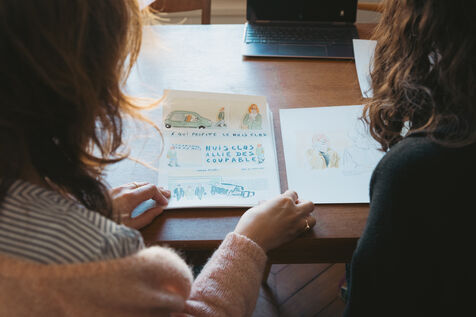
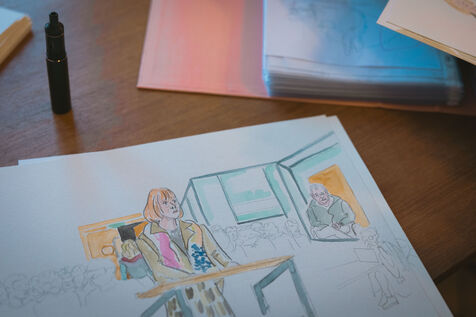
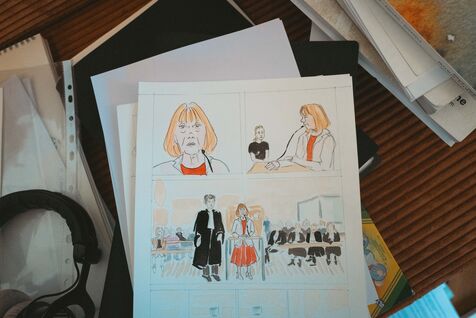
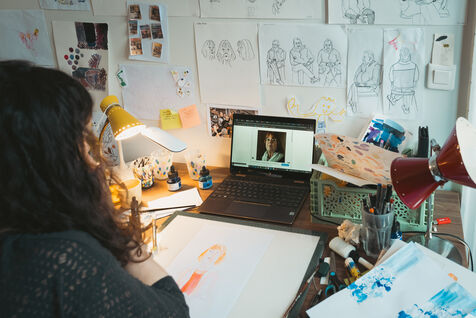
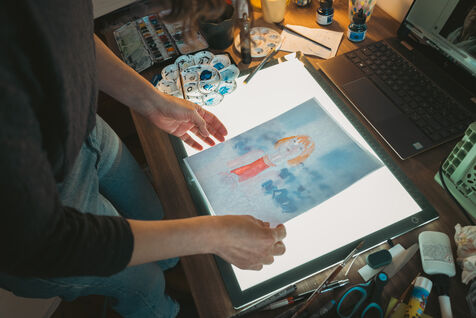
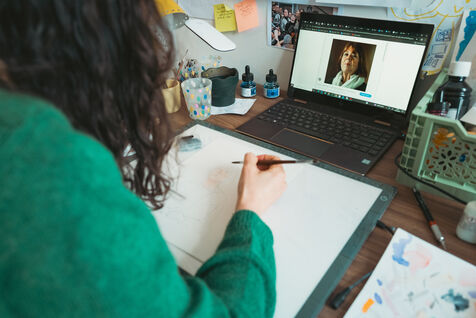
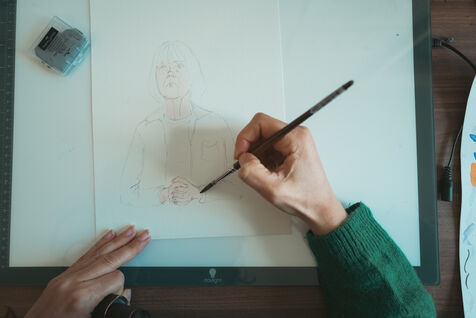
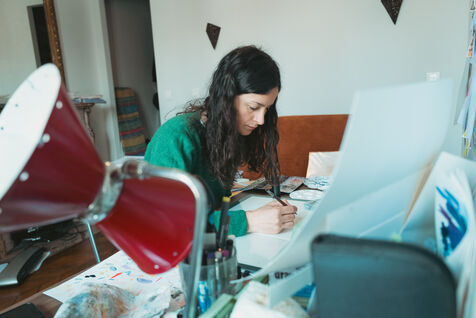
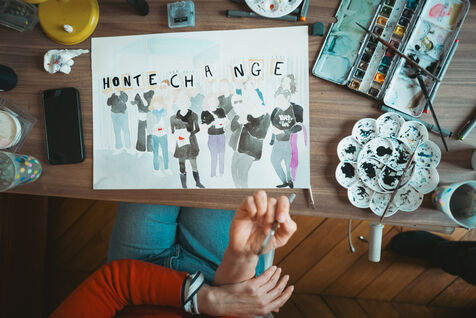
Après avoir couvert le procès de Mazan, Marion Dubreuil, chroniqueuse et dessinatrice judiciaire, réalise désormais une bande dessinée consacrée à cette affaire historique.
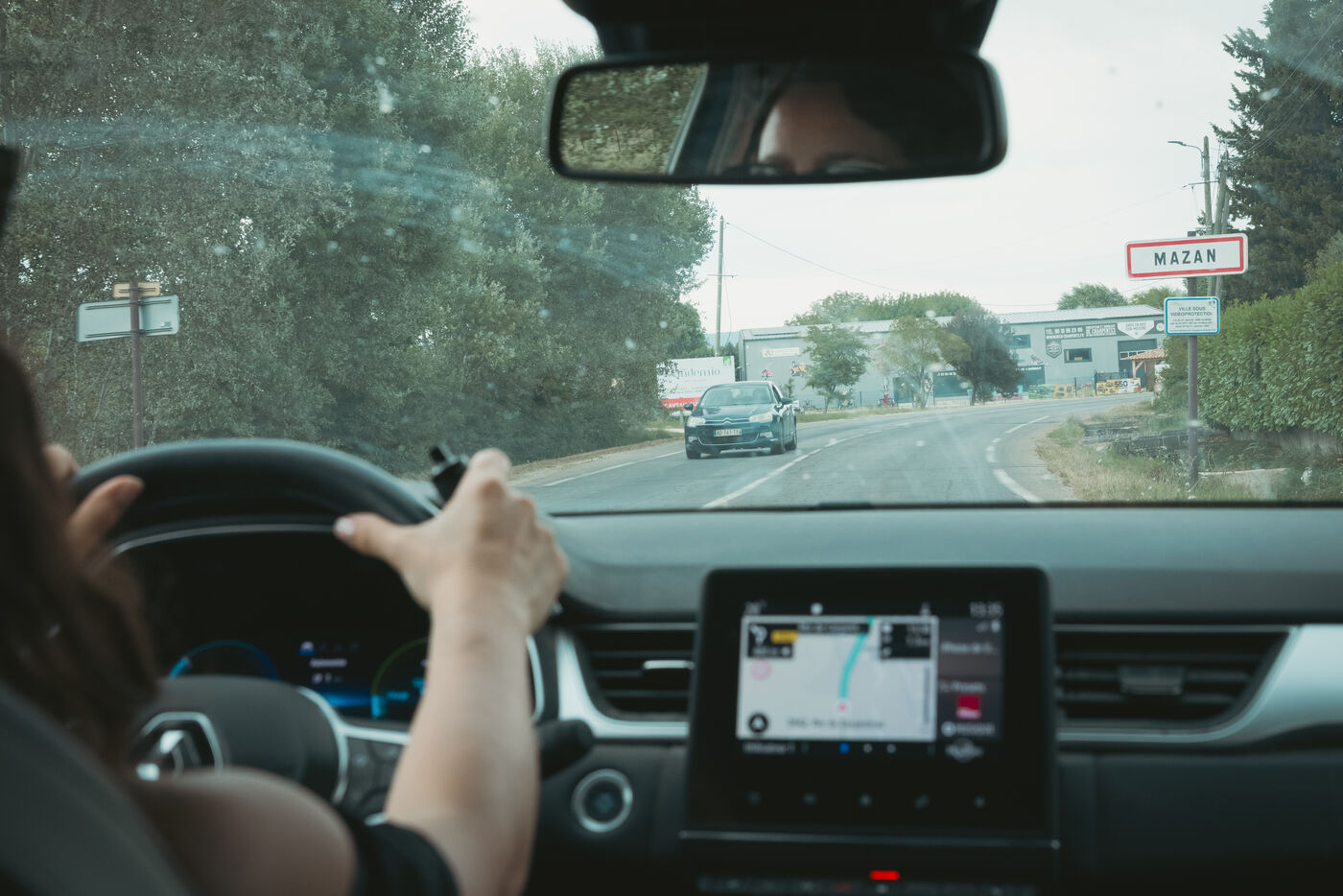
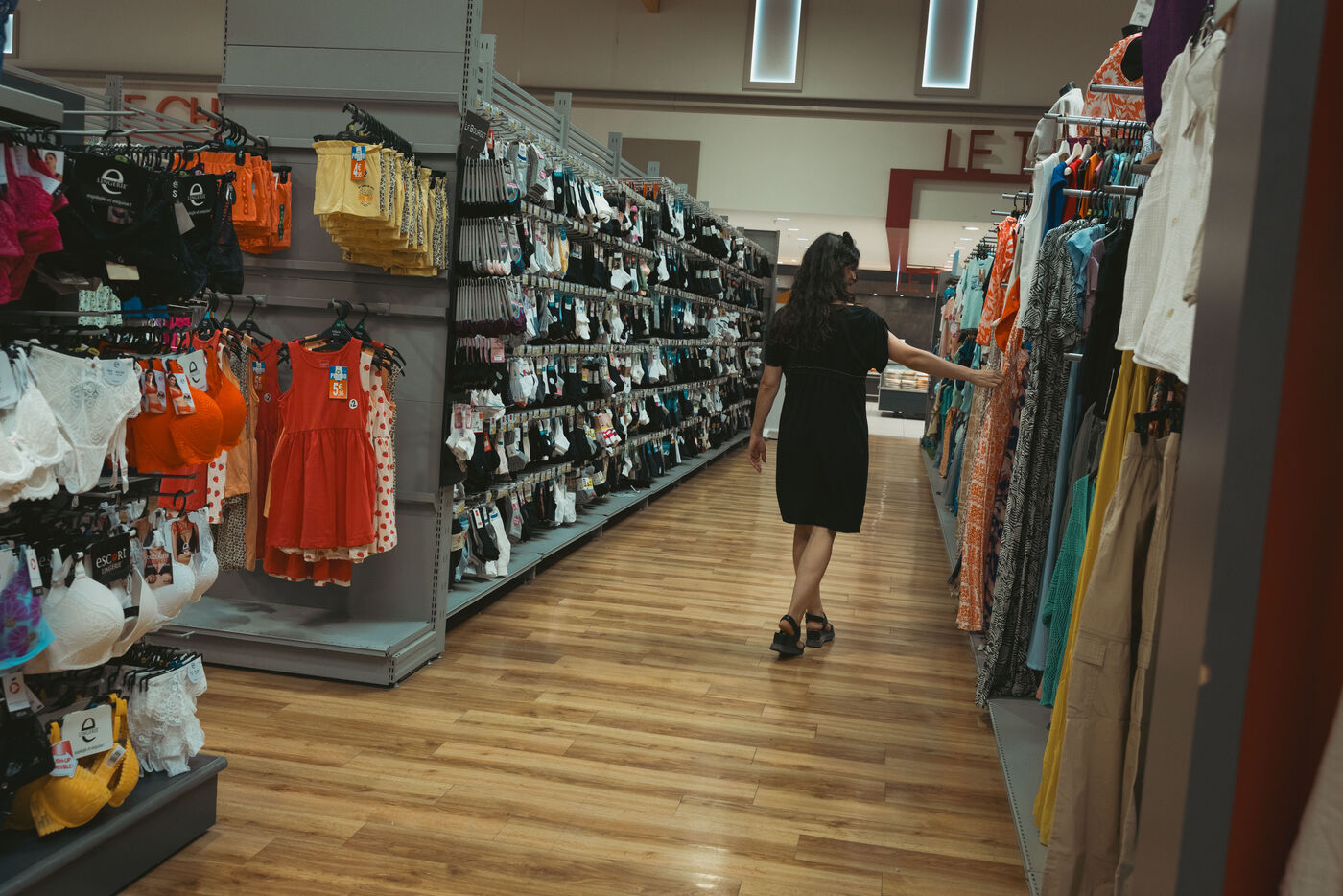
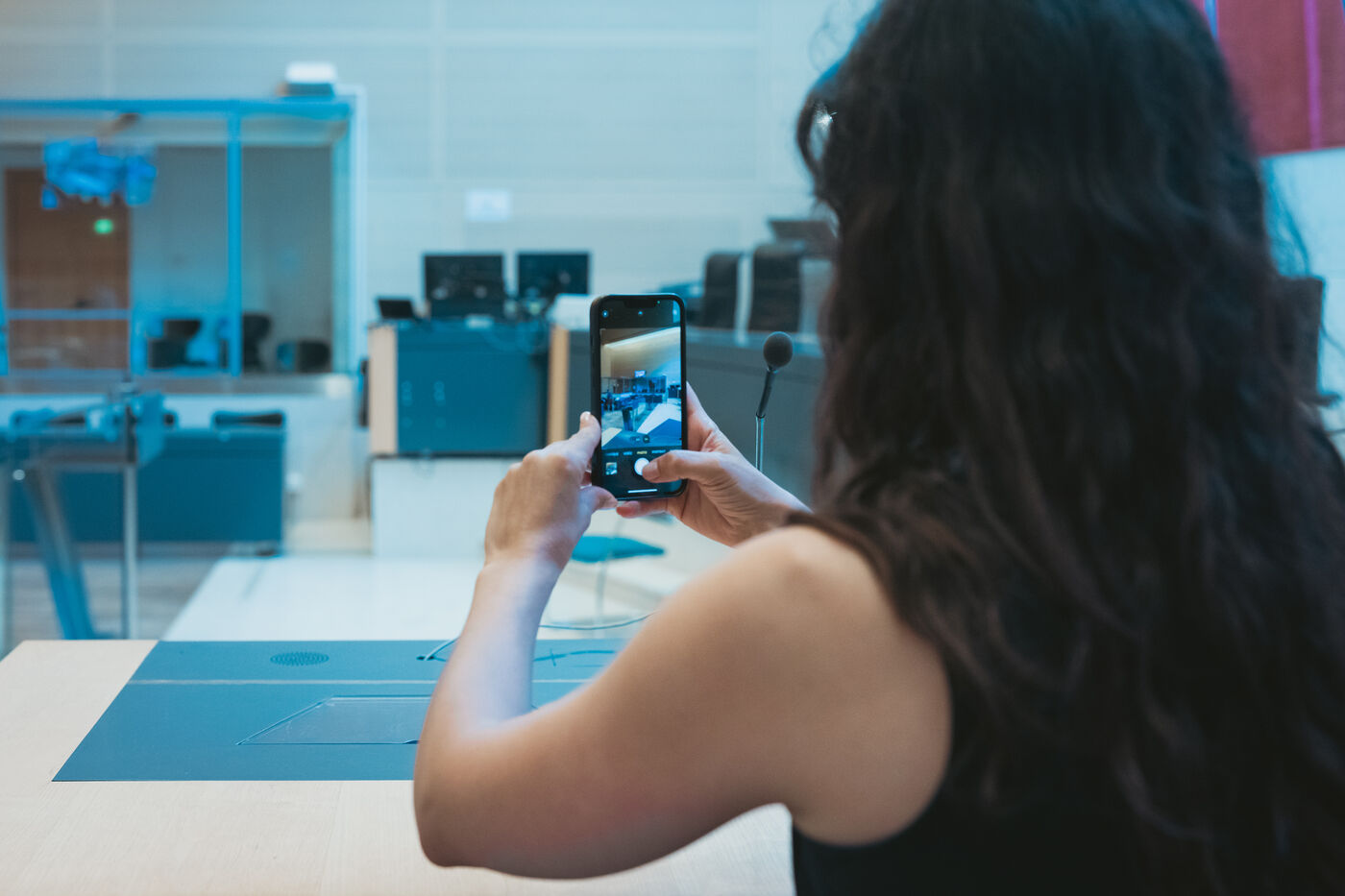
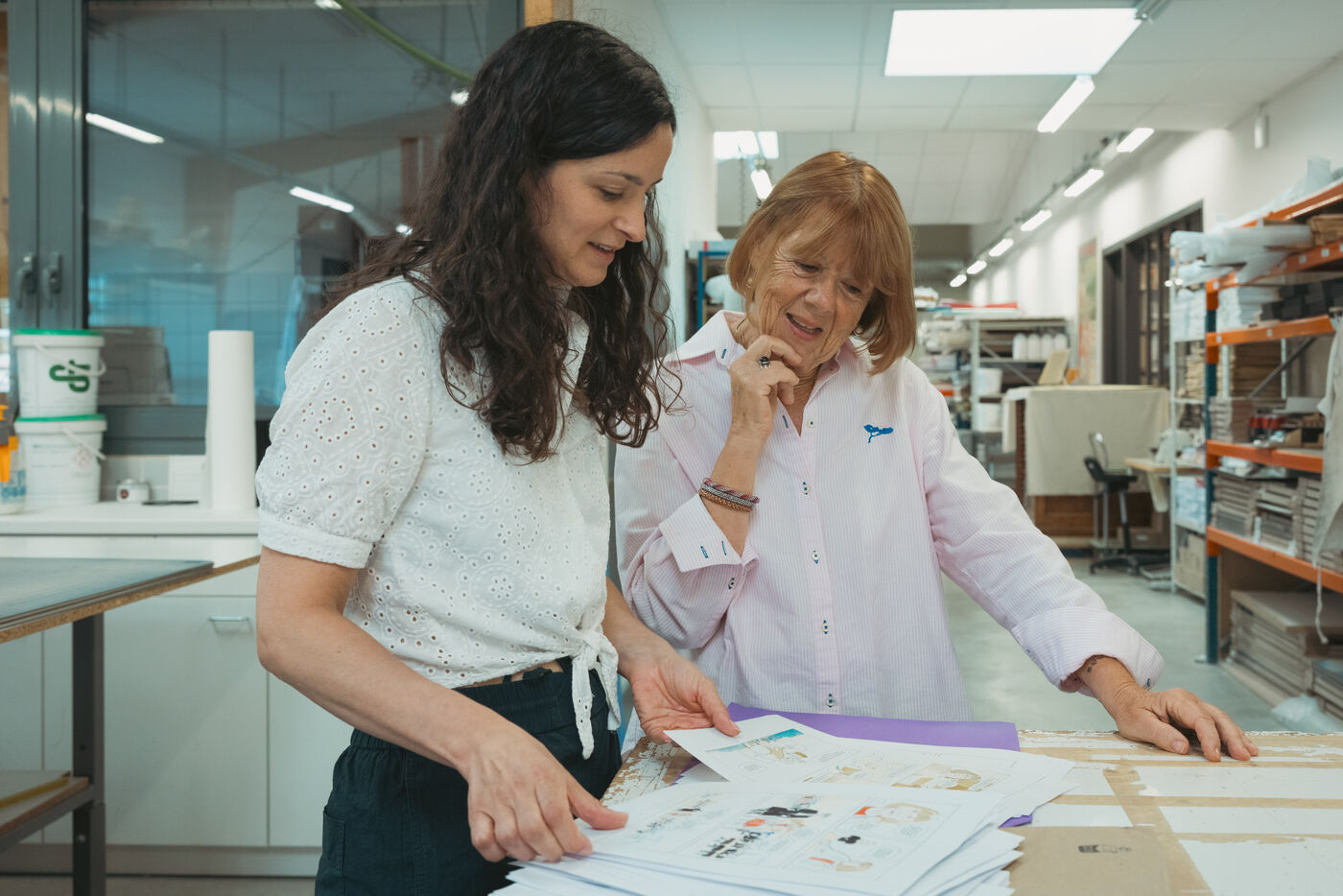
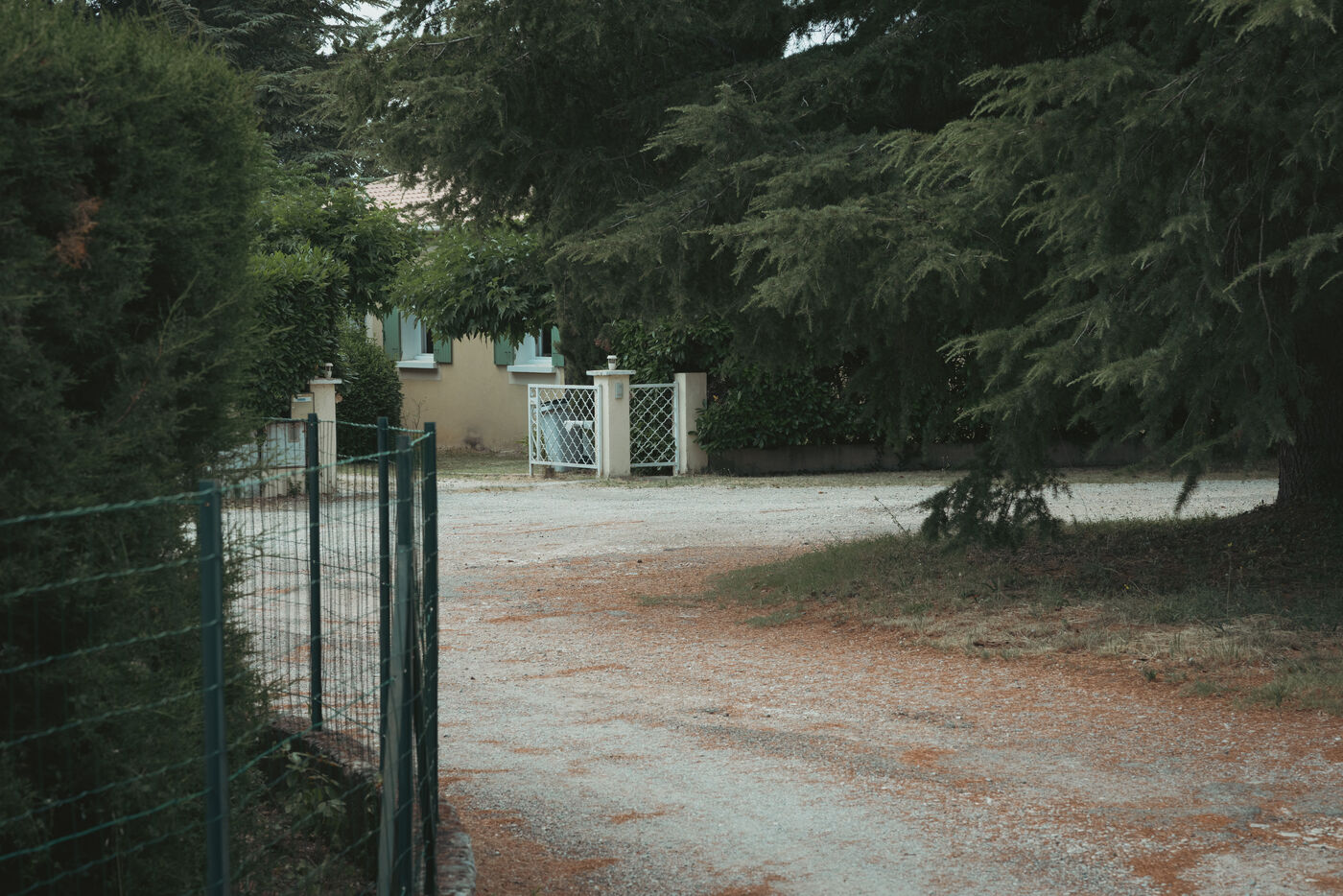
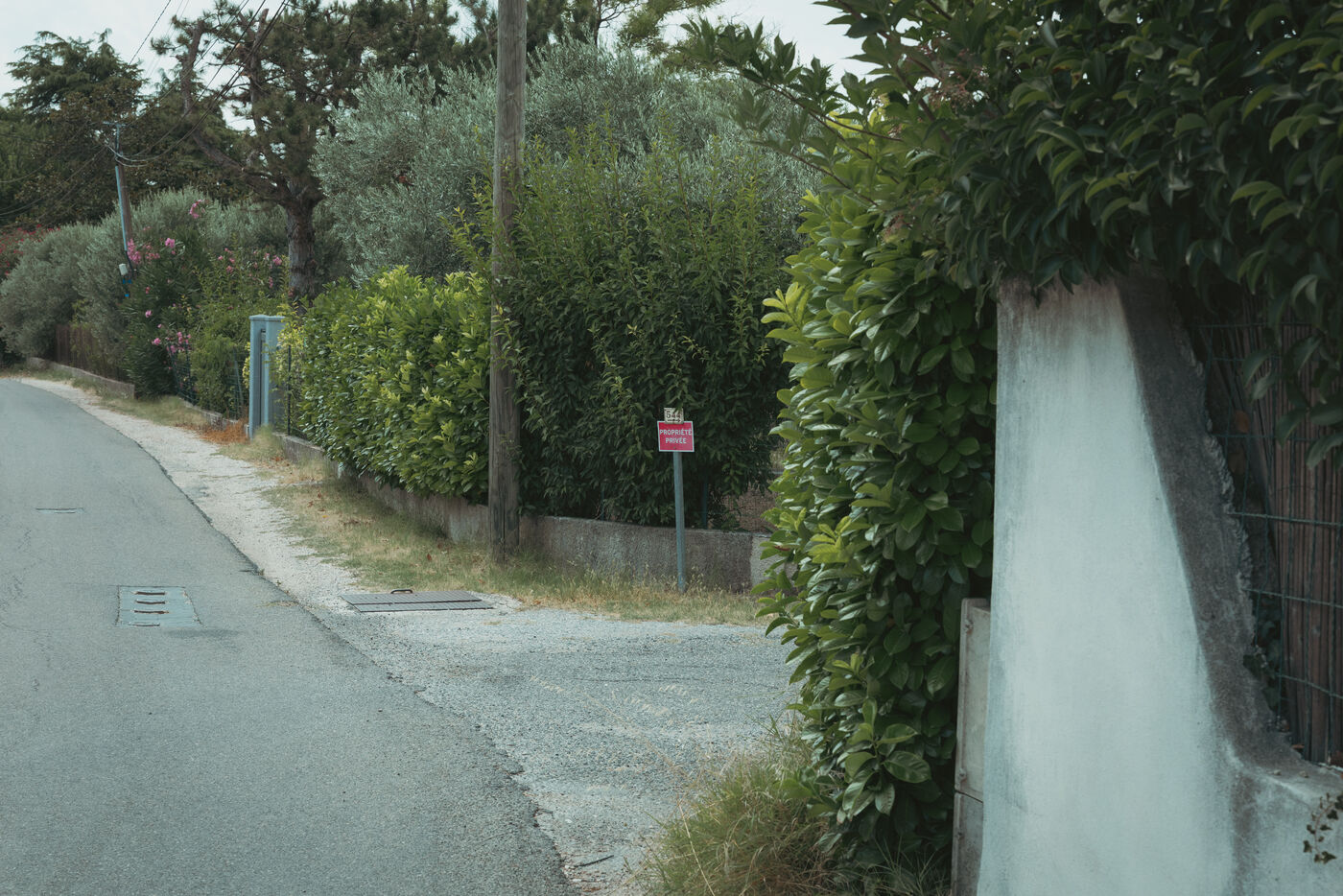
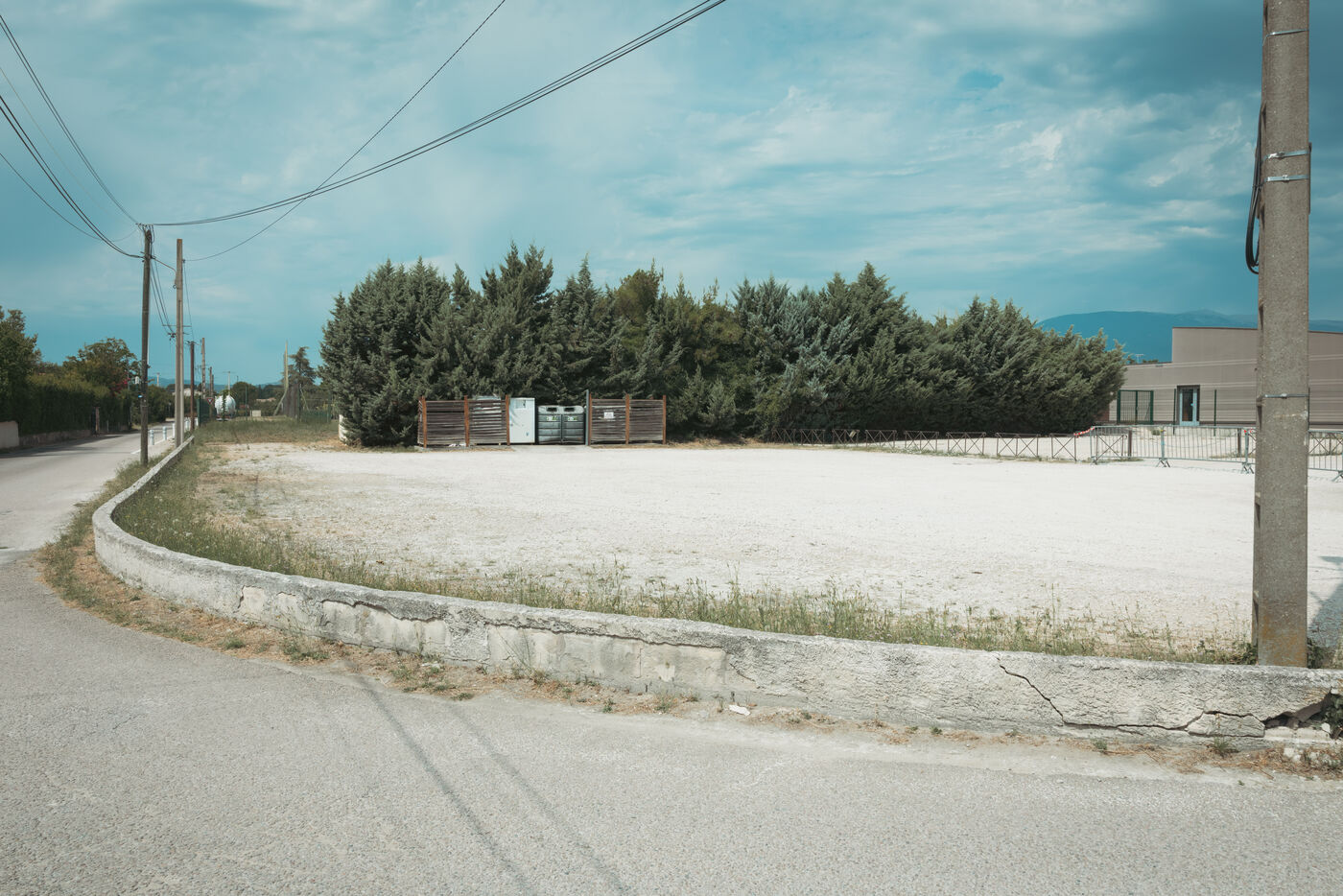
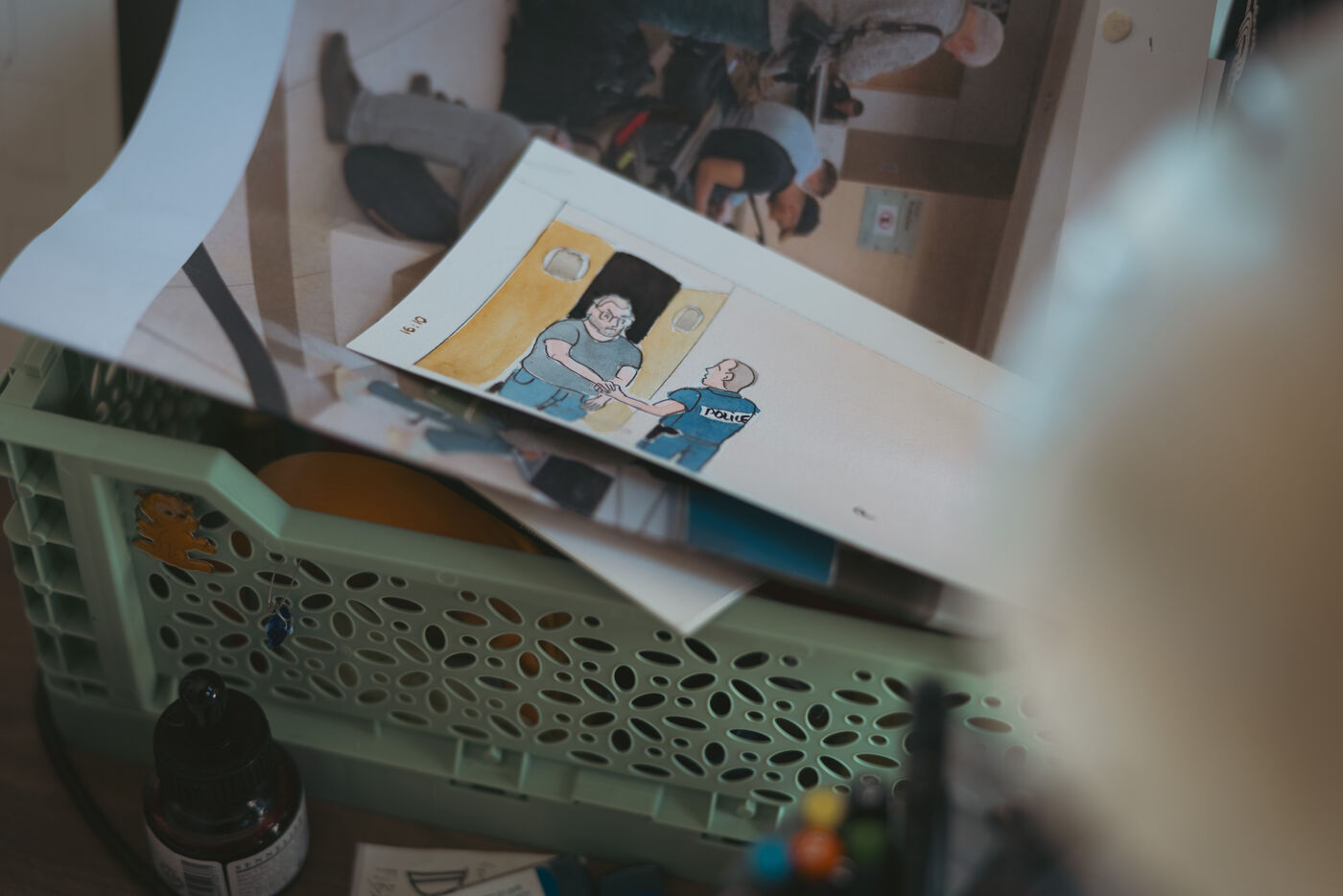
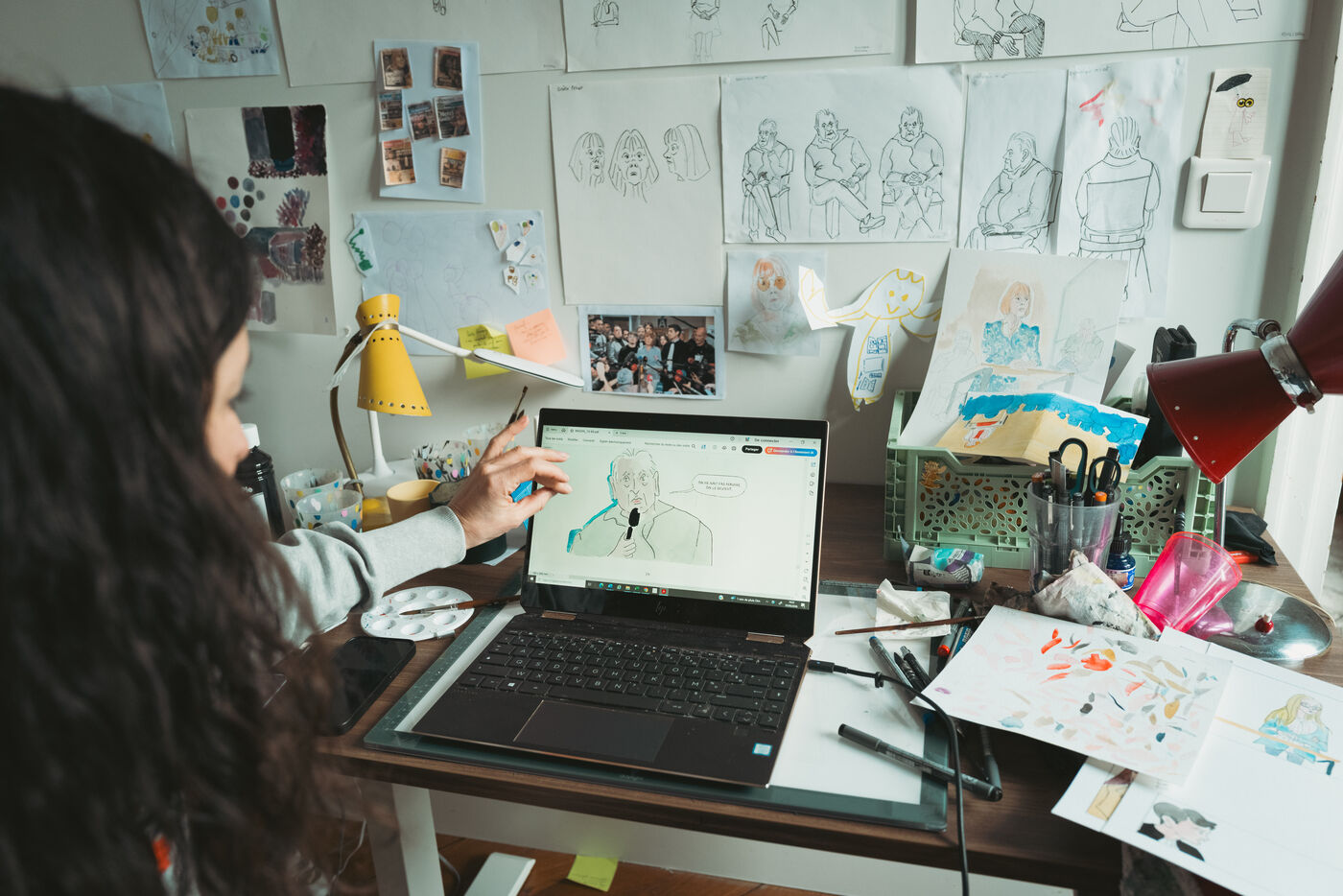
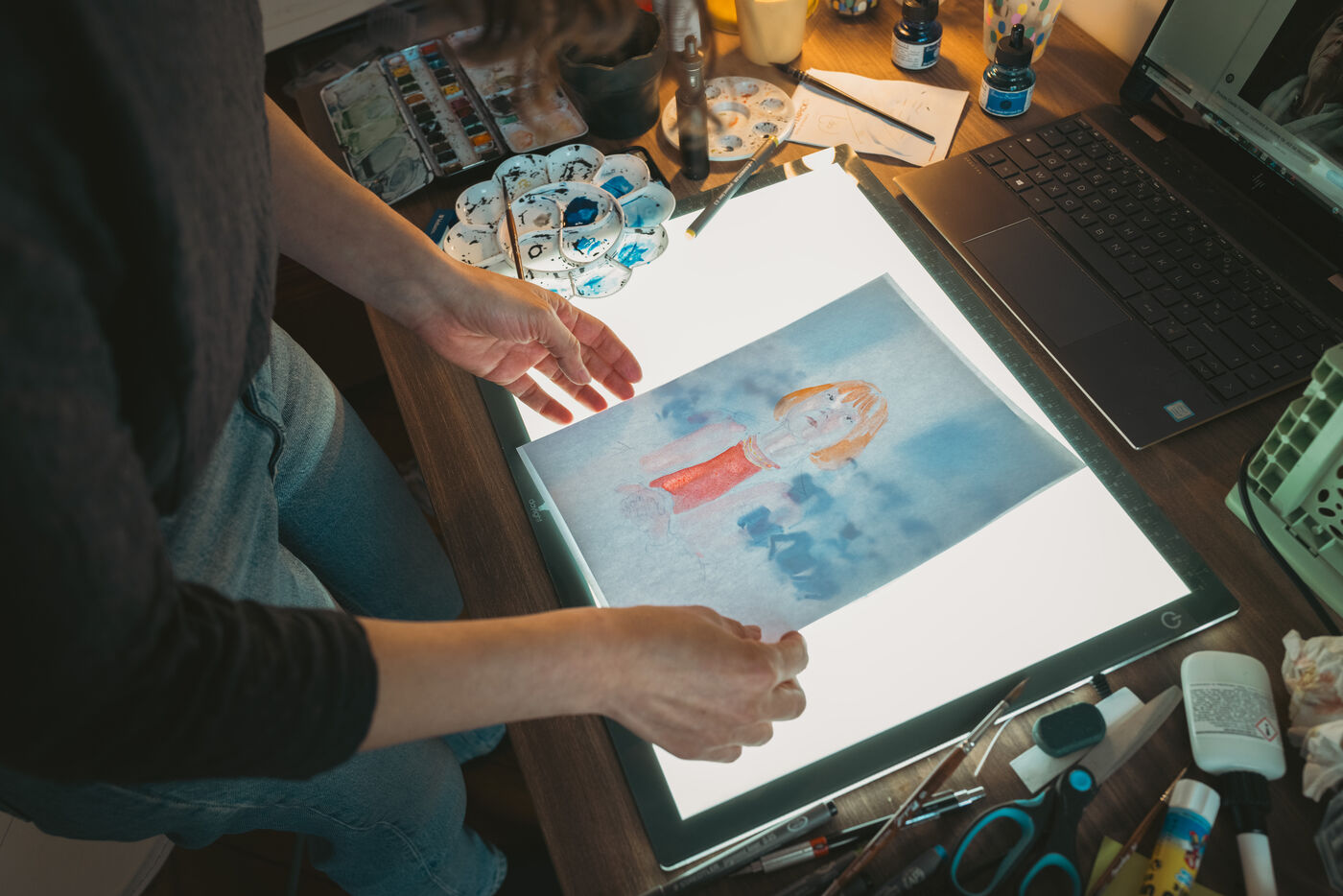
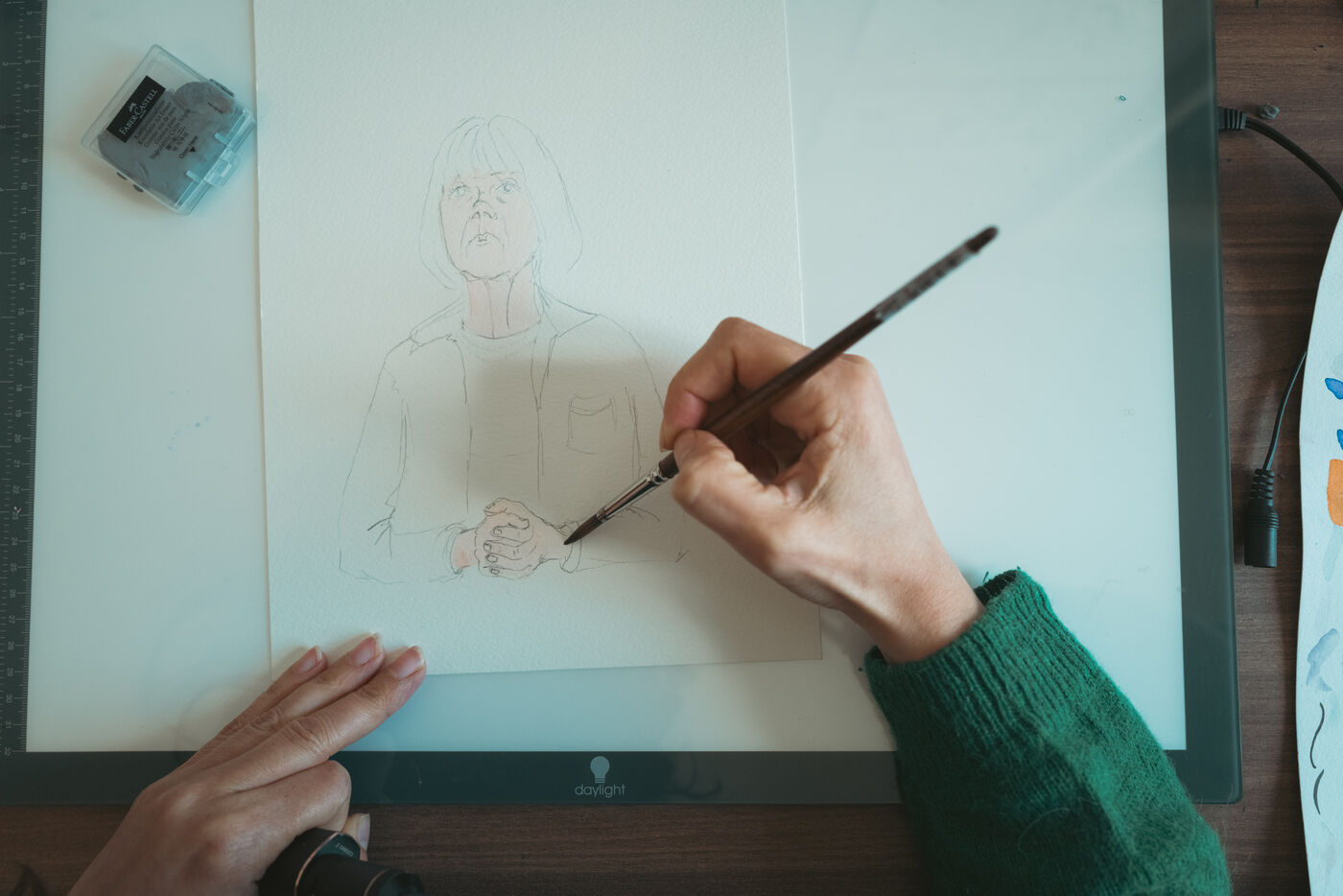
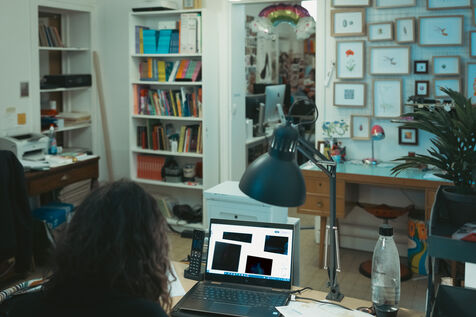
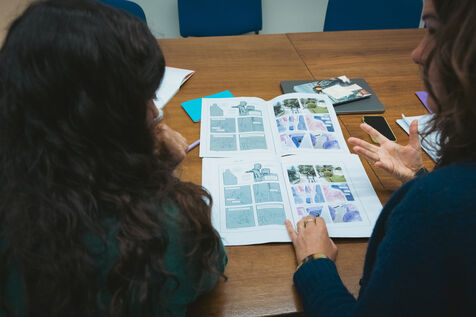
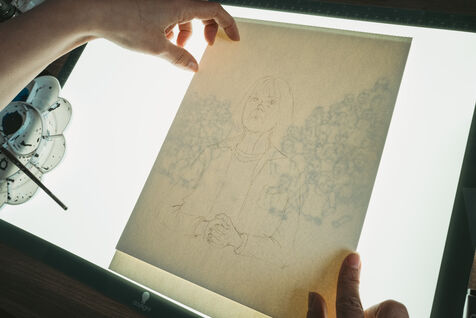
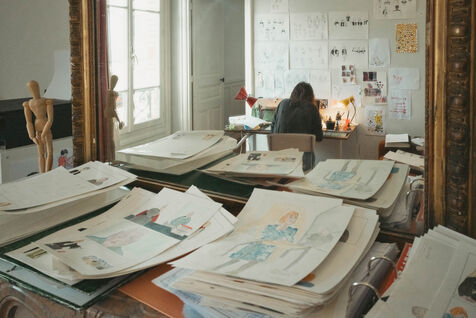
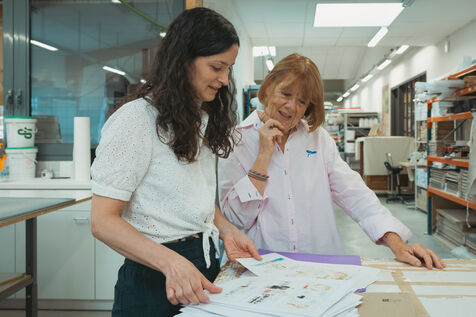
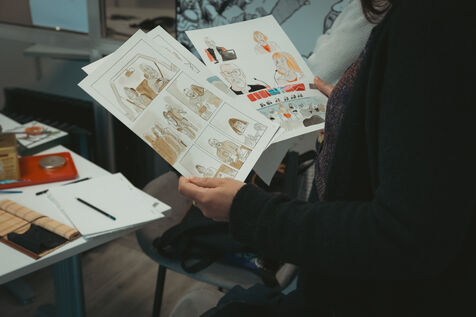
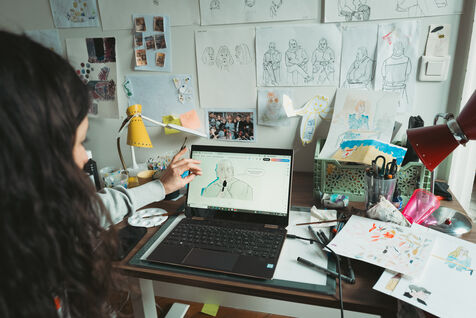
Audiences, archives, visite des lieux, consultation du dossier, visionnage des images et des vidéos des viols : la dessinatrice rassemble une matière dense, brutale, qu’il lui faut transformer en un récit graphique accessible au grand public.
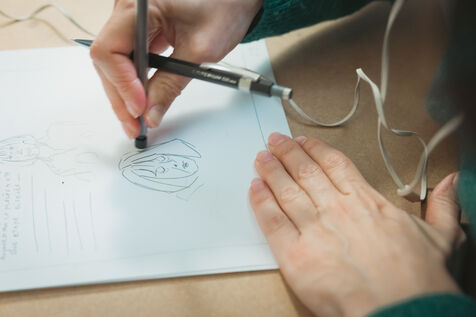
Son travail consiste donc à choisir ce qui peut être montré. Que garder, que laisser hors champ ? Comment raconter les faits sans surexposer le lecteur ?
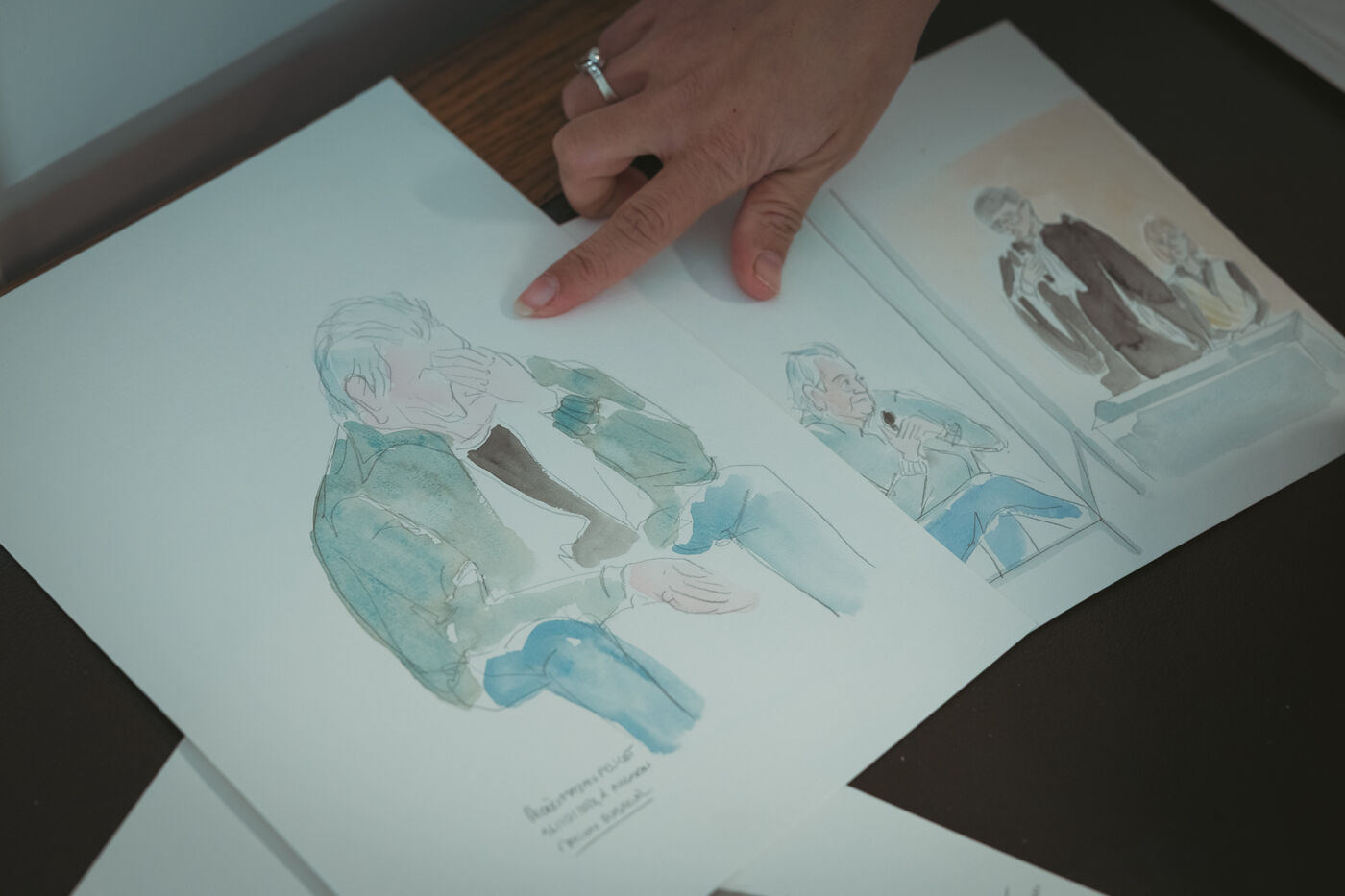
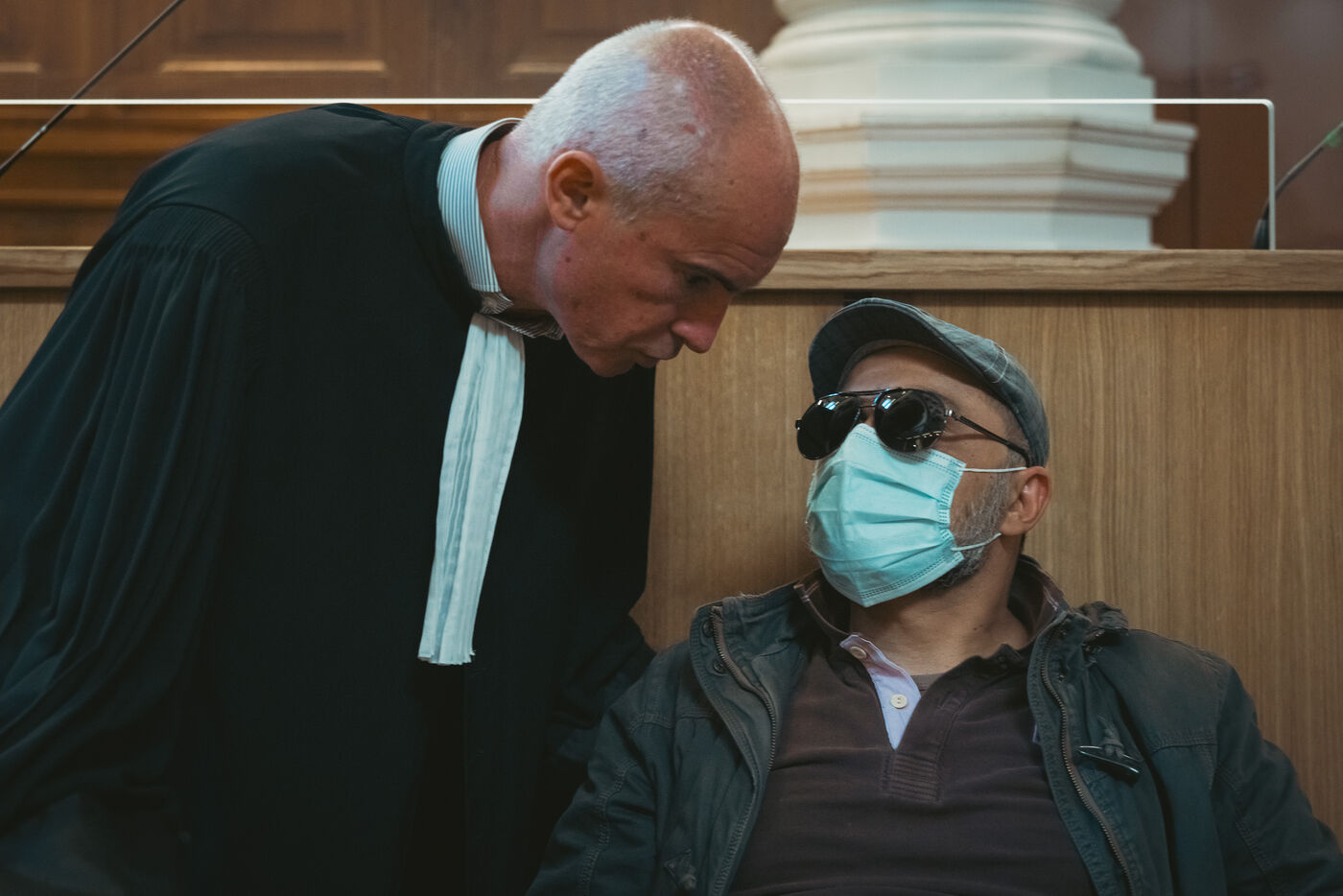
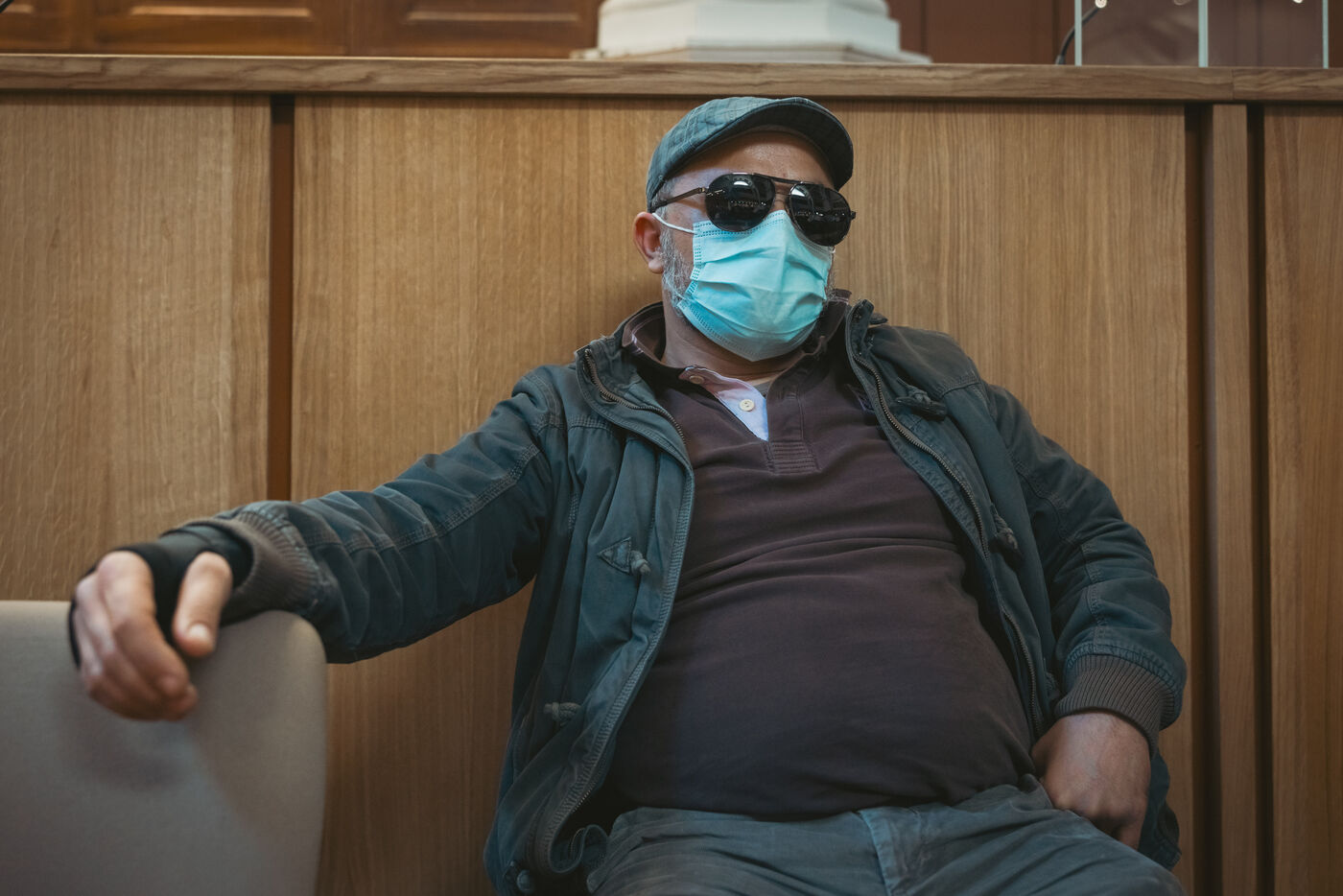
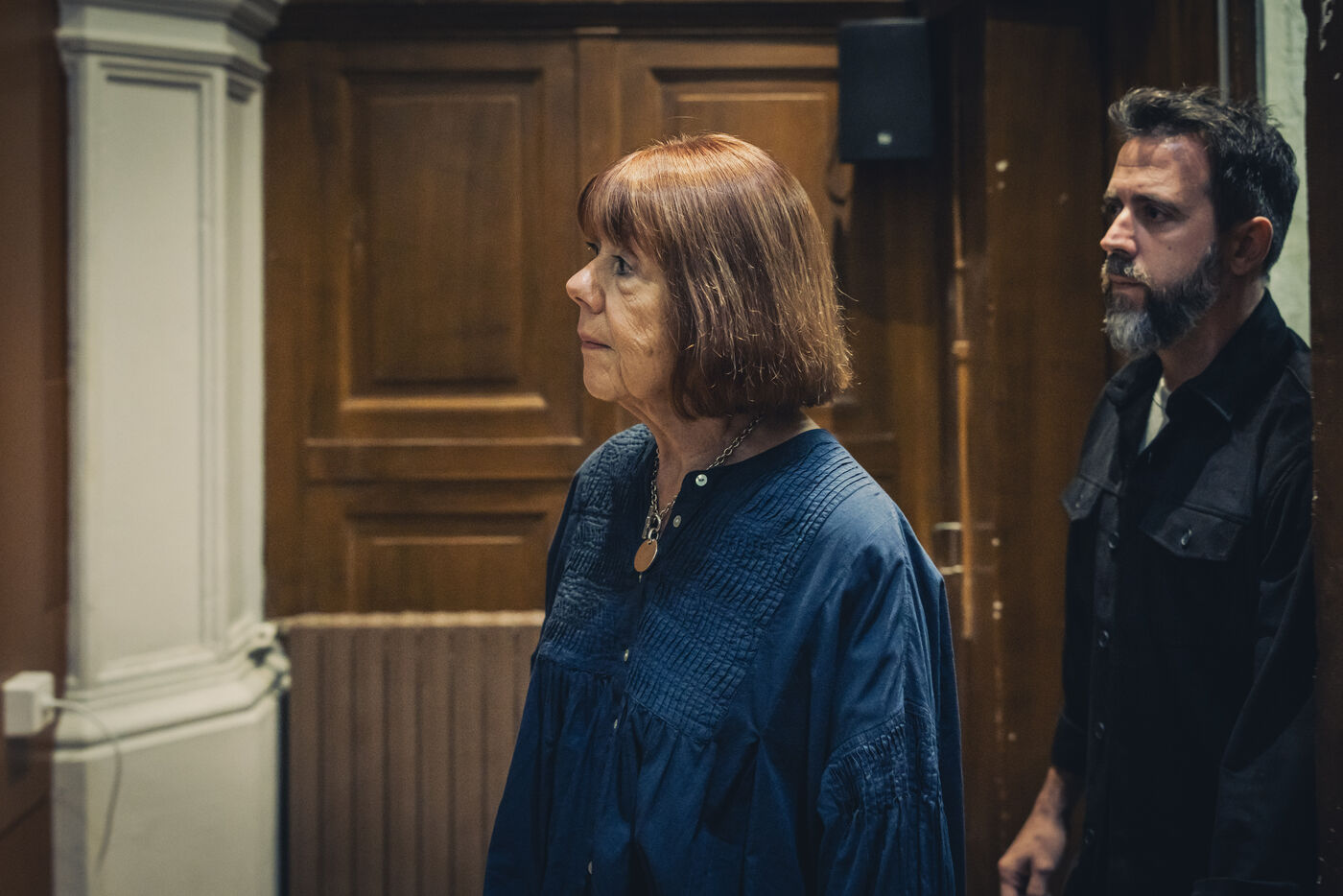
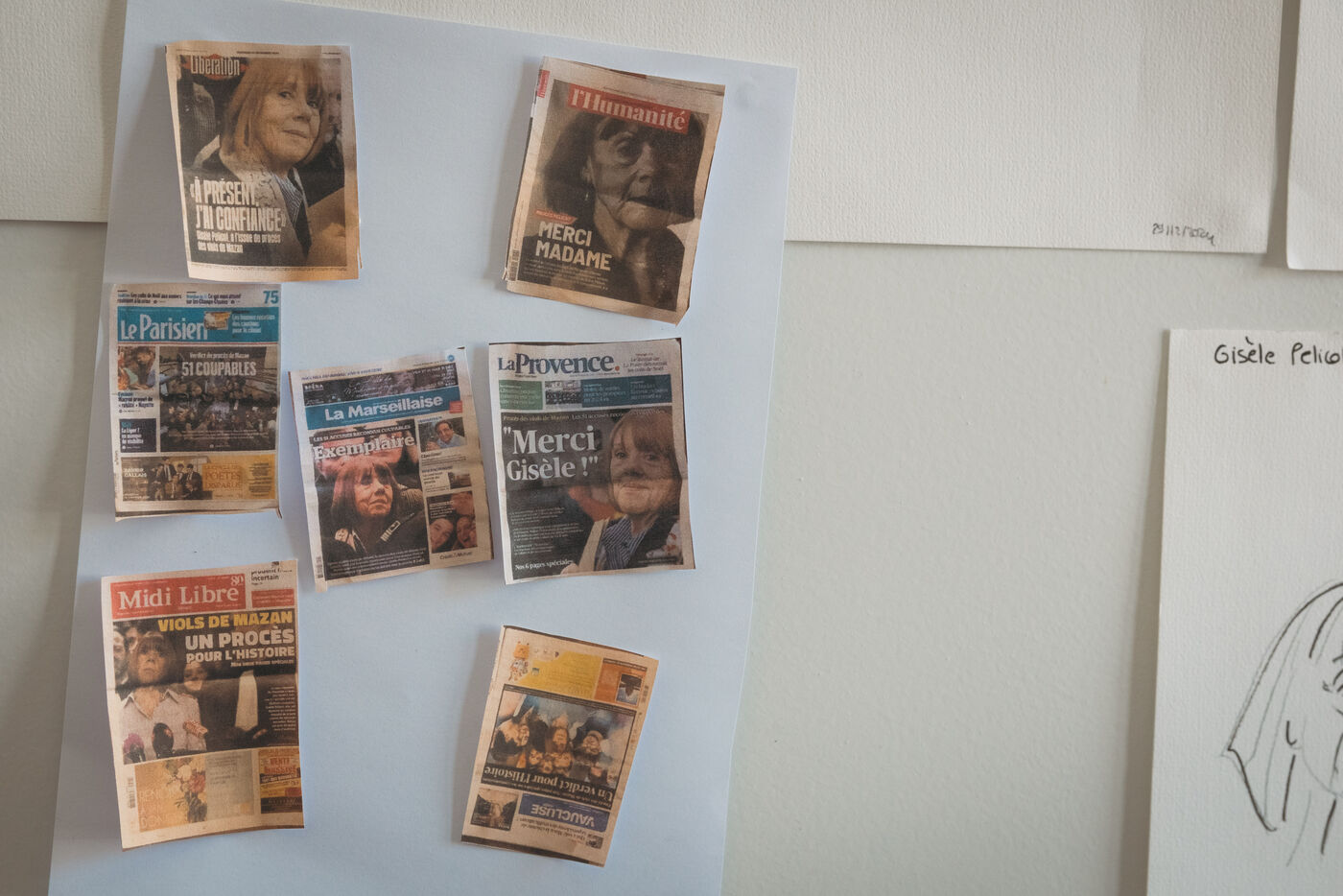
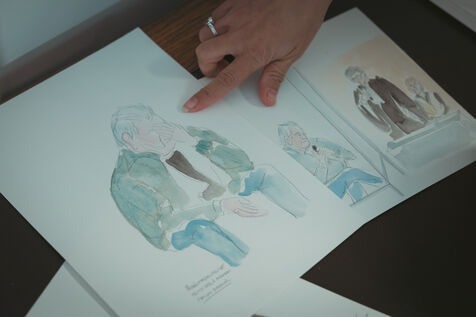
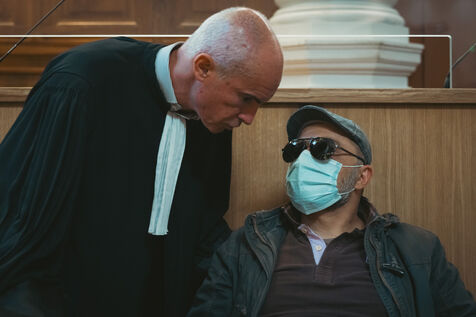
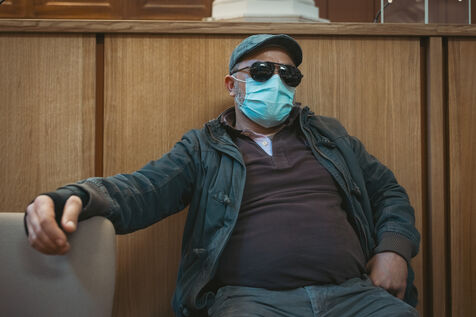
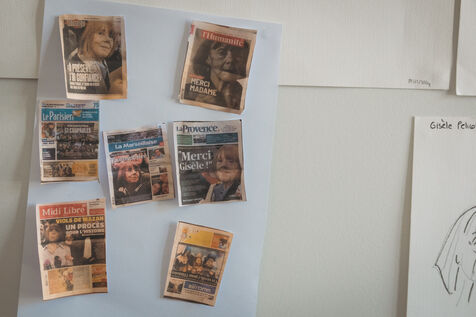
Dans ce procès sans captation, dont il ne restera presque aucune image officielle, les live tweets, les chroniques judiciaires et les croquis d’audience constituent l’une des seules mémoires immédiates de l’affaire. À travers ce livre, Marion laisse une trace : un outil de transmission et de mémoire.
A Drawing for History
In trials involving sexual and gender-based violence, journalists are on the front line. Day after day, they witness some of the worst violence humanity is capable of.
After covering the Mazan trial, Marion Dubreuil, a court reporter and judicial illustrator, is now creating a graphic novel about this historic case.
Court hearings, archives, visits to key locations, examination of the case file, and viewing images and videos of the rapes: the illustrator gathers dense, harrowing material that she must transform into a graphic narrative accessible to a wide audience.
Her work therefore involves deciding what can be shown. What should be included, and what should remain out of frame? How can these events be told without exposing the reader too directly to their violence?
Since cameras were not allowed inside the courtroom, almost no official images of the trial will remain. Live tweets, court reports and courtroom sketches therefore constitute some of the only immediate records of the case. Through this book, Marion creates a lasting testimony: a tool for remembrance and transmission.