Pour accéder à la série en entier, vous devez vous logger ou demander un compte Hans Lucas en cliquant ici.
Extinction Rebellion Bordeaux dénonce les impacts de la FAST-Fashion
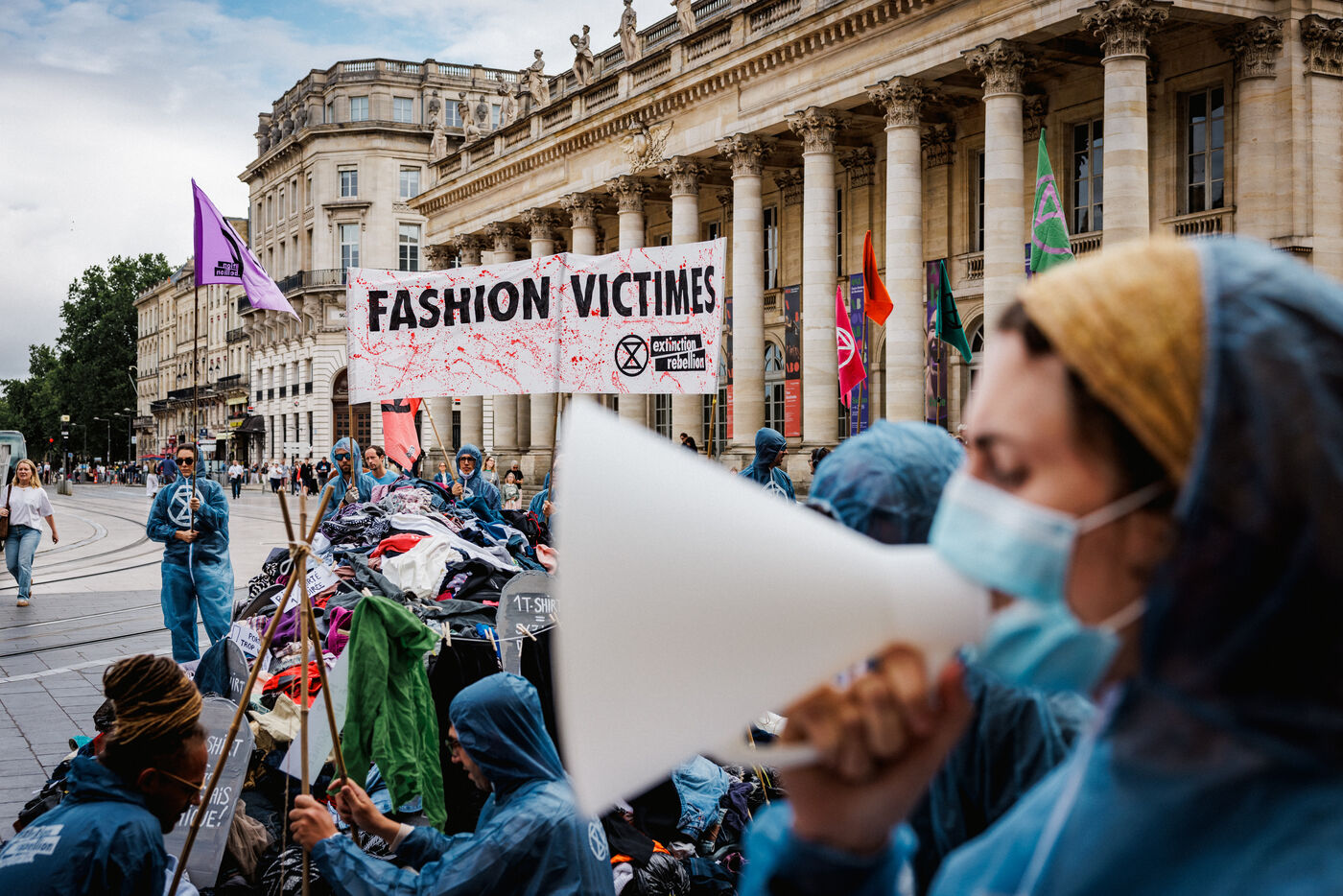
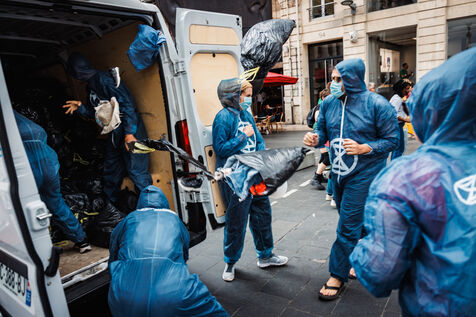
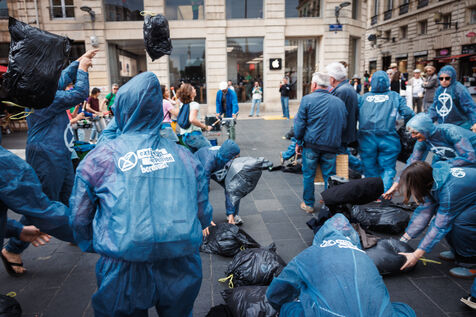
Face à l’accélération de la production textile mondiale et à la multiplication des collections low-cost, le mouvement Extinction Rebellion révèle les conséquences environnementales et sociales de la fast fashion. À travers des actions de sensibilisation dans l’espace public, les militants alertent sur un modèle de consommation basé sur le renouvellement permanent du vêtement, l’exploitation des ressources naturelles et la production massive de déchets textiles.
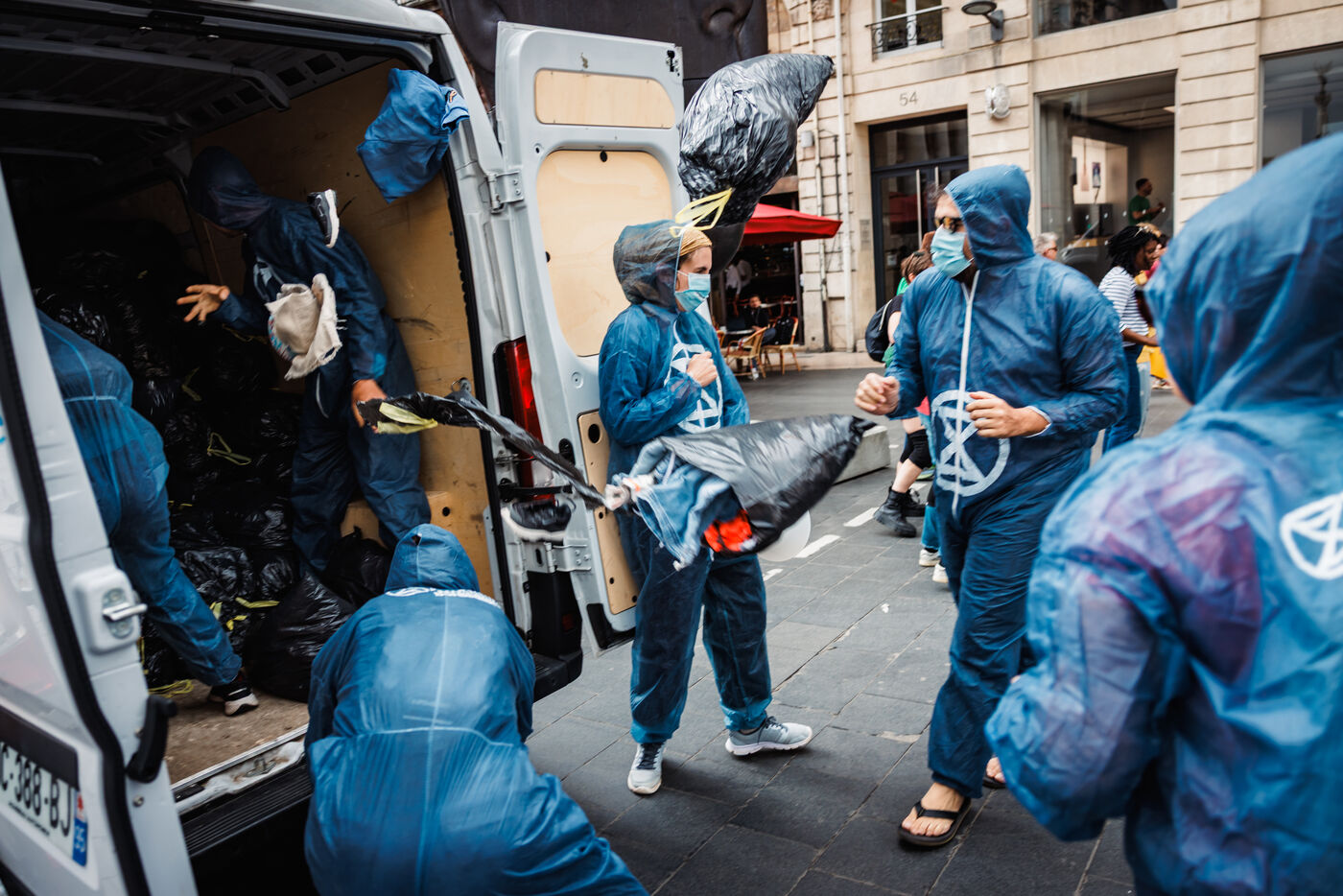
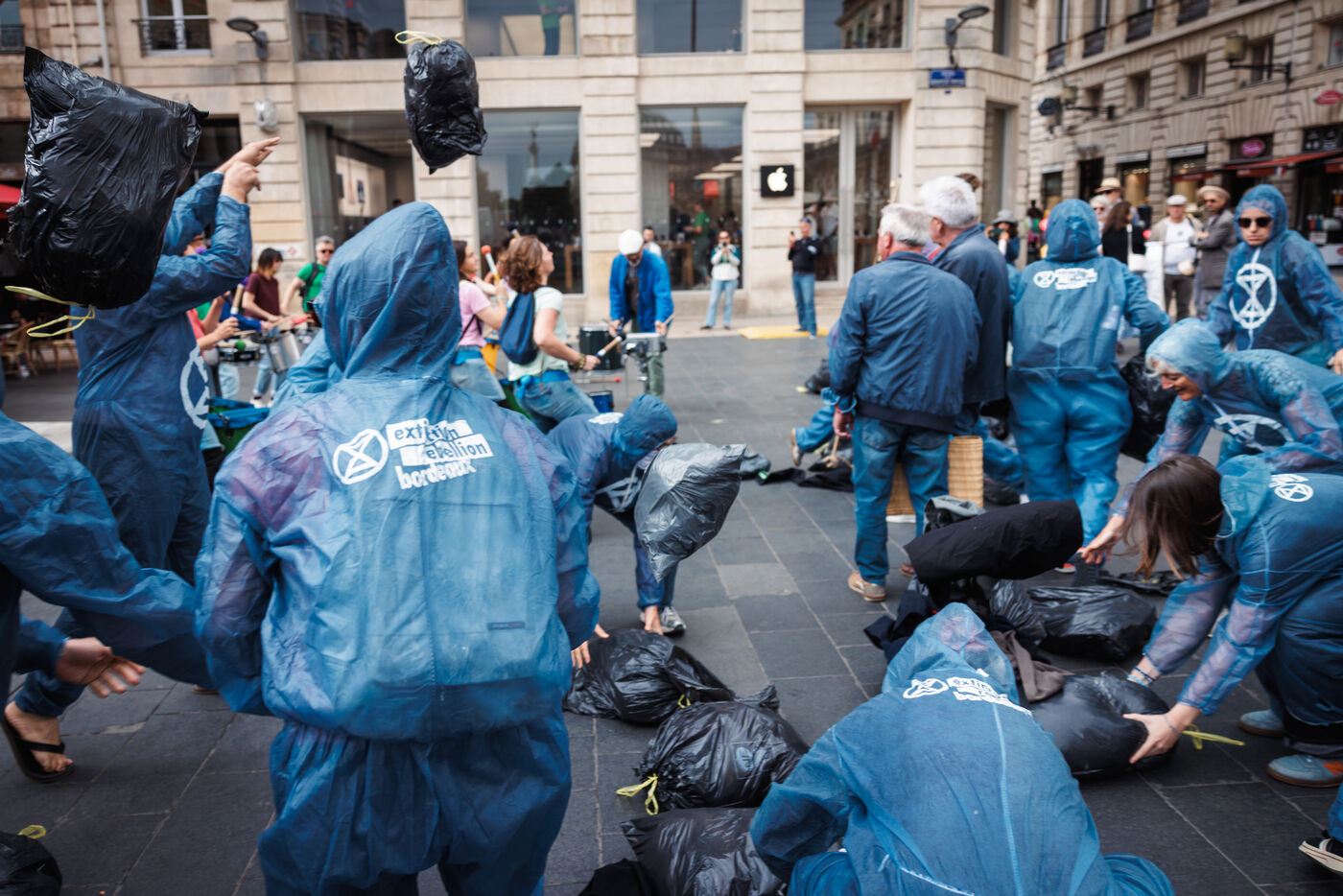
Le 6 juin 2026, à Bordeaux, place de la Comédie, à l’entrée de la rue Sainte Catherine, des militants du mouvement ont mené une action symbolique pour interroger les passants et les consommateurs sur les mécanismes qui alimentent la surconsommation. Au-delà de la question environnementale, Extinction Rebellion entend également mettre en lumière les impacts sociaux et moraux d’une industrie qui encourage une culture de l’apparence et des achats impulsifs, tout en s’appuyant souvent sur des conditions de production contestées. Par cette mobilisation, le mouvement appelle à repenser notre rapport au vêtement, à la consommation et aux limites écologiques de la planète.
Extinction Rebellion Bordeaux denounces the impacts of FAST-Fashion
Faced with the acceleration of global textile production and the multiplication of low-cost collections, the Extinction Rebellion movement reveals the environmental and social consequences of fast fashion. Through awareness-raising actions in public spaces, activists are alerting to a consumption model based on the permanent renewal of clothing, the exploitation of natural resources and the massive production of textile waste.
On June 6, 2026, in Bordeaux, Place de la Comédie, at the entrance of Rue Sainte Catherine, activists of the movement carried out a symbolic action to question passersby and consumers about the mechanisms that fuel overconsumption. Beyond the environmental issue, Extinction Rebellion also intends to highlight the social and moral impacts of an industry that encourages a culture of appearance and impulse buying, while often relying on contested production conditions. Through this mobilization, the movement calls for a rethinking of our relationship with clothing, consumption, and the planet’s ecological limits.