Pour accéder à la série en entier, vous devez vous logger ou demander un compte Hans Lucas en cliquant ici.
LE CERF-VOLANT AU VIETNAM : ENTRE CIEL, TERRE ET MÉMOIRE
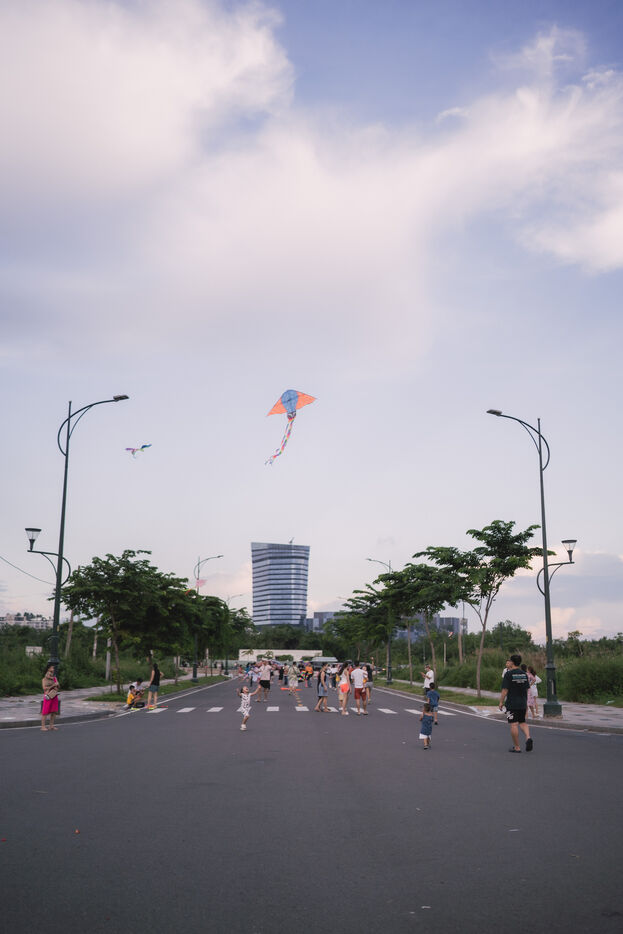
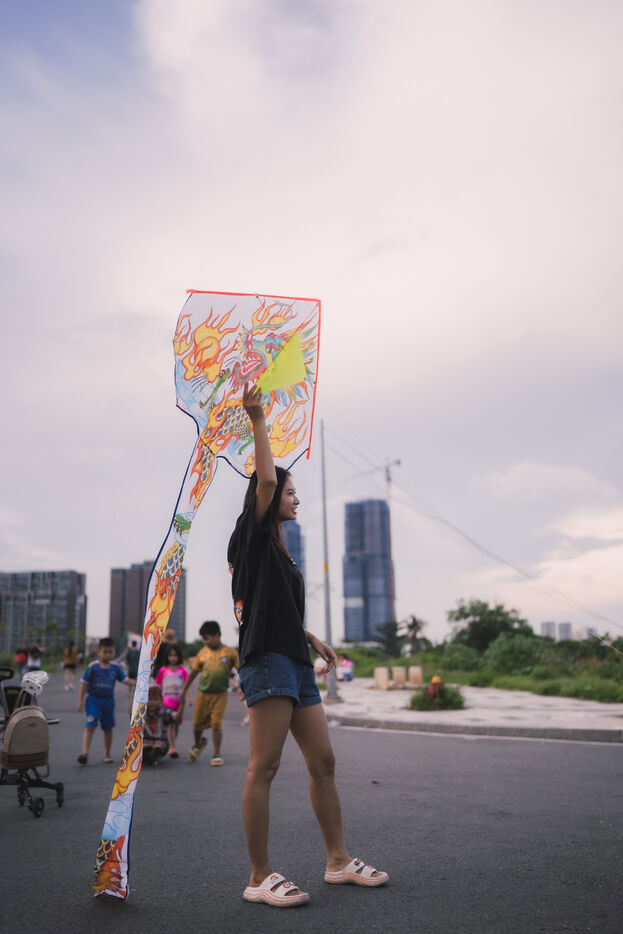
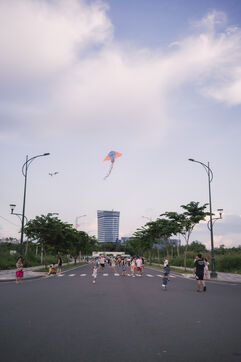
Mes derniers jours à HCMC, sur le chemin du retour en taxi, après une énième intense journée d’exploration dans la moiteur vietnamienne. Mon regard perdu à travers la fenêtre recherche un peu répit mais revient sans cesse aux derniers moments qu’il me reste dans cette jungle urbaine. Dans les dernières lueurs du coucher de soleil, un cerf-volant fait son apparition dans le ciel, triomphant, de l’autre côté du fleuve Sông Sài Gòn. Rejoint par la suite par un second puis par un troisième pour enfin former une petite tribu, chacun d’eux différent en couleur, taille et de forme.
Il est désormais évident que je dois savoir de quel monde ces cerf-volants proviennent. Et m’y rendre dès le lendemain.
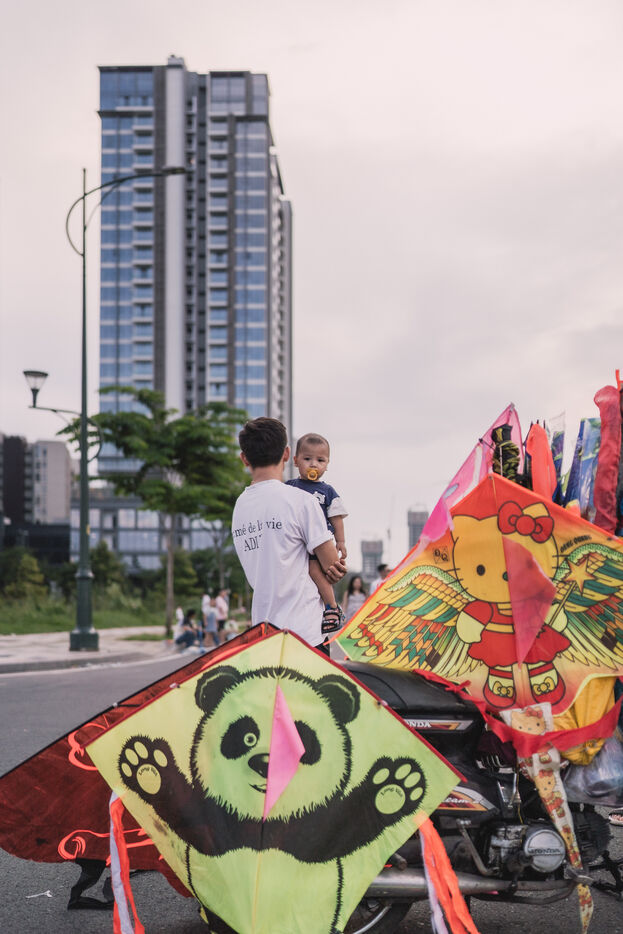
En demandant autour de moi et après quelques recherches, j’apprends que le cerf-volant (diều) fait partie du patrimoine culturel vietnamien depuis des siècles. Associé à la détente, il est surtout un symbole festif et spirituel. Il incarne le yin et le yang, le lien entre ciel et terre, un porte-bonheur pour les agriculteurs mais aussi l’illustration de certaines légendes comme celle rendant hommage aux fées qui autrefois rendaient visite aux hommes sur terre avant de disparaître. On attache parfois des flûtes aux cerf-volants afin de produire des chants censés les faire revenir sur Terre.
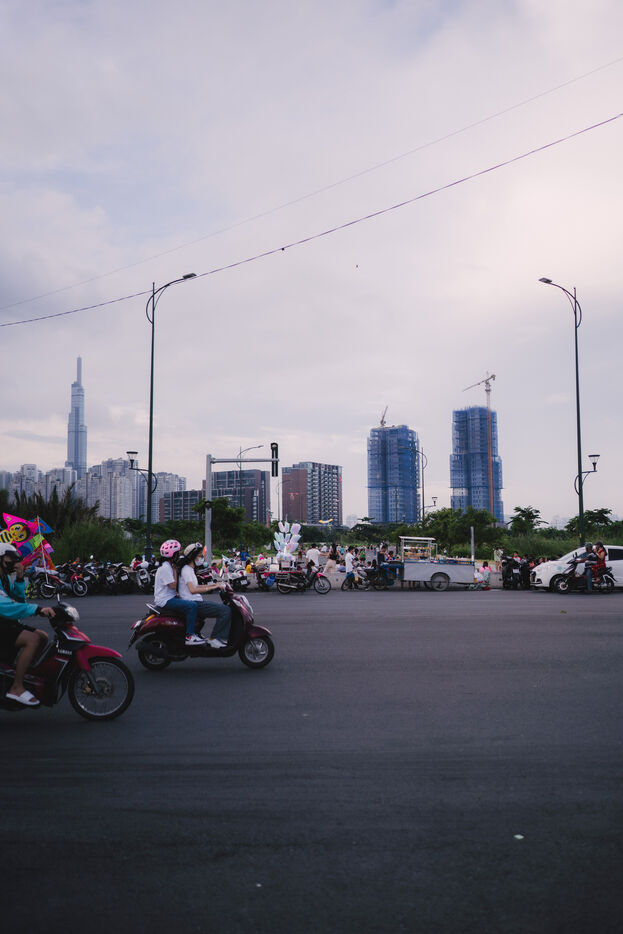
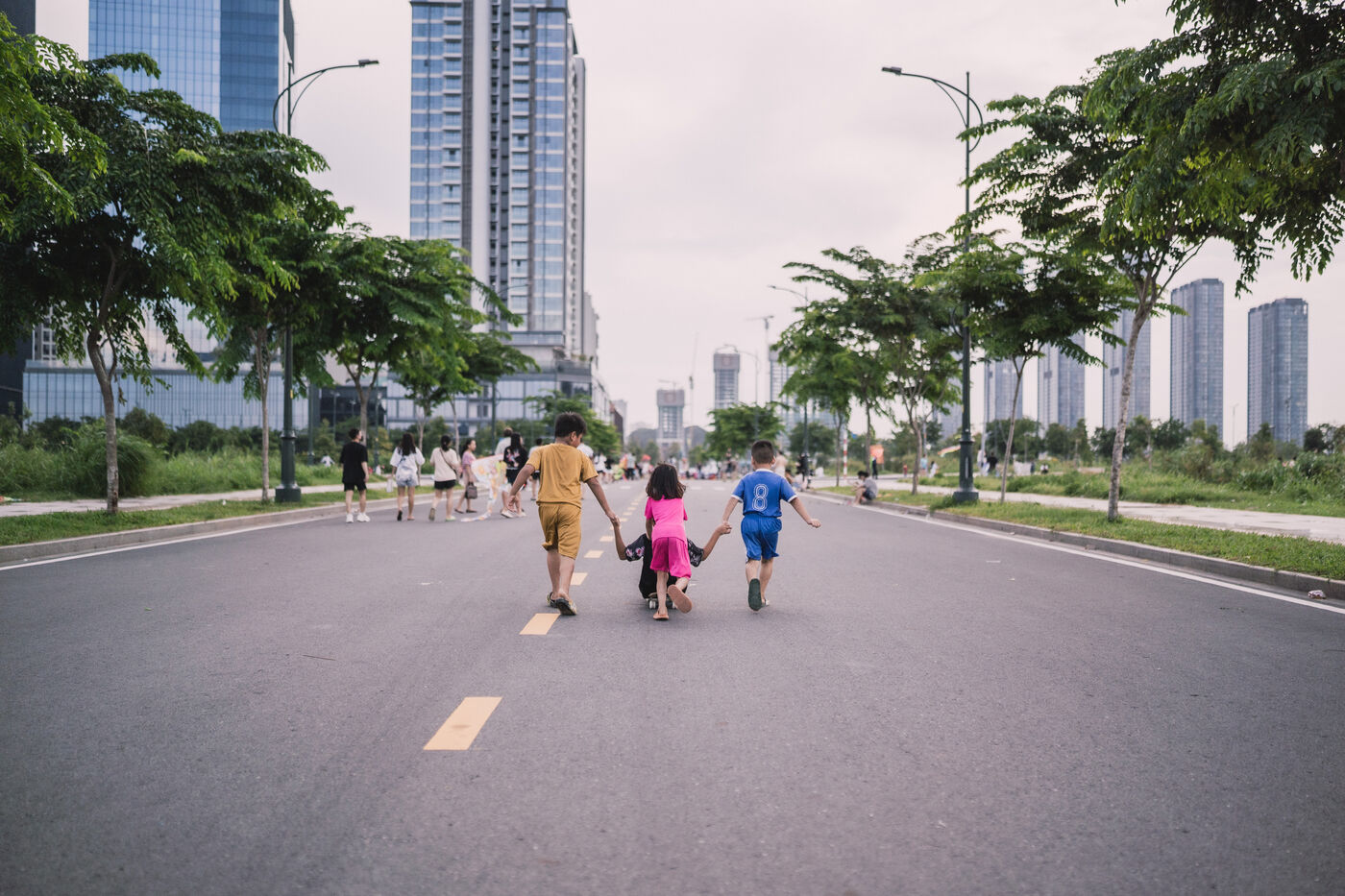
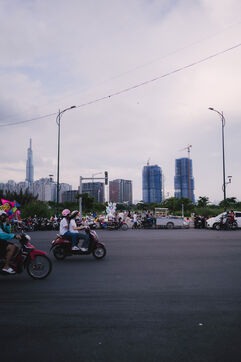
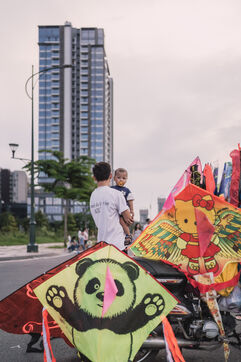
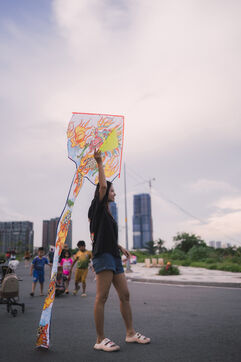
Une fois arrivé à Bãi Thả Diều Chill dans le district 2 (un des derniers lieux à HCMC où a lieu cette pratique) je saisis rapidement la dimension familiale et intergénérationnelle de cette pratique. Dès que la chaleur retombe, des nuages de scooters affluent. Des tables et chaises colorées poussent du sol, et les cerf-volants commencent leur envol. Une nostalgie collective partagée entre les anciens et les plus jeunes est palpable dans l’air, une forme de reconnection.
Ce quartier, à l’image de la société vietnamienne, est en pleine mutation.
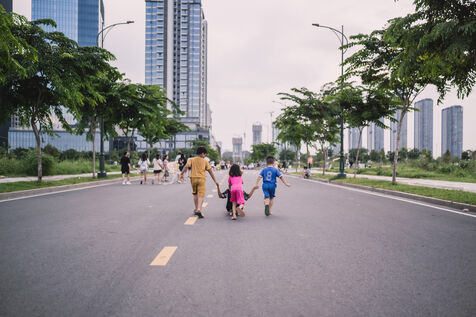
Des espaces dégagés, entre terrains vagues, chantiers aux premières heures, rizières asséchées. Aux abords d’une ville qui évolue extrêmement vite, en constante transition, le cerf-volant est un symbole de simplicité qui a le pouvoir de ralentir, voir figer le temps, entre ciel et terre.
KITE FLYING IN VIETNAM: BETWEEN SKY, EARTH, AND MEMORY
My last days in Ho Chi Minh City. On the way back in a taxi, after yet another intense day of exploration under the heavy Vietnamese heat. My gaze, lost through the window, seeks a moment of peace but keeps thinking about the time I have left in this urban jungle. In the final glow of the setting sun, a kite appears in the sky—triumphant—on the other side of the Sông Sài Gòn river. Then a second, followed by a third, until a small tribe forms—each one different in color, size, and shape.
I obviously needed to find out where these kites were coming from. And get there the next day.
After asking around and doing a bit of research, I learn that the kite (diều) has been part of Vietnamese cultural heritage for centuries. Associated with leisure, it is above all a festive and spiritual symbol. It represents the balance of yin and yang, the link between heaven and earth, a good luck charm for farmers, and the embodiment of legends—such as the one about the fairies who once used to visit humans on Earth before vanishing one day. This is the reason why flutes are sometimes attached to the kites, producing melodies meant to call those fairies back down to Earth.
Once in Bãi Thả Diều Chill in the district 2 (one of the few places in HCMC where this practice still takes place), I quickly get its deeply familial and intergenerational nature. As soon as the heat fades, a river of scooters starts to flow into the area. Colorful plastic chairs and tables seem to sprout from the ground, and the kites take flight. A shared nostalgia drifts in the air, connecting old and young alike—a quiet form of reconnection.
This neighborhood, like Vietnamese society itself, is undergoing rapid transformation. Open spaces stretch out—between empty lots, early-stage construction sites, and dried rice fields. On the edge of a fast-changing, ever-shifting city, the kite becomes a symbol of simplicity—one with the power to slow down, even freeze time, suspended between sky and earth.